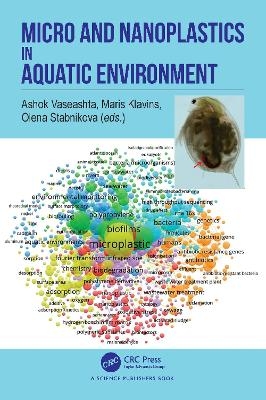
Micro and Nanoplastics in Aquatic Environment
CRC Press (Verlag)
978-1-032-48519-5 (ISBN)
Over the past century and a half, advancements in polymer science—encompassing both natural and synthetic materials—have led to the development of strong, lightweight, and highly flexible polymers. Their remarkable diversity and versatility make them indispensable in modern life. However, the escalating accumulation of fragmented plastic waste in the environment has become a pressing global concern. Micro- and nanoplastics (MNPs), which tend to accumulate at the air-water interface, pose potential safety and security risks by serving as carriers for viruses. Currently, there is limited research on the effects of MNP consumption in both human and non-human models. This book provides a comprehensive examination of the challenges associated with MNPs, their environmental monitoring, and management strategies aimed at risk assessment and mitigation. It explores emerging techniques for identifying, collecting, and mitigating MNP contamination in aquatic ecosystems. Additionally, it delves into the toxicokinetics, fate, and transport of MNPs, including recent findings on their movement within the human body. A notable development in this field is the application of metamaterials for detecting and degrading organic pollutants and microplastics through photocatalysis. From a policy perspective, refining international standards—encompassing product labeling, responsible usage, and strategies for recycling, upcycling, and sustainable disposal—remains imperative for mitigating the long-term impact of MNP pollution.
Ashok Vaseashta, Prof. Acad. is CEO/CTO and Executive Director for strategic research with the International Clean Water Institute in Virginia, USA. Inspired by nature and guided by societal necessities, he strives for technological innovations to address the global challenges of the 21st century. His research interests include foresight, nanotechnology, ecological science, green chemistry, micro/nano plastics, and critical infrastructure safety and security. Maris Klavins, Prof. is director of the Natural Resource Research Centre of the University of Latvia and a professor in Environmental Chemistry and Ecotoxicology. He is a full member of Latvia's Academy of Sciences. Olena Stabnikova, Prof. has 47 years of teaching and research experience in biotechnology and microbiology at the universities of Ukraine and Singapore and is now working in the Advanced research laboratory, NUFT. Her research experience includes environmental and ecological sciences, and the protection of the environment.
Preface. 1. Micro/Nano Plastics in Aquatic Biota: Concerns, Risks, Mitigation, and Policies. 2. Microplastic Pollution Mitigation from Fresh and Marine Water Bodies. 3. Properties and Related Effects of Microplastics in the Aquatic Environment: From the Organismic to Cellular Level. 4. Beyond the Surface: Biofilms and Microplastics in Aquatic Systems. 5. Evidence of Microplastics in the Mediterranean (Adriatic) Sea and the Pacific Ocean. 6. Sources and Impacts of Microplastics in Aquatic Environment and Remediation Strategies. 7. Toxicokinetic Effects of Micro/Nano Plastics on Human Health. 8. Micro Plastic Hazards in Agricultural Ecosystems: Management and Policies for Sustainable Agriculture. 9. Biodegradation Prerequisites for Microplastic Pollution in Freshwater Lakes in Armenia. 10. Hazards Associated with Micro/Nano Plastics in Agricultural Soils. 11. Micro-Nano Plastics in Aquatic Environments: Associated Health Impacts and Mitigation Strategies. Index.
| Erscheinungsdatum | 24.07.2025 |
|---|---|
| Zusatzinfo | 14 Tables, black and white; 17 Line drawings, color; 13 Line drawings, black and white; 11 Halftones, color; 13 Halftones, black and white; 28 Illustrations, color; 26 Illustrations, black and white |
| Verlagsort | London |
| Sprache | englisch |
| Maße | 156 x 234 mm |
| Gewicht | 820 g |
| Themenwelt | Technik ► Bauwesen |
| Technik ► Maschinenbau | |
| Technik ► Umwelttechnik / Biotechnologie | |
| ISBN-10 | 1-032-48519-1 / 1032485191 |
| ISBN-13 | 978-1-032-48519-5 / 9781032485195 |
| Zustand | Neuware |
| Informationen gemäß Produktsicherheitsverordnung (GPSR) | |
| Haben Sie eine Frage zum Produkt? |
aus dem Bereich