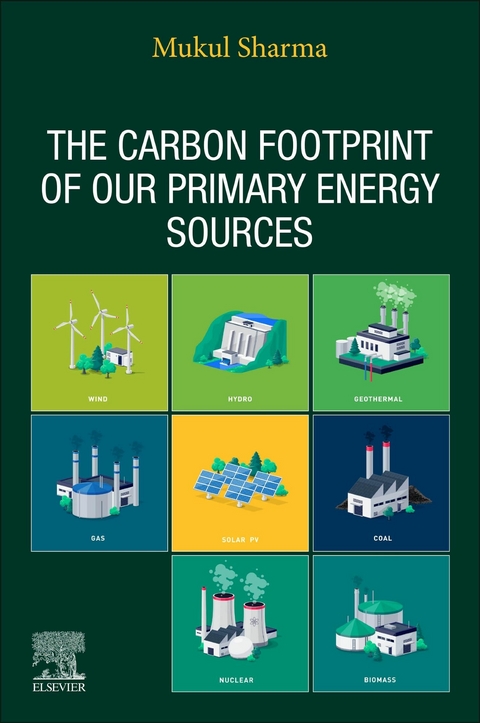
Carbon Footprint of our Primary Energy Sources (eBook)
500 Seiten
Elsevier Science (Verlag)
978-0-443-22329-7 (ISBN)
Dr. Mukul M. Sharma is Professor and holds the 'Tex” Moncrief Chair in the Department of Petroleum, Geosystems & Chemical Engineering at the University of Texas at Austin where he has been for the past 40 years. He served as Chairman of the Department from 2001 to 2005. His current research interests include hydraulic fracturing, oilfield water management, energy transition strategies, formation damage and improved oil recovery. He has published more than 550 journal articles and conference proceedings and has 21 patents. He founded Austin Geotech Services an E&P consulting company in 1996. He also co-founded Layline Petroleum in 2006 and Polaris Lithium in 2018 (both companies had very successful exits in 2013 and 2024), He also co-founded Navidad Energy in 2017 and and Geothermix, LLC in 2020. Sharma has a B. Tech in chemical engineering from IIT Kanpur and an MS and PhD in chemical and petroleum engineering from the University of Southern California. Dr. Sharma is a member of the US National Academy of Engineering and an Honorary Member of the Society of Petroleum Engineers (SPE). He is the recipient of the 2017 John Franklin Carll Award and the 2009 Lucas Gold Medal, SPE's highest technical awards. He has also received the 2004 SPE Faculty Distinguished Achievement Award, the 2002 Lester C. Uren Award, and the 1998 SPE Formation Evaluation Award. He is a Distinguished Alumnus of both IIT Kanpur and USC. He served as an SPE Distinguished Lecturer in 2002, has served on the Editorial Boards of many journals, and taught and consulted for industry worldwide.
The Carbon Footprint of our Primary Energy Sources supplies readers with a comprehensive, accessible analysis of the carbon footprints of a range of primary energy sources including crude oil, natural gas, coal, solar energy, wind energy, geothermal energy, hydroelectric energy and nuclear energy, and biofuels, and their carbon footprints, employing a full lifecycle assessment (LCA) of each primary energy source. It furnishes both the foundation and a tool for estimating carbon footprints for a range of energy systems. The work culminates in a cost-benefit analysis of these primary energy sources.With the significant uptick of global investment in alternative energies and the global focus on reducing emissions, this text delivers an important foundational overview/understanding of these systems, and an opportunity for teachers and readers to apply learnings to their own energy consumption choices. - Presents foundational information about various energy systems and quantifies their carbon footprint- Raises awareness among readers of their energy consumption and the primary sources of carbon emissions- Equips policy makers and engineers with the tools to calculate the carbon footprint of various energy sources- Empowers readers to make informed energy decisions that support the reduction of carbon emissions- Discusses the technologies, options and costs of energy storage for intermittent sources of energy- Presents the costs of carbon capture, sequestration and utilization and its impact on energy prices for the consumer- Summarizes valuable "e;lessons learnt"e; from our energy policy and choices over the past two decades
| Erscheint lt. Verlag | 30.5.2025 |
|---|---|
| Sprache | englisch |
| Themenwelt | Technik ► Elektrotechnik / Energietechnik |
| ISBN-10 | 0-443-22329-7 / 0443223297 |
| ISBN-13 | 978-0-443-22329-7 / 9780443223297 |
| Informationen gemäß Produktsicherheitsverordnung (GPSR) | |
| Haben Sie eine Frage zum Produkt? |
 EPUB (Adobe DRM)
Kopierschutz: Adobe-DRM
Adobe-DRM ist ein Kopierschutz, der das eBook vor Mißbrauch schützen soll. Dabei wird das eBook bereits beim Download auf Ihre persönliche Adobe-ID autorisiert. Lesen können Sie das eBook dann nur auf den Geräten, welche ebenfalls auf Ihre Adobe-ID registriert sind.
Details zum Adobe-DRM
Dateiformat: EPUB (Electronic Publication)
EPUB ist ein offener Standard für eBooks und eignet sich besonders zur Darstellung von Belletristik und Sachbüchern. Der Fließtext wird dynamisch an die Display- und Schriftgröße angepasst. Auch für mobile Lesegeräte ist EPUB daher gut geeignet.
Systemvoraussetzungen:
PC/Mac: Mit einem PC oder Mac können Sie dieses eBook lesen. Sie benötigen eine
eReader: Dieses eBook kann mit (fast) allen eBook-Readern gelesen werden. Mit dem amazon-Kindle ist es aber nicht kompatibel.
Smartphone/Tablet: Egal ob Apple oder Android, dieses eBook können Sie lesen. Sie benötigen eine
Geräteliste und zusätzliche Hinweise
Buying eBooks from abroad
For tax law reasons we can sell eBooks just within Germany and Switzerland. Regrettably we cannot fulfill eBook-orders from other countries.
aus dem Bereich