



Dyeing with the Earth
Textiles, Tradition, and Sustainability in Contemporary Japan
Seiten
2025
Duke University Press (Verlag)
978-1-4780-2898-7 (ISBN)
Duke University Press (Verlag)
978-1-4780-2898-7 (ISBN)
Charlotte Linton explores the intersection of small-scale traditional craft production with contemporary sustainability practices in a textile dyeing workshop in southern Japan within the context of the global fashion industry.
In Dyeing with the Earth, Charlotte Linton explores the intersection of small-scale traditional craft production with contemporary sustainability practices. Focusing on natural textile dyeing on the southern Japanese island of Amami Ōshima, Linton details the complex relationship between preservation practices, resource extraction, and land access in the production of Oshima tsumugi kimono cloth, which uses the indigenous technique of dorozome (or mud-dyeing). As global interest in sustainable fashion grows, textile manufacturers on Amami have expanded from kimono production to dyeing garments and textiles for high-profile designers. While traditional craft may appear at odds with the large-scale global textile industry, Linton reveals how Amamian and global producers face similar social, economic, and environmental pressures. Ethical production in fashion, Linton contends, should focus on understanding local everyday practices that sustain direct relationships between people, place, and environment rather than rely on short-term solutions via new processes or materials. Weaving together ethnography, photography, and illustration, Linton underscores the continued relevance of traditional craft and material cultures amid ongoing climate change and biodiversity loss.
In Dyeing with the Earth, Charlotte Linton explores the intersection of small-scale traditional craft production with contemporary sustainability practices. Focusing on natural textile dyeing on the southern Japanese island of Amami Ōshima, Linton details the complex relationship between preservation practices, resource extraction, and land access in the production of Oshima tsumugi kimono cloth, which uses the indigenous technique of dorozome (or mud-dyeing). As global interest in sustainable fashion grows, textile manufacturers on Amami have expanded from kimono production to dyeing garments and textiles for high-profile designers. While traditional craft may appear at odds with the large-scale global textile industry, Linton reveals how Amamian and global producers face similar social, economic, and environmental pressures. Ethical production in fashion, Linton contends, should focus on understanding local everyday practices that sustain direct relationships between people, place, and environment rather than rely on short-term solutions via new processes or materials. Weaving together ethnography, photography, and illustration, Linton underscores the continued relevance of traditional craft and material cultures amid ongoing climate change and biodiversity loss.
Charlotte Linton is a Postdoctoral Research Fellow in Social Anthropology at All Souls College, University of Oxford.
Introduction 1
1. The Mud Dyers of Amami Ōshima 31
2. The Alchemy of Producing Color 65
3. “Mottainai!” What a Waste! 101
4. The Mejiro Bird 135
5. “The Industrious Way of Doing Things” 165
6. Dyeing with the Earth 203
Conclusion 237
Acknowledgments 257
Glossary 259
Notes 263
References 269
Index
| Erscheinungsdatum | 28.10.2025 |
|---|---|
| Zusatzinfo | 103 color illustrations |
| Verlagsort | North Carolina |
| Sprache | englisch |
| Maße | 152 x 229 mm |
| Gewicht | 572 g |
| Themenwelt | Kunst / Musik / Theater |
| Sozialwissenschaften ► Ethnologie | |
| Sozialwissenschaften ► Soziologie | |
| Technik | |
| ISBN-10 | 1-4780-2898-X / 147802898X |
| ISBN-13 | 978-1-4780-2898-7 / 9781478028987 |
| Zustand | Neuware |
| Informationen gemäß Produktsicherheitsverordnung (GPSR) | |
| Haben Sie eine Frage zum Produkt? |
Mehr entdecken
aus dem Bereich


aus dem Bereich
Prolegomena zu einer Geschichte der Magie
Buch | Hardcover (2025)
Matthes & Seitz Berlin (Verlag)
CHF 53,20
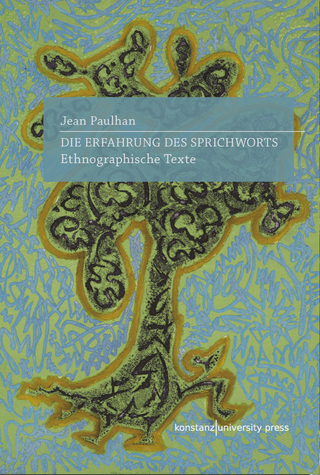
ethnographische Texte
Buch | Hardcover (2025)
Konstanz University Press (Verlag)
CHF 36,40
Buch | Hardcover (2021)
Konstanz University Press (Verlag)
CHF 39,20


