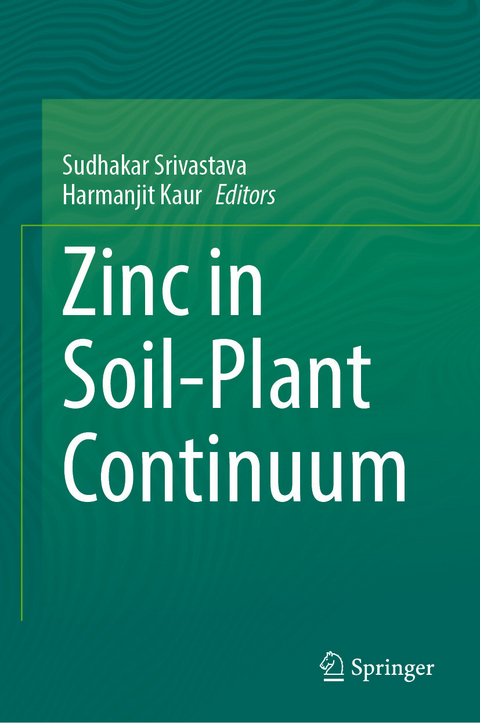
Zinc in Soil-Plant Continuum (eBook)
314 Seiten
Springer Nature Singapore (Verlag)
978-981-96-4253-3 (ISBN)
This contributed volume covers the role of zinc in soil and plant systems, providing a comprehensive understanding of factors influencing its total and bioavailable levels. The book presents the mechanisms of zinc uptake, translocation, and homeostasis in plants under both Zn-deficient and Zn-excess conditions. It also addresses a variety of agronomic, biotechnological, and microbial approaches for managing zinc nutrition in crops.
Plants have evolved intricate systems of transporters and regulatory mechanisms to obtain trace amounts of zinc, which is crucial for their growth and yield. Zinc homeostasis is essential for optimal crop performance, yet its availability in the environment varies significantly. While some regions of the world experience severe zinc deficiency, others face zinc toxicity. This poses a dual challenge: zinc deficiency in crops negatively impacts the nutrition of millions of people dependent on plant-based diets, while zinc toxicity can lead to excessive zinc accumulation in crops, posing health risks to humans. The book highlights significant advancements in improving zinc nutrition in crops, presenting cutting-edge research and strategies to address these challenges. It offers insights into the broader implications of zinc in agriculture and human nutrition, bridging the gap between plant health and public health.
This book is an invaluable resource for undergraduate and postgraduate students, researchers, and academicians. It is particularly relevant for those studying or working in the fields of crop nutrition, essential elements in plants, zinc deficiency and toxicity in soils, the role of zinc in human health, and sustainable agricultural practices.
This contributed volume covers the role of zinc in soil and plant systems, providing a comprehensive understanding of factors influencing its total and bioavailable levels. The book presents the mechanisms of zinc uptake, translocation, and homeostasis in plants under both Zn-deficient and Zn-excess conditions. It also addresses a variety of agronomic, biotechnological, and microbial approaches for managing zinc nutrition in crops.Plants have evolved intricate systems of transporters and regulatory mechanisms to obtain trace amounts of zinc, which is crucial for their growth and yield. Zinc homeostasis is essential for optimal crop performance, yet its availability in the environment varies significantly. While some regions of the world experience severe zinc deficiency, others face zinc toxicity. This poses a dual challenge: zinc deficiency in crops negatively impacts the nutrition of millions of people dependent on plant-based diets, while zinc toxicity can lead to excessive zinc accumulation in crops, posing health risks to humans. The book highlights significant advancements in improving zinc nutrition in crops, presenting cutting-edge research and strategies to address these challenges. It offers insights into the broader implications of zinc in agriculture and human nutrition, bridging the gap between plant health and public health.This book is an invaluable resource for undergraduate and postgraduate students, researchers, and academicians. It is particularly relevant for those studying or working in the fields of crop nutrition, essential elements in plants, zinc deficiency and toxicity in soils, the role of zinc in human health, and sustainable agricultural practices.
| Erscheint lt. Verlag | 10.5.2025 |
|---|---|
| Zusatzinfo | XII, 314 p. 19 illus., 17 illus. in color. |
| Sprache | englisch |
| Themenwelt | Naturwissenschaften ► Biologie ► Botanik |
| Naturwissenschaften ► Geowissenschaften ► Geologie | |
| Technik ► Umwelttechnik / Biotechnologie | |
| Weitere Fachgebiete ► Land- / Forstwirtschaft / Fischerei | |
| Schlagworte | abiotic stress • Crop nutrition • Plant Physiological responses • soil chemistry • zinc bioavailability |
| ISBN-10 | 981-96-4253-1 / 9819642531 |
| ISBN-13 | 978-981-96-4253-3 / 9789819642533 |
| Informationen gemäß Produktsicherheitsverordnung (GPSR) | |
| Haben Sie eine Frage zum Produkt? |
 PDF (Wasserzeichen)
DRM: Digitales Wasserzeichen
Dieses eBook enthält ein digitales Wasserzeichen und ist damit für Sie personalisiert. Bei einer missbräuchlichen Weitergabe des eBooks an Dritte ist eine Rückverfolgung an die Quelle möglich.
Dateiformat: PDF (Portable Document Format)
Mit einem festen Seitenlayout eignet sich die PDF besonders für Fachbücher mit Spalten, Tabellen und Abbildungen. Eine PDF kann auf fast allen Geräten angezeigt werden, ist aber für kleine Displays (Smartphone, eReader) nur eingeschränkt geeignet.
Systemvoraussetzungen:
PC/Mac: Mit einem PC oder Mac können Sie dieses eBook lesen. Sie benötigen dafür einen PDF-Viewer - z.B. den Adobe Reader oder Adobe Digital Editions.
eReader: Dieses eBook kann mit (fast) allen eBook-Readern gelesen werden. Mit dem amazon-Kindle ist es aber nicht kompatibel.
Smartphone/Tablet: Egal ob Apple oder Android, dieses eBook können Sie lesen. Sie benötigen dafür einen PDF-Viewer - z.B. die kostenlose Adobe Digital Editions-App.
Buying eBooks from abroad
For tax law reasons we can sell eBooks just within Germany and Switzerland. Regrettably we cannot fulfill eBook-orders from other countries.
aus dem Bereich