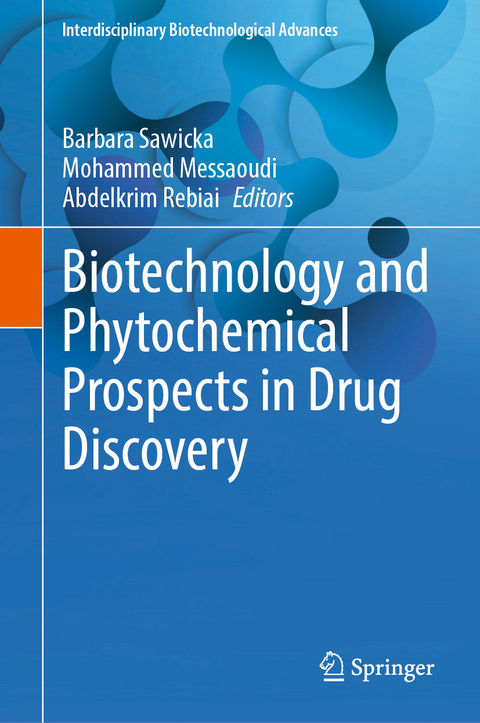
Biotechnology and Phytochemical Prospects in Drug Discovery (eBook)
XVIII, 318 Seiten
Springer Nature Singapore (Verlag)
978-981-96-2790-5 (ISBN)
This book is a comprehensive exploration of the multifaceted role of phytochemicals in contemporary drug discovery and biotechnology. Comprising eleven insightful chapters, it navigates through the historical roots, current applications, and future possibilities of harnessing plant-derived compounds for medicinal advancements. The initial chapters introduce phytochemicals and their historical significance in traditional medicine, highlighting the scientific validation offered by phytochemistry and pharmacology.
The subsequent chapters delve into the incorporation of biotechnology into phytochemical synthesis, focusing on metabolic engineering, synthetic biology, and plant tissue culture to enhance efficiency and reduce environmental impact. The integration of nanomaterial synthesis with medicinal plant extracts is explored for its potential in biomedical applications, such as targeted drug delivery. A thorough examination of bioactive properties of secondary metabolites in unripe fruit extracts reveals their role in immune enhancement, alongside factors affecting bioactive compound content. Advanced analytical techniques crucial to drug discovery are discussed, including "green extraction" and modern methods like high-performance liquid chromatography (HPLC) and gas chromatography (GC) for phytochemical purification and identification. The COVID-19 pandemic has highlighted challenges and strategies in drug discovery, with computational biology advancing molecular target identification and innovative screening methodologies. The exploration of mineral profiling in medicinal plants underscores its importance for human health, detailing methods to identify essential and harmful elements, and noting the nutritional value of these plants. The penultimate chapter addresses future opportunities and challenges in using medicinal plants for drug development, spotlighting India's contributions to global pharmaceutical needs. The final chapter examines phytochemicals as alternative therapeutics against SARS-CoV-2, highlighting antiviral properties and the novel concept of molecular plant farming for vaccine development. This book is a comprehensive resource for those interested in phytochemistry, biotechnology, and pharmacology, elucidating the role of plant-derived chemicals in contemporary medicine and technology.
This book is a comprehensive exploration of the multifaceted role of phytochemicals in contemporary drug discovery and biotechnology. Comprising eleven insightful chapters, it navigates through the historical roots, current applications, and future possibilities of harnessing plant-derived compounds for medicinal advancements. The initial chapters introduce phytochemicals and their historical significance in traditional medicine, highlighting the scientific validation offered by phytochemistry and pharmacology.The subsequent chapters delve into the incorporation of biotechnology into phytochemical synthesis, focusing on metabolic engineering, synthetic biology, and plant tissue culture to enhance efficiency and reduce environmental impact. The integration of nanomaterial synthesis with medicinal plant extracts is explored for its potential in biomedical applications, such as targeted drug delivery. A thorough examination of bioactive properties of secondary metabolites in unripe fruit extracts reveals their role in immune enhancement, alongside factors affecting bioactive compound content. Advanced analytical techniques crucial to drug discovery are discussed, including "e;green extraction"e; and modern methods like high-performance liquid chromatography (HPLC) and gas chromatography (GC) for phytochemical purification and identification. The COVID-19 pandemic has highlighted challenges and strategies in drug discovery, with computational biology advancing molecular target identification and innovative screening methodologies. The exploration of mineral profiling in medicinal plants underscores its importance for human health, detailing methods to identify essential and harmful elements, and noting the nutritional value of these plants. The penultimate chapter addresses future opportunities and challenges in using medicinal plants for drug development, spotlighting India's contributions to global pharmaceutical needs. The final chapter examines phytochemicals as alternative therapeutics against SARS-CoV-2, highlighting antiviral properties and the novel concept of molecular plant farming for vaccine development. This book is a comprehensive resource for those interested in phytochemistry, biotechnology, and pharmacology, elucidating the role of plant-derived chemicals in contemporary medicine and technology.
| Erscheint lt. Verlag | 22.4.2025 |
|---|---|
| Reihe/Serie | Interdisciplinary Biotechnological Advances |
| Zusatzinfo | XVIII, 318 p. 49 illus. |
| Sprache | englisch |
| Themenwelt | Medizin / Pharmazie ► Medizinische Fachgebiete ► Pharmakologie / Pharmakotherapie |
| Medizin / Pharmazie ► Physiotherapie / Ergotherapie ► Orthopädie | |
| Naturwissenschaften ► Biologie ► Botanik | |
| Naturwissenschaften ► Biologie ► Genetik / Molekularbiologie | |
| Naturwissenschaften ► Chemie ► Organische Chemie | |
| Technik ► Medizintechnik | |
| Technik ► Umwelttechnik / Biotechnologie | |
| Schlagworte | Alternative medicine • Health Benefits • Medicinal plants • medicinal properties • Phytochemical analysis |
| ISBN-10 | 981-96-2790-7 / 9819627907 |
| ISBN-13 | 978-981-96-2790-5 / 9789819627905 |
| Informationen gemäß Produktsicherheitsverordnung (GPSR) | |
| Haben Sie eine Frage zum Produkt? |
 PDF (Wasserzeichen)
DRM: Digitales Wasserzeichen
Dieses eBook enthält ein digitales Wasserzeichen und ist damit für Sie personalisiert. Bei einer missbräuchlichen Weitergabe des eBooks an Dritte ist eine Rückverfolgung an die Quelle möglich.
Dateiformat: PDF (Portable Document Format)
Mit einem festen Seitenlayout eignet sich die PDF besonders für Fachbücher mit Spalten, Tabellen und Abbildungen. Eine PDF kann auf fast allen Geräten angezeigt werden, ist aber für kleine Displays (Smartphone, eReader) nur eingeschränkt geeignet.
Systemvoraussetzungen:
PC/Mac: Mit einem PC oder Mac können Sie dieses eBook lesen. Sie benötigen dafür einen PDF-Viewer - z.B. den Adobe Reader oder Adobe Digital Editions.
eReader: Dieses eBook kann mit (fast) allen eBook-Readern gelesen werden. Mit dem amazon-Kindle ist es aber nicht kompatibel.
Smartphone/Tablet: Egal ob Apple oder Android, dieses eBook können Sie lesen. Sie benötigen dafür einen PDF-Viewer - z.B. die kostenlose Adobe Digital Editions-App.
Buying eBooks from abroad
For tax law reasons we can sell eBooks just within Germany and Switzerland. Regrettably we cannot fulfill eBook-orders from other countries.
aus dem Bereich