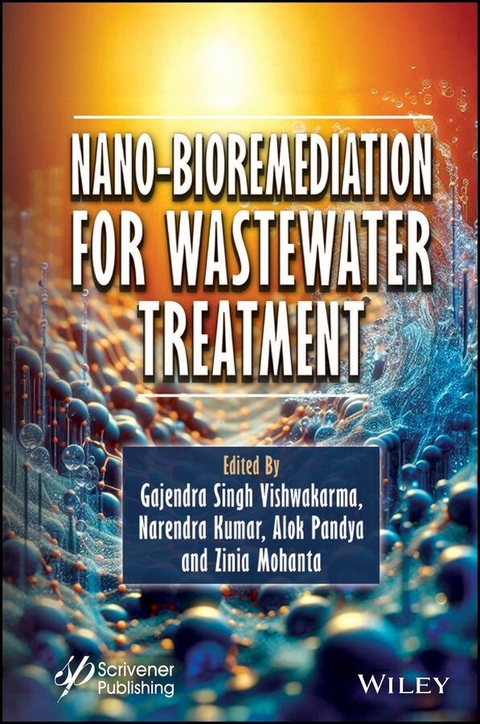
Nano-Bioremediation for Wastewater Treatment (eBook)
554 Seiten
Wiley-Scrivener (Verlag)
978-1-394-27162-7 (ISBN)
Invest in Nano-Bioremediation for Wastewater Treatment to explore cutting-edge techniques that combine nanotechnology and bioremediation, equipping you with innovative solutions and expert insights needed to tackle global environmental pollution challenges effectively.
The coupling of nanotechnology and bioremediation techniques holds great promise for addressing environmental pollution and contamination on a global scale. The process of bioremediation uses living organisms, such as bacteria, fungi, or plants, to degrade or detoxify pollutants in the environment. Nanotechnology involves manipulating materials at the nanoscale, typically at the scale of individual atoms and molecules, to create novel properties and functionalities. Today, research is focused on exploring the combined potential of nanomaterials and bioremediation for treating pollutants.
Nano-Bioremediation for Wastewater Treatment will serve as a premier guide for nanotechnology in this field, providing information regarding the various challenges that arise from the coupling of nanotechnology and bioremediation techniques. Since very limited literature is available on this subject, the editors have compiled all the current assays and techniques that provide insights into this topic. This book will also cover different fabrication methods and methods for decorating microbial cells on the surface of nanomaterials, which is a key factor for synthesizing microbial conjugation, as well as prototype designing and integrating developed materials into water purification systems. Unlock the potential of cutting-edge nano-bioremediation techniques for wastewater treatment, with practical applications, expert insights, and sustainable solutions that set you apart in the field.
Audience
Environmental engineers, chemists, biotechnologists, microbiologists, nanotechnologists, environmental consultants, researchers, academics, and policymakers focused on developing and implementing innovative solutions for wastewater treatment and environmental remediation.
Gajendra Singh Vishwakarma, PhD, is an assistant professor in the Ecosystem and Environment Management Department at the Indian Institute of Forest Management. He has published over 16 research papers, six book chapters, and four patents. He has dedicated his expertise to monitoring environmental pollutants in groundwater and soil, overseeing the quality of industrial wastewater and leachate, and contributing to solid waste management practices that encourage the growth and dissemination of scientific knowledge in his field.
Narendra Kumar, PhD, is the Dean of Academics and an associate professor in the Department of Biotechnology and Bioengineering, Institute of Advanced Research, The University for Innovation, Gujarat, India with over nineteen years of research and teaching experience. He has more than 45 publications to his credit, including research papers, conference papers, and book chapters. He has also edited three internationally published books.
Alok Pandya, PhD, is an interdisciplinary researcher and assistant professor in the Department of Biotechnology and Bioengineering, Institute of Advanced Research, Gujarat, India. He has published over 70 research articles in highly reputed international journals, 12 book chapters, and four books, and has been granted four patents. His research work includes nanobiotechnology, nanochemistry, forensic nanotechnology, and the development of affordable nanodevices for disease monitoring, agricultural nano-products, and products for societal use.
Zinia Mohanta, PhD, is a postdoctoral fellow in the Department of Radiology at Kennedy Krieger Institute, Johns Hopkins School of Medicine, working on several collaborative projects with multiple labs across the United States. She has authored six research articles and three review papers in reputed international journals and has been invited to numerous presentations. Her research interests include biomedical instrumentation, nanomaterials, and their applications as magnetic resonance imaging contrast agents.
Invest in Nano-Bioremediation for Wastewater Treatment to explore cutting-edge techniques that combine nanotechnology and bioremediation, equipping you with innovative solutions and expert insights needed to tackle global environmental pollution challenges effectively. The coupling of nanotechnology and bioremediation techniques holds great promise for addressing environmental pollution and contamination on a global scale. The process of bioremediation uses living organisms, such as bacteria, fungi, or plants, to degrade or detoxify pollutants in the environment. Nanotechnology involves manipulating materials at the nanoscale, typically at the scale of individual atoms and molecules, to create novel properties and functionalities. Today, research is focused on exploring the combined potential of nanomaterials and bioremediation for treating pollutants. Nano-Bioremediation for Wastewater Treatment will serve as a premier guide for nanotechnology in this field, providing information regarding the various challenges that arise from the coupling of nanotechnology and bioremediation techniques. Since very limited literature is available on this subject, the editors have compiled all the current assays and techniques that provide insights into this topic. This book will also cover different fabrication methods and methods for decorating microbial cells on the surface of nanomaterials, which is a key factor for synthesizing microbial conjugation, as well as prototype designing and integrating developed materials into water purification systems. Unlock the potential of cutting-edge nano-bioremediation techniques for wastewater treatment, with practical applications, expert insights, and sustainable solutions that set you apart in the field. Audience Environmental engineers, chemists, biotechnologists, microbiologists, nanotechnologists, environmental consultants, researchers, academics, and policymakers focused on developing and implementing innovative solutions for wastewater treatment and environmental remediation.
1
Nano-Bioremediation and Scale-Up Techniques for Wastewater Treatment
Ananya Tiwari1, Isha Dharsandia1, Dharni Parekh1, Alok Pandya1, Narendra Kumar1, Shubhita Tripathi1 and Gajendra Singh Vishwakarma2*
1Department of Biotechnology and Bioengineering, Institute of Advanced Research, Gandhinagar, Gujarat, India
2Indian Institute of Forest Management, Bhopal, MP, India
Abstract
Providing enough affordable, clean water for everyone is the biggest challenge of the twenty-first century. In the past few decades, many techniques for treating wastewater have been investigated; however, their appliscation is limited by a number of issues, such as the use of chemicals, the production of disinfection by-products (DBPs), time commitment, and cost. Advances in nanotechnology have led to the development of products and processes used in wastewater treatment, such as magnetic nanoparticles, nanofiltration, nanobiocides, nanoadsorbents, and nanozero valent iron. Also, in the scenario of wastewater treatment, the production of bioengineered nanoparticles (BNPs) through microbial interaction plays a significant role. Being less costly and dangerous than traditional approaches, BNPs have been employed as biocatalysts, adsorbents, oxidants, and reductants in the removal of contaminants from drinking water and wastewater because they contain a special bacterial carrier matrix. Moreover in this regard, the use of microbial fuel cells (MFCs) has garnered importance due to the features of simultaneous power production and wastewater treatment. There is a need to scale-up all the available techniques in this aspect, at a large scale. For that, development is required in pilot or large-scale water treatment plants. In this regard, different studies are available in which various processes and parameters have been demonstrated that can be considered during the scale-up techniques and designing principles for optimum wastewater treatment. In this particular book chapter, we have discussed each and every aspect of the same in detail and also sheds light on the most recent developments in nanotechnology in light of the pressing need to investigate and manage the emerging hazardous wastes with reduced prices, less energy, and greater efficiency.
Keywords: Wastewater treatment, nano remediation, reverse osmosis, nanofiltration, ultrafiltration, microfiltration, fabrication, scale-up
1.1 Introduction
The ever-increasing demand for clean water necessitates the development of innovative and efficient water treatment technologies. Traditional methods, while effective, often struggle with emerging contaminants and require significant resources. This has led researchers to explore the exciting potential of microbes and nano-conjugates in wastewater treatment and water purification systems.
In the field of wastewater treatment and water purification, the integration of microbes and nanotechnology has shown great promise. Microbes, with their diverse metabolic capabilities, offer a biological approach to pollutant degradation. By harnessing their natural ability to break down organic matter and certain inorganic compounds, we can create targeted bioremediation solutions. Nano-conjugates, on the other hand, present a unique physicochemical approach. These engineered structures, on a scale of billionths of a meter, possess remarkable properties like high surface area and tunable reactivity. They can be designed for specific functionalities such as adsorption of contaminants, photocatalysis for pollutant degradation, or even sensing of specific pollutants. Various nanomaterials, including zeolites, chitosan, Multi-walled carbon nanotubes (MWCNT), nano-composites, and nano-oxides, have been employed in water treatment processes [1]. The microbial synthesis of nanoparticles has emerged as a cost-effective and environmentally friendly method, offering high absorbent capabilities due to their nanoscale size and unique properties. Additionally, the bioinspired production of nanomaterials through microorganisms has gained attention for its efficiency in treating wastewater and decontaminating pollutants, providing a sustainable and energy-efficient alternative [2]. Moreover, the use of nano microbial conjugates, such as phage-conjugated Fe3O4 nanoparticles, has demonstrated significant antibacterial activity against resistant strains in wastewater, highlighting a novel approach in water management systems [3]. Lastly, the application of titanium oxide nanoparticles in a lab-scale wastewater treatment plant has proven effective in enhancing water quality by reducing turbidity, total solids, suspended solids, and biological and chemical oxygen demands, as well as removing heavy metals and decreasing microbial counts [4].
Microorganisms play a vital role in augmenting water treatment efficacy. Their metabolic processes break down contaminants in wastewater, including organic matter, nitrogen, phosphorus, and other pollutants, into environmentally benign substances. Biological wastewater treatment processes [5] exploit diverse microbial communities to achieve this, leading to reductions in biological oxygen demand (BOD) and chemical oxygen demand (COD). This results in the generation of treated water suitable for reuse in various applications. Specific microbial species, such as Candidatus accumulibacter phosphatis, Spirogyra, Aspergillus luchuensis, and Candida, are instrumental in contaminant removal from wastewater sources [6]. Notably, the type of treatment technology employed influences the composition of microbial communities within wastewater treatment plants. Additionally, environmental factors such as dissolved oxygen concentration and pH significantly impact nitrogen metabolism and microbial interactions [7]. By leveraging microbial biotechnology, we can not only decrease the concentration of diverse water contaminants but also generate valuable energy products like biohydrogen, bioethanol, biogas, and bioelectricity [8].
Nano-conjugates offer distinct advantages in water purification. By combining the unique properties of various materials, they can enhance membrane performance. For instance, the functionalization of carbon nanotubes with diferuloylmethane creates a novel carbon conjugate for membrane reinforcement [1]. Additionally, nanomaterials like zeolites, chitosan, and various nano-composites and oxides showcase promise in pollutant removal [9]. Notably, nano-conjugates can simplify and increase purification efficiency, enabling large-scale production as demonstrated in the method for purifying water-soluble iron oxide nanoparticle-antibody conjugates [10]. Overall, nano-conjugates present a versatile and effective approach for improving water purification processes.
Newly designed prototypes play a crucial role in advancing water purification by incorporating innovative and cost-effective methods. For instance, a prototype for aid workers integrates activated carbon, ceramic candle filtration, and UV irradiation to effectively remove bacteria, turbidity, and viruses from water sources in underdeveloped regions. Similarly, a recently developed system in Pakistan utilizes gravity flow to address arsenic contamination in groundwater, significantly reducing heavy metal levels post-treatment [11]. Furthermore, a domestic wastewater treatment prototype employs a two-filter system for efficient wastewater treatment, producing clean water for reuse [12–15]. These prototypes showcase advancements in water purification technology, addressing various contaminants and improving water quality for diverse applications.
Keeping the above discussion in mind, this chapter will discuss the basics of nanobioremediation along with the fabrication and scale-up techniques for microbes and nano-conjugate based prototypes of waste-water treatment via emphasizing the different matrix for the microbes and nano-conjugate fabrication factors of scale-up of water treatment plant (size, capacity, aeration, filtration).
1.2 Basics of Nanobioremediation
Nanobioremediation is one such method that has gained popularity in recent years.
Bioremediation entails the use of plants, enzymes, and microbes, or a combination of these, for biosorption, bioaccumulation, biotransformation, and biological stabilization. It functions as a remediation approach for removing inorganic, organic, and emergent pollutants from agricultural soil [3]. In the case of nanobioremediation, by combining the concepts of bioremediation with nanotechnology, nanobioremediation may remove pollutants from soil, water, and air more precisely and efficiently. The fundamental idea is to use manufactured nanomaterials, such as nanoparticles, to enhance the natural processes that microbes do to break down pollutants and detoxify the environment. Combining the natural processes of bioremediation with the power of nanotechnology is a revolutionary technique known as nanobioremediation [2].
1.3 Basics of Wastewater Treatment Plant
Water is an invaluable resource, and understanding its treatment is essential before the construction of any wastewater treatment facility. Wastewater, in its simplest terms, is water that has been contaminated through residential, commercial, and industrial activities [21]. The heterogeneous and dynamic chemical composition of wastewater presents challenges in its precise definition. Wastewater treatment encompasses a series of processes designed to meet specific standards or discharge quality, as mandated by regional or federal regulatory...
| Erscheint lt. Verlag | 20.3.2025 |
|---|---|
| Sprache | englisch |
| Themenwelt | Naturwissenschaften ► Chemie |
| Technik ► Maschinenbau | |
| ISBN-10 | 1-394-27162-X / 139427162X |
| ISBN-13 | 978-1-394-27162-7 / 9781394271627 |
| Informationen gemäß Produktsicherheitsverordnung (GPSR) | |
| Haben Sie eine Frage zum Produkt? |
 EPUB (Adobe DRM)
Kopierschutz: Adobe-DRM
Adobe-DRM ist ein Kopierschutz, der das eBook vor Mißbrauch schützen soll. Dabei wird das eBook bereits beim Download auf Ihre persönliche Adobe-ID autorisiert. Lesen können Sie das eBook dann nur auf den Geräten, welche ebenfalls auf Ihre Adobe-ID registriert sind.
Details zum Adobe-DRM
Dateiformat: EPUB (Electronic Publication)
EPUB ist ein offener Standard für eBooks und eignet sich besonders zur Darstellung von Belletristik und Sachbüchern. Der Fließtext wird dynamisch an die Display- und Schriftgröße angepasst. Auch für mobile Lesegeräte ist EPUB daher gut geeignet.
Systemvoraussetzungen:
PC/Mac: Mit einem PC oder Mac können Sie dieses eBook lesen. Sie benötigen eine
eReader: Dieses eBook kann mit (fast) allen eBook-Readern gelesen werden. Mit dem amazon-Kindle ist es aber nicht kompatibel.
Smartphone/Tablet: Egal ob Apple oder Android, dieses eBook können Sie lesen. Sie benötigen eine
Geräteliste und zusätzliche Hinweise
Buying eBooks from abroad
For tax law reasons we can sell eBooks just within Germany and Switzerland. Regrettably we cannot fulfill eBook-orders from other countries.
aus dem Bereich