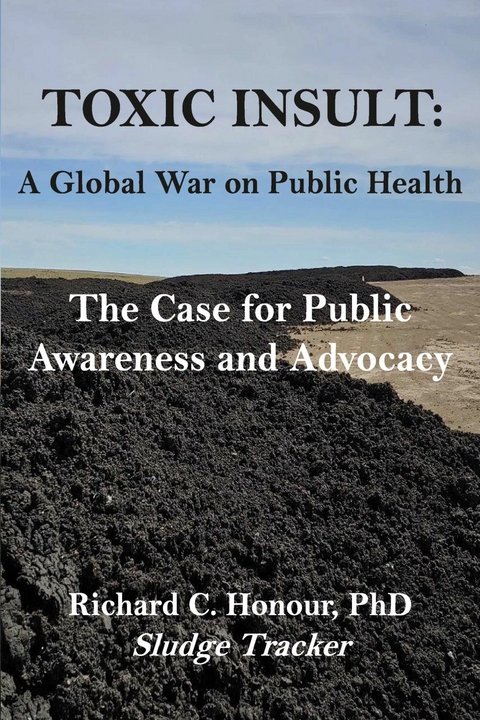
Toxic Insult: A Global War On Public Health. The Case for Public Awareness and Advocacy (eBook)
488 Seiten
Bookbaby (Verlag)
9798350987379 (ISBN)
Richard C. Honour, PhD, is a graduate of San Diego State University, San Diego, CA, with a Bachelor of Science Degree in Biology and Environmental Sciences. He then graduated from the University of California, Riverside, CA, with a PhD from the Department of Soil Microbiology and Plant Pathology with a focus on the effects of soil amendments and environmental factors on sexual reproduction in plant pathogenic Oomycetes. He conducted harsh environment microbiology work in Antarctica for NASA/JPL/National Science Foundation, followed by Environmental Impact Assessment and Statement work for the U.S. Department of Energy on Tribal Lands in the Western U.S. Next he was Executive Director of a Cancer Clinical Trials Research Program in Pediatric Oncology at the University of Southern California, School of Medicine, LAC/USC Cancer Center, Los Angeles, CA. He held executive positions with biotechnology firms on new drug discovery and development. His specialties include drug discovery and development, the emergence of antimicrobial resistance in pathogenic bacterial and fungal infectious agents, antibiotic-resistant and antifungal agent-resistant infectious agents, new cancer drug discovery, Toxics and toxic waste investigations and the adverse impacts thereof upon Human and environmental health. Richard C. Honour, PhD, is coauthor of Sludge Tracker, Toxicus ad Infinitum. The Adverse Impact of Land-Disposed Toxic Sewage Sludge on Human and Environmental Health.© Richard C. Honour, PhD & Michelle Horkings-Brigham, 2022, Horus Publishing, Inc., McKenna, WA.
The purpose of this Book is to enhance public awareness of the toxic impacts of land-disposed toxic sewage sludge and other hazardous wastes on our air, food, soil, water and health. The Author reveals how land-disposed and water-disposed toxic wastes contribute to chronic disease and climate crisis, and threaten biodiversity, sustainability and global security.
Critical Issues
Toxic Insult:1 A Global War on Public Health.2 The Case for Public Awareness3 and Advocacy,© reveals the risk, threat and harm that originate from critical infrastructure, yet target public health and safety. Safety and Security of our air, food, soil and water are issues of Public Health and Global Security.4
Analysis by the Federal Bureau of Investigation (FBI), the Cybersecurity and Infrastructure Agency (CISA), the Environmental Protection Agency (EPA) and the National Security Agency (NSA) highlight ongoing malicious cyber activity by known and unknown actors targeting Information Technology (IT) and Operational Technology (OT) networks, systems and devices of the U.S. Water and Wastewater Systems (WWS) Sector.
Environmental contamination and pollution are matters of Public Health. Soil, food and water reliability represent our most critical local, national and global security issues in light of an expanding global population, and with an accelerating climate crisis, all as matters of Public Health.
Wastewater Treatment Plants, landfills, plant and animal agriculture, industry and nuclear wastes are local, regional and global sources of toxic wastes and pathogens,5 all of which adversely impact human and environmental health. Nearly all antibiotic-resistant bacterial infectious agents,6 and nearly all antifungal agent-resistant fungal infectious agents, and the genetic determinants thereof, originate in wastewater treatment plants. These evolutionary forces continue in light of the discovery and development of new and ineffectual anti-infective agents.
What’s more, nearly all non-communicable diseases (NCDs)7 and chronic diseases8 are incited by long-term exposure to low levels of environmental contaminants and pollutants.9
There is a great need for citizen advocacy, activism and action, whereby citizens are alert to toxic insults and infectious agent threats conferred upon them and upon the living environment by products of domestic and industrial wastewater treatment plants, legacy and extant landfills, plant and animal agriculture, and industry. Public Awareness and Advocacy are essential to assuring the correction of industrial and political subversion of the critical matters of human and environmental health.
There must be identifiable municipal, county, state and federal programs and their officials and managers, with direct responsibility for assuring air, food, soil and water safety and security. Agencies responsible for permitting, monitoring, managing and reporting the release, presence and fate of toxic wastes and pathogens into the environment and for reporting the adverse impacts on human and environmental health resulting therefrom, have neither performed their tasks well nor fulfilled their responsibilities.
The public stands alone as the hapless victim, awaiting the next catastrophe.
Prevention is more effective than any form of costly remedial response.
Responsibility must be assigned to elected officials, agencies and industry, and to their executives, directors and managers who bear accountability for policies, practices or acts of environmental contamination and pollution that adversely impact the security of our air, food, soil and water, and that incite adverse human and environmental health consequences therefrom.
Do Not Underestimate the Power of Public Awareness
Do Not Underestimate the Power of Citizens
Prevention Beats Treatment
Toxic Wastes are Toxic!
Toxics kill!
References
1 Toxic Insult: Exposure to harmful substances or conditions that damage cells, tissues, or organs.
2 Public Health: The science and practice of protecting and improving the health of people and their communities by promoting healthy lifestyles, research on disease and injury prevention, plus the detection and control of diseases at the population level.
3 Public Awareness: The degree to which people are well-informed or knowledgeable about an issue or topic that affects society as a whole.
4 Global Security: Traditionally encompasses measures to protect nations and populations from threats, which historically included military conflict, terrorism and political instability. In the modern context, Global Security includes non-traditional threats, such as environmental contamination and pollution, for these concerns have far-reaching and potentially destabilizing effects on nations and populations worldwide. Global Security aims to create a safer, healthier and more stable world where environmental and public health threats are minimized and populations are protected from the destabilizing effects of contamination and pollution and the global scourge of endless and continuing antibiotic resistance.
5 Pathogens: Microbes that have an inherent capability to cause disease.
6 Infectious Agents: Microbes that may or may not cause disease, as a function of host immunity, virulence and environmental conditions.
7 Non-Communicable Diseases (NCDs): Diseases: i) Not caused by infectious agents, ii) that typically have a prolonged course and iii) are not spread from person to person. NCDs include Cardiovascular Disease, Cancer, Chronic Respiratory Disease, Diabetes and others.
8 Chronic Disease: Long-lasting disease with slow progression that may be communicable or non-communicable. “Chronic” refers to duration and persistence of disease, not to cause, and may include Hypertension, Chronic kidney disease, Chronic liver disease or Chronic infectious diseases. While all chronic diseases can be NCDs, not all NCDs are chronic. The distinction lies in non-transmissibility for NCDs and duration for Chronic Diseases.
9 Environmental Contaminants and Pollutants:
Environmental Contaminants:
Substances that cause harm to human health, ecosystems and the natural balance of the environment when introduced to the environment.
Substances present in the environment at levels higher than natural levels as a result of human activities and that can be naturally occurring or synthetic.
Environmental Contaminants:
Heavy Metals (lead, mercury, arsenic, chromium, etc.) are released to the environment through industrial processes, mining and flawed waste disposal;
Pesticides are chemicals used in agriculture to control pests and which can drain into water bodies and contaminate soils and waters;
Pharmaceutical and Personal Care Products (PPCPs) include medications, shampoos and lotions that enter environments through sewage and wastewater;
Endocrine Disruptors like Bisphenol A (BPA) and Phthalates in plastics are chemicals that interfere with hormonal systems.
Environmental Pollutants: Subset of contaminants with negative impacts on the environment and human health. These substances are usually introduced in quantities that cause immediate or long-term harm and include:
Air Pollutants, Chemicals like carbon monoxide, sulfur dioxide, nitrogen oxides, particulate matter and volatile organic compounds (VOCs) are released from vehicles, industrial processes and burning fossil fuels
Water Pollutants, such as oil from spills, plastic debris, heavy metals, pesticides and industrial effluents that degrade water quality.
Soil Pollutants, include chemicals, pesticides, heavy metals and industrial wastes that reduce soil fertility and enter the food chain.
Environmental Contaminants and Pollutants Impact:
Human Health, by inciting respiratory diseases, cardiovascular diseases, cancers, neurological disorders and endocrine disruption;
Ecosystems, which incite lost biodiversity, disrupted food chains and habitat degradation. Climate Crisis effects include pollutants (greenhouse gases CO2, Methane), which contribute to global warming and climate crisis. Efforts to control and mitigate the impact of these substances involve regulations and Public Awareness campaigns to reduce emissions, enhance waste management methods and promote sustainable practices.
Environmental contaminants and pollutants incite chronic diseases:
Air Pollutants: Particulate Matter (PM2.5, PM10), Ozone (O3), Nitrogen Dioxide (NO2), Sulfur Dioxide (SO2), Carbon Monoxide (CO), Volatile Organic Compounds (VOCs), Benzene, Formaldehyde, Toluene.
Water Contaminants: Heavy Metals (Lead, Mercury, Arsenic); Industrial Chemicals (Polychlorinated Biphenyls (PCBs), Dioxins and Furans; Pesticides and Herbicides (Atrazine and Glyphosate). Pharmaceuticals and Personal Care Products (Antibiotics, Hormones, Per- and Polyfluoroalkyl Substances (PFAS); Chlorine and Chloramine Byproducts (Trihalomethanes (THMs)).
Microbial Contaminants: Bacteria (E. coli), Viruses (Norovirus, Hepatitis A), Protozoa (Cryptosporidium, Giardia).
Soil Contaminants: Heavy Metals (Lead, Arsenic, Cadmium, Mercury);...
| Erscheint lt. Verlag | 4.2.2025 |
|---|---|
| Sprache | englisch |
| Themenwelt | Technik |
| ISBN-13 | 9798350987379 / 9798350987379 |
| Informationen gemäß Produktsicherheitsverordnung (GPSR) | |
| Haben Sie eine Frage zum Produkt? |
 EPUB (Ohne DRM)
Größe: 1,1 MB
Digital Rights Management: ohne DRM
Dieses eBook enthält kein DRM oder Kopierschutz. Eine Weitergabe an Dritte ist jedoch rechtlich nicht zulässig, weil Sie beim Kauf nur die Rechte an der persönlichen Nutzung erwerben.
Dateiformat: EPUB (Electronic Publication)
EPUB ist ein offener Standard für eBooks und eignet sich besonders zur Darstellung von Belletristik und Sachbüchern. Der Fließtext wird dynamisch an die Display- und Schriftgröße angepasst. Auch für mobile Lesegeräte ist EPUB daher gut geeignet.
Systemvoraussetzungen:
PC/Mac: Mit einem PC oder Mac können Sie dieses eBook lesen. Sie benötigen dafür die kostenlose Software Adobe Digital Editions.
eReader: Dieses eBook kann mit (fast) allen eBook-Readern gelesen werden. Mit dem amazon-Kindle ist es aber nicht kompatibel.
Smartphone/Tablet: Egal ob Apple oder Android, dieses eBook können Sie lesen. Sie benötigen dafür eine kostenlose App.
Geräteliste und zusätzliche Hinweise
Buying eBooks from abroad
For tax law reasons we can sell eBooks just within Germany and Switzerland. Regrettably we cannot fulfill eBook-orders from other countries.
aus dem Bereich