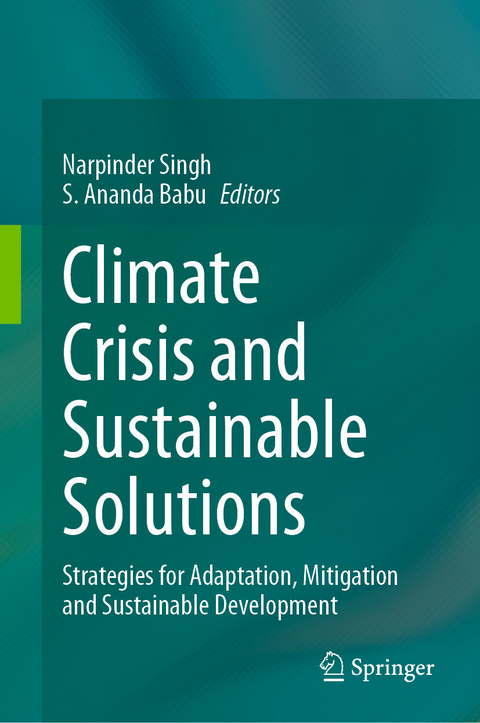
Climate Crisis and Sustainable Solutions (eBook)
356 Seiten
Springer Nature Singapore (Verlag)
978-981-97-7110-3 (ISBN)
This contributed volume dives into the critical intersection of climate adaptation, vulnerability to hazards, and the imperative of decarbonization in fortifying global food and nutritional security. This comprehensive exploration aims to shed light on the challenges our food systems face in the wake of climate change, and the strategies required to ensure resilience and sustainability.
In the face of escalating climate challenges, securing sustenance demands a comprehensive approach. Climate adaptation becomes paramount, as agricultural systems struggle with increased vulnerabilities to various hazards. From extreme weather events to shifting precipitation patterns, the agricultural landscape is under constant threat. The decarbonization imperative emerges as a critical strategy, addressing the dual goals of mitigating climate change and enhancing food and nutritional resilience. By reducing carbon emissions and transitioning to sustainable practices, we not only contribute to global climate goals but also fortify food systems against environmental shocks. This integrated approach acknowledges the intricate connections between climate, agriculture, and nutrition, emphasizing the urgency of concerted efforts to ensure a resilient and sustainable future for food production and consumption. This book includes in-depth case studies from different regions, showcasing the diverse impacts of climate change on food systems.
This book will integrate insights from multiple disciplines such as environmental science, agriculture, policy studies, and community engagement, providing a more holistic understanding of the issues at hand. It will serve as a valuable resource for students, researchers and practitioners seeking in-depth knowledge on these interconnected topics.
This contributed volume dives into the critical intersection of climate adaptation, vulnerability to hazards, and the imperative of decarbonization in fortifying global food and nutritional security. This comprehensive exploration aims to shed light on the challenges our food systems face in the wake of climate change, and the strategies required to ensure resilience and sustainability.In the face of escalating climate challenges, securing sustenance demands a comprehensive approach. Climate adaptation becomes paramount, as agricultural systems struggle with increased vulnerabilities to various hazards. From extreme weather events to shifting precipitation patterns, the agricultural landscape is under constant threat. The decarbonization imperative emerges as a critical strategy, addressing the dual goals of mitigating climate change and enhancing food and nutritional resilience. By reducing carbon emissions and transitioning to sustainable practices, we not only contribute to global climate goals but also fortify food systems against environmental shocks. This integrated approach acknowledges the intricate connections between climate, agriculture, and nutrition, emphasizing the urgency of concerted efforts to ensure a resilient and sustainable future for food production and consumption. This book includes in-depth case studies from different regions, showcasing the diverse impacts of climate change on food systems.This book will integrate insights from multiple disciplines such as environmental science, agriculture, policy studies, and community engagement, providing a more holistic understanding of the issues at hand. It will serve as a valuable resource for students, researchers and practitioners seeking in-depth knowledge on these interconnected topics.
| Erscheint lt. Verlag | 26.11.2024 |
|---|---|
| Zusatzinfo | XVIII, 356 p. 131 illus., 118 illus. in color. |
| Sprache | englisch |
| Themenwelt | Naturwissenschaften ► Biologie ► Ökologie / Naturschutz |
| Technik ► Umwelttechnik / Biotechnologie | |
| Weitere Fachgebiete ► Land- / Forstwirtschaft / Fischerei | |
| Schlagworte | climate adaptation • Climate Change Impact • Climate Hazards • decarbonization • disaster risk reduction • Food and Nutritional Resilience • global food systems • sustainable agriculture |
| ISBN-10 | 981-97-7110-2 / 9819771102 |
| ISBN-13 | 978-981-97-7110-3 / 9789819771103 |
| Informationen gemäß Produktsicherheitsverordnung (GPSR) | |
| Haben Sie eine Frage zum Produkt? |
 PDF (Wasserzeichen)
DRM: Digitales Wasserzeichen
Dieses eBook enthält ein digitales Wasserzeichen und ist damit für Sie personalisiert. Bei einer missbräuchlichen Weitergabe des eBooks an Dritte ist eine Rückverfolgung an die Quelle möglich.
Dateiformat: PDF (Portable Document Format)
Mit einem festen Seitenlayout eignet sich die PDF besonders für Fachbücher mit Spalten, Tabellen und Abbildungen. Eine PDF kann auf fast allen Geräten angezeigt werden, ist aber für kleine Displays (Smartphone, eReader) nur eingeschränkt geeignet.
Systemvoraussetzungen:
PC/Mac: Mit einem PC oder Mac können Sie dieses eBook lesen. Sie benötigen dafür einen PDF-Viewer - z.B. den Adobe Reader oder Adobe Digital Editions.
eReader: Dieses eBook kann mit (fast) allen eBook-Readern gelesen werden. Mit dem amazon-Kindle ist es aber nicht kompatibel.
Smartphone/Tablet: Egal ob Apple oder Android, dieses eBook können Sie lesen. Sie benötigen dafür einen PDF-Viewer - z.B. die kostenlose Adobe Digital Editions-App.
Buying eBooks from abroad
For tax law reasons we can sell eBooks just within Germany and Switzerland. Regrettably we cannot fulfill eBook-orders from other countries.
aus dem Bereich