


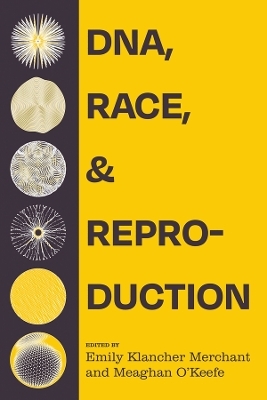
DNA, Race, and Reproduction
Seiten
2025
University of California Press (Verlag)
978-0-520-39958-7 (ISBN)
University of California Press (Verlag)
978-0-520-39958-7 (ISBN)
A free ebook version of this title is available through Luminos, University of California Press's Open Access publishing program. Visit www.luminosoa.org to learn more.
DNA, Race, and Reproduction helps readers inside and outside of academia evaluate and engage with the current genomic landscape. It brings together expertise in law, medicine, religion, history, anthropology, philosophy, and genetics to examine how scientists, medical professionals, and laypeople use genomic concepts to construct racial identity and make or advise reproductive decisions, often at the same moment. It critically and accessibly interrogates how DNA figures in the reproduction of racialized bodies and the racialization of reproduction and examines the privileged position from which genomic knowledge claims to speak about human bodies, societies, and activities. The volume begins from the premise that reproduction, regardless of the means, forces a confrontation between biomedical, scientific, and popular understandings of genetics, and that those understandings are often racialized. It therefore centers reproduction as both a site of analysis and an analytic lens.
DNA, Race, and Reproduction helps readers inside and outside of academia evaluate and engage with the current genomic landscape. It brings together expertise in law, medicine, religion, history, anthropology, philosophy, and genetics to examine how scientists, medical professionals, and laypeople use genomic concepts to construct racial identity and make or advise reproductive decisions, often at the same moment. It critically and accessibly interrogates how DNA figures in the reproduction of racialized bodies and the racialization of reproduction and examines the privileged position from which genomic knowledge claims to speak about human bodies, societies, and activities. The volume begins from the premise that reproduction, regardless of the means, forces a confrontation between biomedical, scientific, and popular understandings of genetics, and that those understandings are often racialized. It therefore centers reproduction as both a site of analysis and an analytic lens.
Emily Klancher Merchant is Associate Professor of Science and Technology Studies at the University of California, Davis. She is the author of Building the Population Bomb. Meaghan O’Keefe is Associate Professor of Religious Studies and leads the Medical Humanities Program at the University of California, Davis.
| Erscheinungsdatum | 19.12.2024 |
|---|---|
| Zusatzinfo | 4 b-w illustrations, 3 color illustrations, 1 table |
| Verlagsort | Berkerley |
| Sprache | englisch |
| Maße | 152 x 229 mm |
| Gewicht | 408 g |
| Themenwelt | Naturwissenschaften ► Biologie |
| Technik ► Umwelttechnik / Biotechnologie | |
| ISBN-10 | 0-520-39958-7 / 0520399587 |
| ISBN-13 | 978-0-520-39958-7 / 9780520399587 |
| Zustand | Neuware |
| Informationen gemäß Produktsicherheitsverordnung (GPSR) | |
| Haben Sie eine Frage zum Produkt? |
Mehr entdecken
aus dem Bereich



aus dem Bereich
Wegweiser vom Honigtau zum Waldhonig
Buch | Hardcover (2024)
Leopold Stocker Verlag
CHF 36,40
Ein aktueller Blick auf das Mosaik der Menschwerdung
Buch | Hardcover (2025)
Springer (Verlag)
CHF 69,95
Warum gesunde Böden das Klima retten, deinen Körper heilen und die …
Buch | Hardcover (2025)
Wiley-VCH (Verlag)
CHF 41,95


