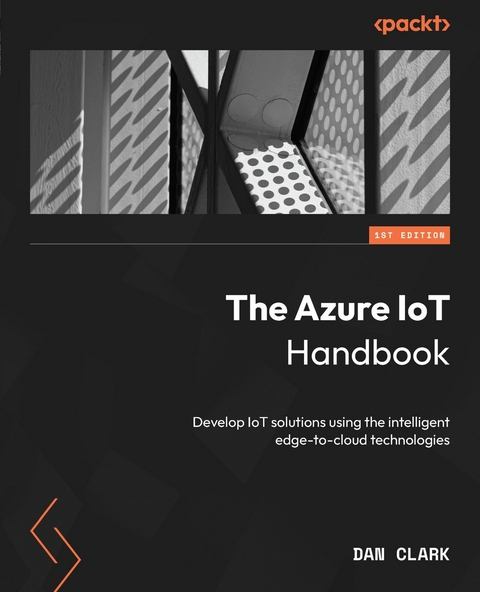
Azure IoT Handbook (eBook)
248 Seiten
Packt Publishing (Verlag)
978-1-83763-136-0 (ISBN)
With the rise of cloud-based computing, deploying IoT systems has become more cost-effective for businesses. This transformation has led to developers and architects shouldering the responsibility of creating, managing, and securing these systems, even if they are new to the IoT technology. The Azure IoT Handbook is a comprehensive introduction to quickly bring you up to speed in this rapidly evolving landscape.
Starting with the basic building blocks of any IoT system, this book guides you through mobile device management and data collection using an IoT hub. You'll explore essential tools for system security and monitoring. Following data collection, you'll delve into real-time data analytics using Azure Stream Analytics and view real-time streaming on a Power BI dashboard. Packed with real-world examples, this book covers common IoT use as well.
By the end of this IoT book, you'll know how to design and develop IoT solutions leveraging intelligent edge-to-cloud technologies implemented on Azure.
The essential guide to architecting Azure IoT systems-from provisioning and monitoring IoT sensors to analyzing real-time streaming dataKey FeaturesDevelop a complete IoT system in Azure with the help of hands-on examplesDiscover how to create, secure, and manage an enterprise-wide IoT systemLearn how to collect, analyze, and visualize streaming dataPurchase of the print or Kindle book includes a free PDF eBookBook DescriptionWith the rise of cloud-based computing, deploying IoT systems has become more cost-effective for businesses. This transformation has led to developers and architects shouldering the responsibility of creating, managing, and securing these systems, even if they are new to the IoT technology. The Azure IoT Handbook is a comprehensive introduction to quickly bring you up to speed in this rapidly evolving landscape. Starting with the basic building blocks of any IoT system, this book guides you through mobile device management and data collection using an IoT hub. You ll explore essential tools for system security and monitoring. Following data collection, you ll delve into real-time data analytics using Azure Stream Analytics and view real-time streaming on a Power BI dashboard. Packed with real-world examples, this book covers common IoT use as well. By the end of this IoT book, you ll know how to design and develop IoT solutions leveraging intelligent edge-to-cloud technologies implemented on Azure.What you will learnGet to grips with setting up and deploying IoT devices at scaleUse Azure IoT Hub for device management and message routingExplore Azure services for analyzing streaming dataUncover effective techniques for visualizing real-time streaming dataDelve into the essentials of monitoring and logging to secure your IoT systemGain insights into real-time analytics with Power BICreate workflows and alerts triggered by streaming dataWho this book is forThe Azure IoT Handbook is for cloud developers and architects who want to learn how to establish an IoT solution on the Azure platform. This book is equally valuable for IoT developers transitioning to Azure, encompassing tasks such as aggregating, analyzing, and visualizing real-time data streams. Basic knowledge of the C# and Python programming languages, as well as a practical understanding of data processing will help you make the most of this book. Familiarity with working with cloud-based services is also advantageous.]]>
1
An Introduction to the IoT
The Internet of Things (IoT) is rapidly transforming the way we live, work, and interact with the world around us. It has the potential to revolutionize countless industries, from manufacturing and healthcare to transportation and agriculture. With billions of interconnected devices already in use, and that number projected to grow exponentially in the coming years, understanding and harnessing the power of the IoT is becoming increasingly important. This book aims to provide a comprehensive introduction to the IoT and is arranged to guide you through setting up and securing your devices, routing and analyzing data, and then visualizing and augmenting it. Although there are no prerequisites for this book, it would be beneficial to have some experience with programming and scripting languages.
This chapter introduces you to the IoT. It introduces some common use cases for developing IoT systems and introduces you to the common components of an IoT system. You will understand the benefits of an IoT hub and its role in the IoT system. The chapter ends with a hands-on lab where you will connect a virtual IoT device to an Azure IoT hub and capture the streaming data.
In this chapter, we’re going to cover the following main topics:
- What is the IoT?
- What are some common IoT use cases?
- What are the components of an IoT system?
- Lab – setting up an IoT hub in Azure
Technical requirement
In order to complete the lab in this chapter, you will need a subscription to Azure. If you do not have access to one, you can sign up for a free trial subscription at https://azure.microsoft.com/subscription/free. This free trial will give you $200 of Azure credit to spend over the next 30 days. Take some time to explore all the free services you get with your free subscription; they are quite extensive.
What is the IoT?
If you are reading this book, you are probably somewhat aware of what the IoT is and have been tasked with an IoT project. Nonetheless, it is a good idea to look at the common components of IoT systems. The IoT is a network of connected computing devices with embedded sensors that can transfer the sensor data to the cloud for centralized data processing. These devices run the gamut of wearable devices, such as Fitbit, that track your steps and vitals to smart cars and appliances.
Once you begin planning an IoT solution, you will find that it is a complex task. Both the device side and the cloud side involve complicated implementations that provide hundreds of required features, and the security of these devices is of the utmost importance. This is where Azure comes into play. It provides a set of Platform-as-a-Service (PaaS) offerings that make creating IoT systems easier, more reliable, and secure.
Now that we know what the IoT is, let’s look at some use cases before we dive into further details.
What are some common IoT use cases?
While there are some common IoT use cases to consider, this list is getting bigger all the time. People are constantly coming up with exciting new ways to use the IoT to solve problems, and I think we are just scratching the surface of its full potential. Nevertheless, it is helpful to consider the following common use cases to get a feel for the technology:
- Agriculture: This domain is finding many ways to use the IoT. For example, smart irrigation is a popular IoT use case for farmers that provides real-time visibility; IoT sensors recognize when environmental factors, such as ground moisture, call for adjusted watering schedules and can pinpoint where water is needed.
- Predictive maintenance: Predictive maintenance sensors and software help recognize when a piece of equipment is out of date, slowing down, or malfunctioning and needs to be replaced proactively instead of reactively.
- Remote monitoring: This IoT use case allows companies to monitor sensors that are in dangerous and remote places. This is particularly helpful in industries such as mining and environmental agencies, where specialized equipment is widely distributed.
Now that we have discussed a few use cases, let’s review the common components of an IoT system.
What are the components of an IoT system?
At their core, all IoT systems are composed of things, insights, and actions. Things refers to small computing devices with embedded sensors that send data up to the cloud through a cloud gateway. The cloud gateway offers a central hub in the cloud that provides secure connectivity, telemetry, event ingestion, cloud-to-device communication, and device management functionalities. It routes the streaming data to storage for long-term analysis and to services that can analyze real-time streaming data. Once the data is processed, it is sent to reporting tools, dashboards, and automated workflows that can automatically respond to the conditions and insights garnered from the telemetry data of the devices. The following figure shows a generic IoT system:
Figure 1.1 – Basic structure of a generic IoT system
In addition to the basic components of an IoT system, many IoT solutions include subsystems for provisioning management at scale, end-to-end security, and machine learning. The following figure shows an IoT system architecture with additional subsystems:
Figure 1.2 – Adding optional subsystems to the IoT solution
As shown in the figure, Bulk Device Provisioning allows the provisioning of a large number of devices. Edge devices play an active role in managing access and controlling the flow of information. They can assist in tasks such as filtering, batching, aggregating, and buffering data, as well as translating protocols. Data Transformation refers to the manipulation or aggregation of the raw streaming data. The User Management subsystem allows the capabilities of different users and groups to be specified in the context of the actions they can perform via the applications and on the systems. Machine Learning provides the systems with the ability to perform actions based on the data, such as predictive maintenance and security alerts. In addition to supporting these subsystems, IoT systems should provide the ability to set up system-wide security and end-to-end logging and monitoring, in addition to high availability and disaster recovery for the system.
Now that we have seen the pieces that make up an IoT system, let’s see what the corresponding resources are in Azure.
Understanding the Azure IoT system
The first thing we need for an IoT system is the devices that will collect the data. These devices can be very small, such as 8-bit microcontrollers, all the way up to server-grade devices depending on the implementation requirements. There are a tremendous number of devices on the market to choose from. The key differentiators are cost, power, network access, types of sensors, and the inputs and outputs accepted.
Although not necessary, when using an IoT device on Azure it is beneficial to ensure it is an Azure Certified Device. This guarantees the device supports telemetry that will be compatible with the IoT hub and the Device Provisioning Service (DPS). It will also facilitate cloud-to-device messaging, direct methods, and device-twin updating. Microsoft maintains a catalog of Azure Certified Devices at https://devicecatalog.azure.com.
Organizations that choose Azure Certified Devices for their IoT projects benefit from reduced development time, increased security, and a more streamlined integration process when building and scaling their IoT solutions on the Azure platform. These devices are typically used in a wide range of IoT applications, including industrial automation, smart cities, healthcare, agriculture, and more.
After selecting a device, the next step is to set up an IoT hub on Azure and connect the device to it. Within Azure IoT Hub, numerous features are available to simplify device management and control. These features comprise secure communication channels that enhance data transmission and reception, the automatic resending of device messages to accommodate intermittent connectivity, and selective revocation of access rights for specific devices as required.
In the following hands-on lab, you will learn how to set up a virtual device that will send simulated data to an IoT hub you will create in Azure. Make sure you have the technical requirements in place before you start!
Lab – setting up an IoT hub in Azure
By the end of this lab, you will be able to do the following:
- Navigate the Azure portal
- Set up a resource group
- Create an IoT hub
- Create a...
| Erscheint lt. Verlag | 22.12.2023 |
|---|---|
| Sprache | englisch |
| Themenwelt | Mathematik / Informatik ► Informatik ► Datenbanken |
| Mathematik / Informatik ► Informatik ► Netzwerke | |
| Informatik ► Weitere Themen ► Hardware | |
| Technik | |
| ISBN-10 | 1-83763-136-0 / 1837631360 |
| ISBN-13 | 978-1-83763-136-0 / 9781837631360 |
| Informationen gemäß Produktsicherheitsverordnung (GPSR) | |
| Haben Sie eine Frage zum Produkt? |
 EPUB (Ohne DRM)
Digital Rights Management: ohne DRM
Dieses eBook enthält kein DRM oder Kopierschutz. Eine Weitergabe an Dritte ist jedoch rechtlich nicht zulässig, weil Sie beim Kauf nur die Rechte an der persönlichen Nutzung erwerben.
Dateiformat: EPUB (Electronic Publication)
EPUB ist ein offener Standard für eBooks und eignet sich besonders zur Darstellung von Belletristik und Sachbüchern. Der Fließtext wird dynamisch an die Display- und Schriftgröße angepasst. Auch für mobile Lesegeräte ist EPUB daher gut geeignet.
Systemvoraussetzungen:
PC/Mac: Mit einem PC oder Mac können Sie dieses eBook lesen. Sie benötigen dafür die kostenlose Software Adobe Digital Editions.
eReader: Dieses eBook kann mit (fast) allen eBook-Readern gelesen werden. Mit dem amazon-Kindle ist es aber nicht kompatibel.
Smartphone/Tablet: Egal ob Apple oder Android, dieses eBook können Sie lesen. Sie benötigen dafür eine kostenlose App.
Geräteliste und zusätzliche Hinweise
Buying eBooks from abroad
For tax law reasons we can sell eBooks just within Germany and Switzerland. Regrettably we cannot fulfill eBook-orders from other countries.
aus dem Bereich