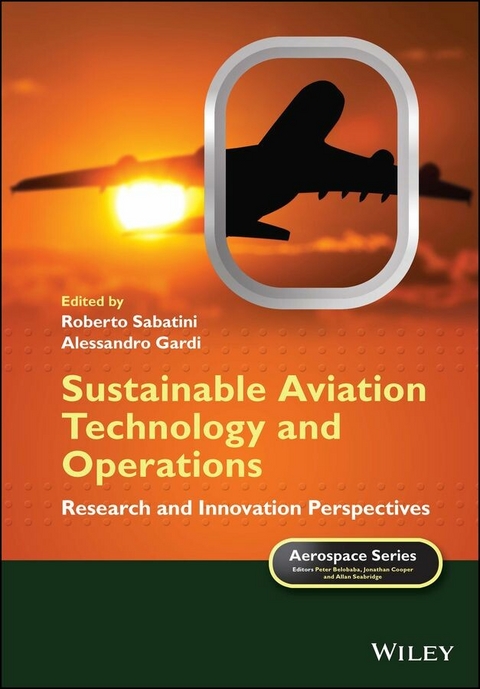
Sustainable Aviation Technology and Operations (eBook)
John Wiley & Sons (Verlag)
978-1-118-93260-5 (ISBN)
Comprehensively covers research and development initiatives to enhance the environmental sustainability of the??aviation sector
Sustainable Aviation Technology and Operations provides a comprehensive and timely outlook of recent research advances in aeronautics and air transport, with emphasis on both long-term sustainable development goals and current achievements.
This book discusses some of the most promising advances in aircraft technologies, air traffic management and systems engineering methodologies for sustainable aviation. The topics covered include: propulsion, aerodynamics, avionics, structures, materials, airspace management, biofuels and sustainable lifecycle management. The physical processes associated with various aircraft emissions - including air pollutants, noise and contrails - are presented to support the development of computational models for aircraft design, flight path optimization and environmental impact assessment. Relevant advances in systems engineering and lifecycle management processes are also covered, bridging some of the existing gaps between academic research and industry best practices. A collection of research case studies complements the book, highlighting opportunities for a timely uptake of the most promising technologies, towards a more efficient and environmentally sustainable aviation future.
Key features:
- Contains important research and industry relevant contributions from world-class experts.
- Addresses recent advances in aviation sustainability including multidisciplinary design approaches and multi-objective operational optimisation methods.
- Includes a number of research case studies, addressing propulsion, aerostructures, alternative aviation fuels, avionics, air traffic management, and sustainable lifecycle management solutions.
Sustainable Aviation Technology and Operations is an excellent book for aerospace engineers, aviation scientists, researchers and graduate students involved in the field.
Roberto Sabatini is a Professor of Aeronautics and Astronautics with three decades of industrial and academic experience in Europe, North America, Asia-Pacific and the Middle-East. His research addresses key contemporary challenges in aerospace systems design, test and certification, at the intersection between digital transformation, sustainable development and innovation management. He is an advocate of industry-focused education and a leader in research translation for economic and social advancement.
Alessandro Gardi is an Assistant Professor in Aerospace Engineering with ten years of experience in aerospace systems research and education. His research focuses on avionics, air traffic management and sustainable aviation technologies for conventional and autonomous aerospace vehicles. In this domain, he specializes in multidisciplinary and multi-objective optimization methods, with emphasis on the application of optimal control and artificial intelligence techniques to design and operational problems.
Sustainable Aviation Technology and Operations Comprehensively covers research and development initiatives to enhance the environmental sustainability of the aviation sector Sustainable Aviation Technology and Operations provides a comprehensive and timely outlook of recent research advances in aeronautics and air transport, with emphasis on both long-term sustainable development goals and current achievements. This book discusses some of the most promising advances in aircraft technologies, air traffic management and systems engineering methodologies for sustainable aviation. The topics covered include: propulsion, aerodynamics, avionics, structures, materials, airspace management, biofuels and sustainable lifecycle management. The physical processes associated with various aircraft emissions including air pollutants, noise and contrails are presented to support the development of computational models for aircraft design, flight path optimization and environmental impact assessment. Relevant advances in systems engineering and lifecycle management processes are also covered, bridging some of the existing gaps between academic research and industry best practices. A collection of research case studies complements the book, highlighting opportunities for a timely uptake of the most promising technologies, towards a more efficient and environmentally sustainable aviation future. Key features: Contains important research and industry relevant contributions from world-class experts. Addresses recent advances in aviation sustainability including multidisciplinary design approaches and multi-objective operational optimisation methods. Includes a number of research case studies, addressing propulsion, aerostructures, alternative aviation fuels, avionics, air traffic management, and sustainable lifecycle management solutions. Sustainable Aviation Technology and Operations is an excellent book for aerospace engineers, aviation scientists, researchers and graduate students involved in the field.
Roberto Sabatini is a Professor of Aeronautics and Astronautics with three decades of industrial and academic experience in Europe, North America, Asia-Pacific and the Middle-East. His research addresses key contemporary challenges in aerospace systems design, test and certification, at the intersection between digital transformation, sustainable development and innovation management. He is an advocate of industry-focused education and a leader in research translation for economic and social advancement. Alessandro Gardi is an Assistant Professor in Aerospace Engineering with ten years of experience in aerospace systems research and education. His research focuses on avionics, air traffic management and sustainable aviation technologies for conventional and autonomous aerospace vehicles. In this domain, he specializes in multidisciplinary and multi-objective optimization methods, with emphasis on the application of optimal control and artificial intelligence techniques to design and operational problems.
List of Contributors vii
About the Editors ix
About the Companion Website x
1 Sustainable Aviation: An Introduction 1
Roberto Sabatini and Alessandro Gardi
Section I Aviation Sustainability Fundamentals 29
2 Climate Impacts of Aviation 31
Yixiang Lim, Alessandro Gardi, and Roberto Sabatini
3 Noise Pollution and Other Environmental and Health Impacts of Aviation 49
Alessandro Gardi, Rohan Kapoor, Yixiang Lim, and Roberto Sabatini
Section II Systems for Sustainable Aviation 79
4 Systems Engineering Evolutions 81
Anthony Zanetti, Arun Kumar, Alessandro Gardi, and Roberto Sabatini
5 Life Cycle Assessment for Carbon Neutrality 113
Enda Crossin, Alessandro Gardi, and Roberto Sabatini
6 Air Traffic Management and Avionics Systems Evolutions 145
Alessandro Gardi, Yixiang Lim, Nichakorn Pongsakornsathien, Roberto Sabatini, and Trevor Kistan
7 Optimisation of Flight Trajectories and Airspace 165
Alessandro Gardi, Yixiang Lim, and Roberto Sabatini
Section III Aerostructures and Propulsive Technologies 213
8 Advanced Aerodynamic Configurations 215
Matthew Marino, Alessandro Gardi, Roberto Sabatini, and Yixiang Lim
9 Lightweight Structures and Advanced Materials 241
Raj Das and Joel Galos
10 Low-Emission Propulsive Technologies in Transport Aircraft 263
Kavindu Ranasinghe, Kai Guan, Alessandro Gardi, and Roberto Sabatini
11 Approved Drop-in Biofuels and Prospects for Alternative Aviation Fuels 301
Graham Dorrington
Section IV Research Case Studies 323
12 Overall Contribution of Wingtip Devices to Improving Aircraft Performance 325
Nikola Gavrilovi´c, Bosko Rasuo, Vladimir Parezanovi´c, George Dulikravich, and Jean-Marc Moschetta
13 Integration of Naturally Occurring Materials in Lightweight Aerostructures 343
Jose Silva, Alessandro Gardi, and Roberto Sabatini
14 Distributed and Hybrid Propulsion: A Tailored Design Methodology 355
Martin Burston, Kavindu Ranasinghe, Alessandro Gardi, Vladimir Parezanovic, Rafic Ajaj, and Roberto Sabatini
15 Integration of Hybrid-Electric Propulsion Systems in Small Unmanned Aircraft 393
Jacob Sliwinski, Alessandro Gardi, Matthew Marino, and Roberto Sabatini
16 Benefits and Challenges of Liquid Hydrogen Fuels for Commercial Transport Aircraft 417
Stephen Rondinelli, Alessandro Gardi, and Roberto Sabatini
17 Multi-Objective Trajectory Optimisation Algorithms for Avionics and ATM Systems 433
Alessandro Gardi, Roberto Sabatini, and Trevor Kistan
18 Energy-Optimal 4D Guidance and Control for Terminal Descent Operations 457
Yixiang Lim, Alessandro Gardi, and Roberto Sabatini
19 Contrail Modelling for 4D Trajectory Optimisation 475
Yixiang Lim, Alessandro Gardi, and Roberto Sabatini
20 Trajectory Optimisation to Minimise the Combined Radiative Forcing Impacts of Contrails and CO2 499
Yixiang Lim, Alessandro Gardi, Roberto Sabatini, and Trevor Kistan
21 The W Life Cycle Model - San Francisco Airport Case Study 509
Anthony Zanetti, Alessandro Gardi, and Roberto Sabatini
22 Conclusions and Future Research 517
Roberto Sabatini and Alessandro Gardi
Index 523
1
Sustainable Aviation: An Introduction
Roberto Sabatini and Alessandro Gardi
Department of Aerospace Engineering, Khalifa University of Science and Technology, Abu Dhabi, UAE
School of Engineering, RMIT University, Melbourne, Victoria, Australia
The aviation industry plays an important role in the global economy. Before the recent crisis caused by the Coronavirus Disease 2019 (COVID‐19) pandemic, air transport alone contributed US$2.7 trillion to the world GDP (3.6%) and supported 65.5 million jobs globally [1]. For several decades, the sector has been on an almost uninterrupted exponential growth trajectory, which demonstrated a remarkable resilience to economic and geo‐political crises. According to forecasts predating the COVID‐19 pandemic, air traffic was expected to double approximately every 25 years [2]. It was also expected that without intervention, aviation would contribute about 6‐10% of all human‐induced climate change by 2050 [3], while half of all air traffic would take off, land, or transit through the Asia‐Pacific region. In the period 2019–2020, the COVID‐19 pandemic has led to a reduction in global passenger traffic in the order of 60% (2,703 million passengers) and the airlines experienced a loss of approximately US$372 billion of gross passenger operating revenues [4, 5]. The situation gradually improved in 2021 and 2022, with a recovery of about 11% and 31% in the number of passengers, reflected by revenue losses of about US$324 billion in 2021 and US$175 in 2022 (compared to 2019).
While sending this book to the press, COVID‐19 travel restrictions have been removed in most regions and the latest reports of the International Civil Aviation Organization (ICAO) show that both domestic and international air travel are resuming pre-pandemic levels [5–7]. Factors that could contribute to accelerate further the aviation market recovery and growth include: (1) an increasing demand for commercial Unmanned Aircraft Systems (UAS) and Advanced Air Mobility (AAM) services; (2) technological advances in eco‐friendly design solutions (i.e., aerospace vehicles, propulsion, digital flight systems and ground-based infrastructure); (3) uptake of sustainable aviation technologies and associated evolutions of legal frameworks, design/certification standards and operational procedures. In the longer term, the expansion of commercial aviation operations above Flight Level 6‐0‐0 (FL 600) and the introduction of point‐to‐point space transport could also contribute to a further evolution and expansion of the aviation sector [8, 9]. Factors that could hinder the growth of the aviation sector include airlines' bankruptcy, order cancellations, increased cyber threats, insufficient investment in aviation infrastructure, increasing geopolitical tensions, escalation of conflicts, and global recession, many of which are being observed in the post pandemic era.
Over the years, the concomitance of several economic, technological and environmental factors has put the sector under intense and growing pressure. Key factors include the rising costs of operations and fuels; a spiking global competition in relation to the rapid liberalisation of the market and the proliferation of alternative forms of high‐speed transport; increased air traffic; capacity bottlenecks at major airports; the need to reduce the environmental impact and achieve greater sustainability in airport and aircraft operations; as well as new regulations and processes to cater for new generation aircraft that are technologically more complex and have new maintenance requirements.
To ensure the aviation sector continues to play a vital role in supporting economic development and employment worldwide, the future air transportation system needs to become even more customer‐orientated, time and cost‐efficient, secure, and environmentally sustainable than it is today. One of the main priorities for the sector is the rapid uptake of digital technology and, in particular, Cyber‐Physical Systems (CPS) that can support the introduction of higher levels of automation, increased airspace capacity, and significant advances in environmental sustainability of both passenger and cargo air transport operations. From the environmental sustainability perspective, over the past two decades, various countries have set unprecedented performance targets for future air transport, such as greenhouse gas emissions having to halve by 2020 (relative to 2000) and be completely offset by 2050 [10]. Adding to these demands are the rising fuel costs, which have increased fourfold in the past 20 years, impeding the profitability of both large airlines and smaller aviation companies.
1.1 Sustainability Fundamentals
Integrating Environmental Susitainability (ES) into business models and associated business functions is an open challenge faced by many industry sectors, including aviation. There is no universally accepted definition for ES while a thematic search of the existing literature1 shows a prevailing emphasis on the responsible interaction with the environment to avoid depletion or degradation of natural resources and allow for long‐term environmental quality both locally and globally. Until recently, businesses have not been held accountable for the cost of damages made to the environment and society. One possible approach is to quantify the environmental degradation caused by a sector and the required measures for restoring the pre‐existing conditions. The damages and restoration costs include various sector‐specific contributing factors. However, in most cases, such costs are associated air/land/sea pollution and noise. As proposed by [11], the following equation could be used to quantify the cost of environmental degradations caused by economic development activities:
where EDT is the total environmental degradation (in dollars), N is the population (total number of people), GN is the Gross National Product (GNP) per capita (in dollars) and EDG is the environmental degradation per unit of GNP.
So, according to Eq. (1.1), an increase in population would require a proportional reduction of the environmental degradation per unit of GNP in order to maintain the overall environmental degradation at the same level. Similarly, a growth of the GNP per capita would require a commensurate reduction of the environmental degradation per unit of GNP. However, in practice, this equation finds a limited applicability as it does not capture the need for a balance between environmental impacts and the social benefits to be obtained by economic development [12]. Efforts to address these limitations of early quantitative approaches have placed emphasis on the concept of Sustainable Development (SD). The United Nation (UN) 1987 Bruntland Report2 [13] describes SD as: “Development that meets the needs of the present without compromising the ability of future generations to meet their own needs.”
The concepts of sustainability and SD have been subjects for extensive research and political debate form many years. What is sustainable can be illustrated using the so‐called Triple Bottom Line (TBL) or the “Three Spheres of Sustainability” concept originally introduced by [14]. A modern reinterpretation of this concept is shown in Figure 1.1.
Figure 1.1 The three spheres of sustainability. Inspired by [14].
One of the advantages of the TBL approach is that it recognises the importance of delivering sustainable economic value to shareholders by focusing on the bottom line profit that is generated. It also considers that if an enterprise is to be sustainable, it also needs to evaluate its performance in terms of the corresponding environmental and social bottom lines [15]. Several variants of the TBL model have been proposed but essentially this remains a valid high‐level reference still utilised in current research work addressing the development of SBM in the corporate environment. The concepts of corporate social responsibility and environmental accountability have been widely discussed in the literature [16, 17]. The main function of the TBL approach is to make corporations aware of the environmental and social values they add or destroy in the world, in addition to the economic value they add [18–20].
Over the years, TBL has become a dominant approach in terms of corporate reporting [21, 22] and companies adopting TBL reporting have introduced significant changes to the way they do, or at least think about, business [23]. The three major criticisms of the TBL approach are in its measurement approach, its lack of integration across the three dimensions and its main function as a compliance mechanism rather than a basis for the development of SBM [24]. To tackle these limitations and the growing need for more specific approaches applicable to different industry sectors, researchers have proposed various approaches to SBM (or business models for sustainability). However, early attempts to develop and introduce SBM design methodologies where hindered by a strong focus on compliance (with existing laws and regulations) and responsible management (i.e., achieving some kind of perceived or measurable optimal balance...
| Erscheint lt. Verlag | 6.9.2023 |
|---|---|
| Reihe/Serie | Aerospace Series |
| Aerospace Series (PEP) | Aerospace Series (PEP) |
| Mitarbeit |
Herausgeber (Serie): Peter Belobaba, Jonathan Cooper, Allan Seabridge |
| Sprache | englisch |
| Themenwelt | Technik ► Maschinenbau |
| Schlagworte | Aeronautic & Aerospace Engineering • Aircraft design optimisation • Aircraft life cycle management • Aircraft pollution Aircraft noise Contrails • Aircraft Systems • Air Traffic Management • Biofuels • Electrical & Electronics Engineering • Elektrotechnik u. Elektronik • Energie • Energieeffizienz • Energy • energy efficiency • Environmental policies • Luftfahrttechnik • Luft- u. Raumfahrttechnik • Maschinenbau • mechanical engineering • Nachhaltigkeit • Systems Engineering & Management • Systemtechnik • Systemtechnik u. -management • Trajectory optimization |
| ISBN-10 | 1-118-93260-9 / 1118932609 |
| ISBN-13 | 978-1-118-93260-5 / 9781118932605 |
| Informationen gemäß Produktsicherheitsverordnung (GPSR) | |
| Haben Sie eine Frage zum Produkt? |
 EPUB (Adobe DRM)
Kopierschutz: Adobe-DRM
Adobe-DRM ist ein Kopierschutz, der das eBook vor Mißbrauch schützen soll. Dabei wird das eBook bereits beim Download auf Ihre persönliche Adobe-ID autorisiert. Lesen können Sie das eBook dann nur auf den Geräten, welche ebenfalls auf Ihre Adobe-ID registriert sind.
Details zum Adobe-DRM
Dateiformat: EPUB (Electronic Publication)
EPUB ist ein offener Standard für eBooks und eignet sich besonders zur Darstellung von Belletristik und Sachbüchern. Der Fließtext wird dynamisch an die Display- und Schriftgröße angepasst. Auch für mobile Lesegeräte ist EPUB daher gut geeignet.
Systemvoraussetzungen:
PC/Mac: Mit einem PC oder Mac können Sie dieses eBook lesen. Sie benötigen eine
eReader: Dieses eBook kann mit (fast) allen eBook-Readern gelesen werden. Mit dem amazon-Kindle ist es aber nicht kompatibel.
Smartphone/Tablet: Egal ob Apple oder Android, dieses eBook können Sie lesen. Sie benötigen eine
Geräteliste und zusätzliche Hinweise
Buying eBooks from abroad
For tax law reasons we can sell eBooks just within Germany and Switzerland. Regrettably we cannot fulfill eBook-orders from other countries.
aus dem Bereich