Zum Hauptinhalt springen
Nicht aus der Schweiz? Besuchen Sie lehmanns.de
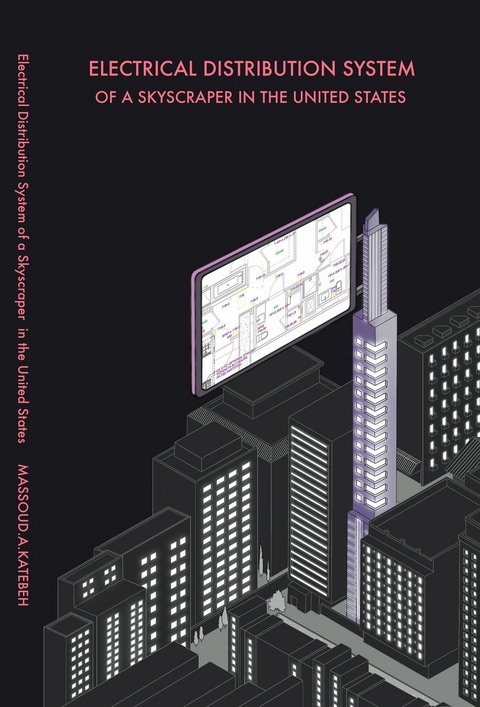
Electrical Distribution System of a Skyscraper in the United States -  Gabriel Cipriani Katebeh,  Massoud A. Katebeh

Electrical Distribution System of a Skyscraper in the United States (eBook)

eBook Download: EPUB
2023 | 1. Auflage
305 Seiten
Bookbaby (Verlag)
979-8-3509-1516-7 (ISBN)
Systemvoraussetzungen
48,78 inkl. MwSt
(CHF 47,65)
Der eBook-Verkauf erfolgt durch die Lehmanns Media GmbH (Berlin) zum Preis in Euro inkl. MwSt.
  • Download sofort lieferbar
  • Zahlungsarten anzeigen
This book is a mathematical model of an Electrical Distribution in a high-rise building with the National Electrical Code - NFPA 70 - requirement. There are many ways to estimate and calculate the electrical loads for designing an electrical distribution system in a super-tall building. The author presents one of these methods in a quick and easy-to-understand format that benefits all experience levels in the electrical engineering field. The book introduces a new calculation method and provides step-by-step instructions for designing electrical distribution. Integration of the Medium Voltage in design assists in satisfying the voltage drop requirement in the electrical distribution system. This book compares the process between the early stage of a project (Schematic Design), where we have only assumption and anticipation, to the last part of the project (Construction Document), where there are actual electrical loads.

Gabriel Cipriani Katebeh is co-author
This book is a mathematical model of an Electrical Distribution in a high-rise building with the National Electrical Code - NFPA 70 - requirement. There are many ways to estimate and calculate the electrical loads for designing an electrical distribution system in a super-tall building. The author presents one of these methods in a quick and easy-to-understand format that benefits all experience levels in the electrical engineering field. The book introduces a new calculation method and provides step-by-step instructions for designing electrical distribution. Integration of the Medium Voltage in design assists in satisfying the voltage drop requirement in the electrical distribution system. This book compares the process between the early stage of a project (Schematic Design), where we have only assumption and anticipation, to the last part of the project (Construction Document), where there are actual electrical loads.

3 – Building Typology
To illustrate our example, let’s assume we are dealing with a skyscraper located in New York City. The building is 80 floors above grade at an approximate elevation of + 1100 feet (335 meters) and an approximate area of half a million square feet (46,451.5 square meters). There are three floors below the ground floor and an additional tower up to the roof. The building is considered a mixed-use development consisting of commercial office floors, residential floors, and amenities.
This high-rise building comprises (80) floors above grade and (3) floors below grade. The building program will comprise residential (floor 14 to floor 76), commercial office space (floor 03 to floor 10), an enclosed), Amenities (Floor 12 to Floor 13) and amenities in the cellar floors.
Based on what was described in Table 1.1, IBC would classify this building as occupancy R-2 with an occupancy B accessory for the commercial spaces and S for Storage. Since this building is in a flood zone, ownership has elected to move the main electrical and fire pump rooms from the cellar to the second floor to maintain building operation in the event of a flood.
Table 3.1 – Building Program Summary.
Floor Program
Subcellar 2 Storages
Ejector Room
Gas Meter Room
Refuse Storage
Subcellar 1 Locker Rooms
Toilets
Mechanical Plant Area
Amenity
Cellar Swimming Pool
Steam Room
Sauna
Storm Detention Room
Toilets
Managers Room
Floor 1 Residential Lobby
Commercial Lobby
Bike Storage
Mail Room
Floor 1 Mezzanine Laundry room
Bike Storage
Mechanical
Floor 2 Mechanical
Electrical Utility Room
Generator Room
Floor 03 to Floor 10 Commercial Office
Floor 11 Mechanical
Floor 11 Mezzanine Mechanical
Floor 12 to Floor 13 Amenity
Floor 14 to Floor 33 Residential Tier-1 – (5) Apartments per floor
Floor 34 Mechanical
Floor 34 Mezzanine Mechanical
Floor 35 to Floor 51 Residential Tier-2 – (3) Apartments per floor
Floor 52 Mechanical
Floor 53 to Floor 63 Residential Tier-2 – (3) Apartments per floor
Floors 64th, 66th, 68th, and 70th Residential Tier-2-Lower – (3) Apartments per floor
Floors 65th, 67th, 69th, and 71st Residential Tier-2-Upper – (3) Apartments per floor
Floor 72 to Floor 76 Residential Tier-3 – (2) Apartments per floor
Floor 77 Mechanical
Floor 78 Mechanical
Floor 79 Roof
3.1.1 – Subcellar 02 to Cellar – Amenity
At subcellar 02 is for Refuse storage with additional general storage. Subcellar 01 contains mechanical space for swimming pool equipment, locker room facilities, and general mechanical space. The cellar houses amenities made up of a lap pool with adjacent spa and sauna facilities. The storm detention tank is located on the cellar floor on the west side of the building. We also see incoming water, fire main, gas, sewer, electrical data, and telecom. Transfers for the utilities happen in the high-level cellar to allow for ease of external connections and to facilitate the rise up the building. The high level of the cellar level will require an MEP (Mechanical, Electrical, and Plumbing) distribution zone to accommodate the service transfers from the main utility and distribution rooms to each of the main building cores and risers.
3.1.2 – Floor 01 – Lobby
The street entry floor will comprise of (2) building main entrance lobbies consisting of (1) residential and (1) commercial entry. To accommodate the different entry types, there will be two banks of elevators; (1) bank to service the commercial spaces and (1) bank to service the residential tower. On the east side of the first floor, a double-height space will be provided for the cellar floor swimming pool with east-facing glazing on the east side of the double-height void.
3.1.3 – Floor 1M and Floor 2 – Mechanical Floor
Floor 1M will comprise of the double-height entrance lobby void on the west side, bike storage adjacent to the core on the North side, and laundry at the southeast corner. HVAC (Heating, Ventilation, and Air Conditioning) equipment will be located on the east side of the level adjacent to the façade.
Floor 02 will house the two switchgears in an electrical room on the west side of the building with louvers on the west elevation. On Floor 02, HVAC stair pressurization and toilet exhaust fans will be provided. A domestic water tank will also be provided on Floor 02, complete with pumps for domestic and fire protection. The domestic hot water heat exchangers and associated recirculation pump will be located on Floor 02.
3.1.4 – Floor 03 to Floor 10 – Commercial
The commercial spaces will be designed as a “white box.” The MEP (Mechanical, Electrical, and Plumbing) systems will be designed to provide code minimum services to this space along with capped-off ventilation and condenser water connections for an extension by the tenant as part of the tenant fit-out works.
3.1.5 – Floor 11 and Floor 11M – Mechanical Floor
Floor 11 will be a dedicated mechanical floor containing plumbing, domestic hot water heat exchangers, pumps, pressure relief valves, and hot water recirculation pumps. Floor 11 will accommodate the energy recovery units north of the core. The heating hot water boilers are located on the east side of the building, and both the heating hot water primary and secondary pumps will be in the same room as the boilers.
Primary and secondary electrical panels will be located on Floor 11 to serve the mechanical floors and to allow distribution to the above floors. Floor 11M will contain exhaust fans and stair pressurization fans.
3.1.6 – Floor 12 to Floor 13 – Amenity
Floor 12 is considered an Amenity floor. Floor 13 is considered a gymnasium where the type of gymnasium equipment and the maximum occupancy is to be further developed.
3.1.7 – Floor 14 to Floor 33 – Residential Apartments
The project’s residential component commences on Floor 14 and is divided into three Tiers separated by mechanical zones. Each Tier will be considered a distribution zone for the MEP services. Tier-1 encompasses Floor 14 to Floor 33 with five apartments per floor. The apartments will be arranged around a central core on the south of the building, connected by a common corridor that passes through the core. The cooling towers are located on the roof, which will result in the condenser water express riser pipework at the top of the building being of a greater diameter than in the lower zones of the building. Residential Tier fans and energy recovery units will be located at the mechanical floor above the residential Tier. The ducts will drop down from the mechanical floor within the residential Tier and reduce in size as the duct drops down to the lower floors.
3.1.8 – Floor 34 and Floor 34M – Mechanical Floors
Floor 34 will be a dedicated mechanical floor which will contain plumbing domestic hot water heat exchangers, pumps, pressure relief valves, and hot water recirculation pumps. Floor 34 will accommodate the energy recovery units, pressurization fans, and exhaust fans located north of the core. Heating hot water heat exchangers, heating hot water pumps, and condenser water pumps...

Erscheint lt. Verlag 12.8.2023
Sprache englisch
Themenwelt Technik Elektrotechnik / Energietechnik
ISBN-13 979-8-3509-1516-7 / 9798350915167
Informationen gemäß Produktsicherheitsverordnung (GPSR)
Haben Sie eine Frage zum Produkt?
EPUBEPUB (Ohne DRM)
Größe: 40,4 MB

Digital Rights Management: ohne DRM
Dieses eBook enthält kein DRM oder Kopier­schutz. Eine Weiter­gabe an Dritte ist jedoch rechtlich nicht zulässig, weil Sie beim Kauf nur die Rechte an der persön­lichen Nutzung erwerben.

Dateiformat: EPUB (Electronic Publication)
EPUB ist ein offener Standard für eBooks und eignet sich besonders zur Darstellung von Belle­tristik und Sach­büchern. Der Fließ­text wird dynamisch an die Display- und Schrift­größe ange­passt. Auch für mobile Lese­geräte ist EPUB daher gut geeignet.

Systemvoraussetzungen:
PC/Mac: Mit einem PC oder Mac können Sie dieses eBook lesen. Sie benötigen dafür die kostenlose Software Adobe Digital Editions.
eReader: Dieses eBook kann mit (fast) allen eBook-Readern gelesen werden. Mit dem amazon-Kindle ist es aber nicht kompatibel.
Smartphone/Tablet: Egal ob Apple oder Android, dieses eBook können Sie lesen. Sie benötigen dafür eine kostenlose App.
Geräteliste und zusätzliche Hinweise

Buying eBooks from abroad
For tax law reasons we can sell eBooks just within Germany and Switzerland. Regrettably we cannot fulfill eBook-orders from other countries.

Mehr entdecken
aus dem Bereich
Kommunikationssysteme mit EIB/KNX, LON, BACnet und Funk

von Thomas Hansemann; Christof Hübner; Kay Böhnke

eBook Download (2025)
Hanser (Verlag)
CHF 38,95
Verfahren zur Berechnung elektrischer Energieversorgungsnetze

von Karl Friedrich Schäfer

eBook Download (2023)
Springer Fachmedien Wiesbaden (Verlag)
CHF 107,45