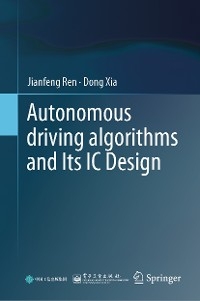
Autonomous driving algorithms and Its IC Design (eBook)
294 Seiten
Springer Nature Singapore (Verlag)
978-981-99-2897-2 (ISBN)
With the rapid development of artificial intelligence and the emergence of various new sensors, autonomous driving has grown in popularity in recent years. The implementation of autonomous driving requires new sources of sensory data, such as cameras, radars, and lidars, and the algorithm processing requires a high degree of parallel computing. In this regard, traditional CPUs have insufficient computing power, while DSPs are good at image processing but lack sufficient performance for deep learning. Although GPUs are good at training, they are too “power-hungry,” which can affect vehicle performance. Therefore, this book looks to the future, arguing that custom ASICs are bound to become mainstream. With the goal of ICs design for autonomous driving, this book discusses the theory and engineering practice of designing future-oriented autonomous driving SoC chips.
The content is divided into thirteen chapters, the first chapter mainly introduces readers to the current challenges and research directions in autonomous driving. Chapters 2–6 focus on algorithm design for perception and planning control. Chapters 7–10 address the optimization of deep learning models and the design of deep learning chips, while Chapters 11-12 cover automatic driving software architecture design. Chapter 13 discusses the 5G application on autonomous drving.
This book is suitable for all undergraduates, graduate students, and engineering technicians who are interested in autonomous driving.
With the rapid development of artificial intelligence and the emergence of various new sensors, autonomous driving has grown in popularity in recent years. The implementation of autonomous driving requires new sources of sensory data, such as cameras, radars, and lidars, and the algorithm processing requires a high degree of parallel computing. In this regard, traditional CPUs have insufficient computing power, while DSPs are good at image processing but lack sufficient performance for deep learning. Although GPUs are good at training, they are too "e;power-hungry,"e; which can affect vehicle performance. Therefore, this book looks to the future, arguing that custom ASICs are bound to become mainstream. With the goal of ICs design for autonomous driving, this book discusses the theory and engineering practice of designing future-oriented autonomous driving SoC chips.The content is divided into thirteen chapters, the first chapter mainly introduces readers to the current challenges and research directions in autonomous driving. Chapters 2-6 focus on algorithm design for perception and planning control. Chapters 7-10 address the optimization of deep learning models and the design of deep learning chips, while Chapters 11-12 cover automatic driving software architecture design. Chapter 13 discusses the 5G application on autonomous drving. This book is suitable for all undergraduates, graduate students, and engineering technicians who are interested in autonomous driving.
| Erscheint lt. Verlag | 9.8.2023 |
|---|---|
| Zusatzinfo | XXI, 294 p. 1 illus. |
| Sprache | englisch |
| Themenwelt | Informatik ► Grafik / Design ► Digitale Bildverarbeitung |
| Informatik ► Theorie / Studium ► Algorithmen | |
| Informatik ► Theorie / Studium ► Künstliche Intelligenz / Robotik | |
| Informatik ► Weitere Themen ► Hardware | |
| Technik ► Elektrotechnik / Energietechnik | |
| Technik ► Fahrzeugbau / Schiffbau | |
| Technik ► Maschinenbau | |
| Schlagworte | Autonomous Driving • chip design • Deep learning • SLAM • software/hardware codesgin |
| ISBN-10 | 981-99-2897-4 / 9819928974 |
| ISBN-13 | 978-981-99-2897-2 / 9789819928972 |
| Informationen gemäß Produktsicherheitsverordnung (GPSR) | |
| Haben Sie eine Frage zum Produkt? |
 PDF (Wasserzeichen)
DRM: Digitales Wasserzeichen
Dieses eBook enthält ein digitales Wasserzeichen und ist damit für Sie personalisiert. Bei einer missbräuchlichen Weitergabe des eBooks an Dritte ist eine Rückverfolgung an die Quelle möglich.
Dateiformat: PDF (Portable Document Format)
Mit einem festen Seitenlayout eignet sich die PDF besonders für Fachbücher mit Spalten, Tabellen und Abbildungen. Eine PDF kann auf fast allen Geräten angezeigt werden, ist aber für kleine Displays (Smartphone, eReader) nur eingeschränkt geeignet.
Systemvoraussetzungen:
PC/Mac: Mit einem PC oder Mac können Sie dieses eBook lesen. Sie benötigen dafür einen PDF-Viewer - z.B. den Adobe Reader oder Adobe Digital Editions.
eReader: Dieses eBook kann mit (fast) allen eBook-Readern gelesen werden. Mit dem amazon-Kindle ist es aber nicht kompatibel.
Smartphone/Tablet: Egal ob Apple oder Android, dieses eBook können Sie lesen. Sie benötigen dafür einen PDF-Viewer - z.B. die kostenlose Adobe Digital Editions-App.
Buying eBooks from abroad
For tax law reasons we can sell eBooks just within Germany and Switzerland. Regrettably we cannot fulfill eBook-orders from other countries.
aus dem Bereich