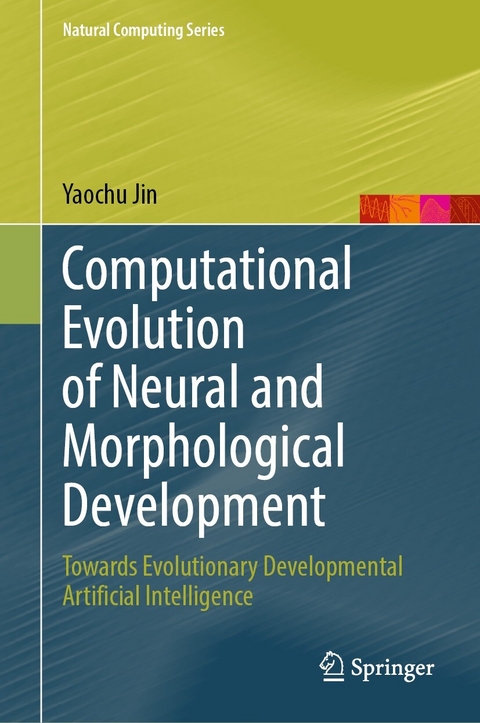
Computational Evolution of Neural and Morphological Development (eBook)
295 Seiten
Springer Nature Singapore (Verlag)
978-981-99-1854-6 (ISBN)
This book provides a basic yet unified overview of theory and methodologies for evolutionary developmental systems. Based on the author’s extensive research into the synergies between various approaches to artificial intelligence including evolutionary computation, artificial neural networks, and systems biology, it also examines the inherent links between biological intelligence and artificial intelligence.
The book begins with an introduction to computational algorithms used to understand and simulate biological evolution and development, including evolutionary algorithms, gene regulatory network models, multi-cellular models for neural and morphological development, and computational models of neural plasticity. Chap. 2 discusses important properties of biological gene regulatory systems, including network motifs, network connectivity, robustness and evolvability. Going a step further, Chap. 3 presents methods for synthesizing regulatory motifs from scratch and creating more complex regulatory dynamics by combining basic regulatory motifs using evolutionary algorithms. Multi-cellular growth models, which can be used to simulate either neural or morphological development, are presented in Chapters 4 and 5. Chap. 6 examines the synergies and coupling between neural and morphological evolution and development. In turn, Chap. 7 provides preliminary yet promising examples of how evolutionary developmental systems can help in self-organized pattern generation, referred to as morphogenetic self-organization, highlighting the great potentials of evolutionary developmental systems. Finally, Chap. 8 rounds out the book, stressing the importance and promise of the evolutionary developmental approach to artificial intelligence.
Featuring a wealth of diagrams, graphs and charts to aid in comprehension, this book offers a valuable asset for graduate students, researchers and practitioners who are interested in pursuing a different approach to artificial intelligence.
This book provides a basic yet unified overview of theory and methodologies for evolutionary developmental systems. Based on the author's extensive research into the synergies between various approaches to artificial intelligence including evolutionary computation, artificial neural networks, and systems biology, it also examines the inherent links between biological intelligence and artificial intelligence. The book begins with an introduction to computational algorithms used to understand and simulate biological evolution and development, including evolutionary algorithms, gene regulatory network models, multi-cellular models for neural and morphological development, and computational models of neural plasticity. Chap. 2 discusses important properties of biological gene regulatory systems, including network motifs, network connectivity, robustness and evolvability. Going a step further, Chap. 3 presents methods for synthesizing regulatory motifs from scratch and creating more complex regulatory dynamics by combining basic regulatory motifs using evolutionary algorithms. Multi-cellular growth models, which can be used to simulate either neural or morphological development, are presented in Chapters 4 and 5. Chap. 6 examines the synergies and coupling between neural and morphological evolution and development. In turn, Chap. 7 provides preliminary yet promising examples of how evolutionary developmental systems can help in self-organized pattern generation, referred to as morphogenetic self-organization, highlighting the great potentials of evolutionary developmental systems. Finally, Chap. 8 rounds out the book, stressing the importance and promise of the evolutionary developmental approach to artificial intelligence.Featuring a wealth of diagrams, graphs and charts to aid in comprehension, this book offers a valuable asset for graduate students, researchers and practitioners who are interested in pursuing a different approach to artificial intelligence.
| Erscheint lt. Verlag | 14.7.2023 |
|---|---|
| Reihe/Serie | Natural Computing Series | Natural Computing Series |
| Zusatzinfo | XI, 295 p. 164 illus., 131 illus. in color. |
| Sprache | englisch |
| Themenwelt | Informatik ► Theorie / Studium ► Künstliche Intelligenz / Robotik |
| Technik ► Bauwesen | |
| Schlagworte | Evolution • Evolutionary Developmental Systems • gene regulatory networks • Morphogenesis • Neural development • Self-Organization • swarm robotics |
| ISBN-10 | 981-99-1854-5 / 9819918545 |
| ISBN-13 | 978-981-99-1854-6 / 9789819918546 |
| Informationen gemäß Produktsicherheitsverordnung (GPSR) | |
| Haben Sie eine Frage zum Produkt? |
 PDF (Wasserzeichen)
DRM: Digitales Wasserzeichen
Dieses eBook enthält ein digitales Wasserzeichen und ist damit für Sie personalisiert. Bei einer missbräuchlichen Weitergabe des eBooks an Dritte ist eine Rückverfolgung an die Quelle möglich.
Dateiformat: PDF (Portable Document Format)
Mit einem festen Seitenlayout eignet sich die PDF besonders für Fachbücher mit Spalten, Tabellen und Abbildungen. Eine PDF kann auf fast allen Geräten angezeigt werden, ist aber für kleine Displays (Smartphone, eReader) nur eingeschränkt geeignet.
Systemvoraussetzungen:
PC/Mac: Mit einem PC oder Mac können Sie dieses eBook lesen. Sie benötigen dafür einen PDF-Viewer - z.B. den Adobe Reader oder Adobe Digital Editions.
eReader: Dieses eBook kann mit (fast) allen eBook-Readern gelesen werden. Mit dem amazon-Kindle ist es aber nicht kompatibel.
Smartphone/Tablet: Egal ob Apple oder Android, dieses eBook können Sie lesen. Sie benötigen dafür einen PDF-Viewer - z.B. die kostenlose Adobe Digital Editions-App.
Buying eBooks from abroad
For tax law reasons we can sell eBooks just within Germany and Switzerland. Regrettably we cannot fulfill eBook-orders from other countries.
aus dem Bereich