Protection of Modern Power Systems (eBook)
John Wiley & Sons (Verlag)
978-1-118-81722-3 (ISBN)
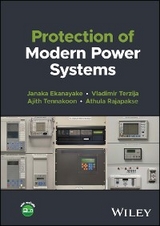
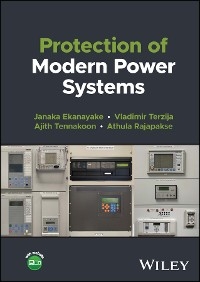
Familiarize yourself with the cutting edge of power system protection technology
All electrical systems are vulnerable to faults, whether produced by damaged equipment or the cumulative breakdown of insulation. Protection from these faults is therefore an essential part of electrical engineering, and the various forms of protection that have developed constitute a central component of any course of study related to power systems. Particularly in recent decades, however, the demands of decarbonization and reduced dependency on fossil fuels have driven innovation in the field of power systems. With new systems and paradigms come new kinds of faults and new protection needs, which promise to place power systems protection once again at the forefront of research and development.
Protection of Modern Power Systems offers the first classroom-ready textbook to fully incorporate developments in renewable energy and 'smart' power systems into its overview of the field. It begins with a comprehensive guide to the principles of power system protection, before surveying the systems and equipment used in modern protection schemes, and finally discussing new and emerging protection paradigms. It promises to become the standard text in power system protection classrooms.
Protection of Modern Power Systems readers will also find:
- Treatment of the new faults and protection paradigms produced by the introduction of new renewable generators
- Discussion of SmartGrids-intelligently-controlled active systems designed to integrate renewable energy into the power system-and their protection needs
- Detailed exploration of Synchronized Measurement Technology and Intelligent Electronic Devices
- Accompanying website to include Solutions Manual for instructors
Protection of Modern Power Systems is an essential resource for students, researchers, and system engineers looking for a working knowledge of this critical subject.
Janaka Ekanayake, Ph.D. is a Senior Professor and the Chair of Electrical and Electronic Engineering of the University of Peradeniya, Sri Lanka. He is a Visiting Professor at the Institute of Energy at Cardiff University, UK, and an Honorary Professor of the University of Wollongong, Australia. He has published widely on intelligent electronic devices, renewable energy and power systems.
Vladimir Terzija is a Professor of Newcastle University, UK. Prior to that he was a Full Professor and the Head of Laboratory of Modern Energy Systems at Skoltech, Moscow, Russian Federation. He has worked in the field of power system protection for over 25 years. He has published widely on power system protection and WAMPAC and is a member of the IEEE.
Ajith Tennakoon is a Senior Power Systems Engineer for Vysus Group, Australia, involved in grid connection studies fowr renewable energy sources. He has extensive experience in Power System protection and has been heading the Transmission Network protection in Sri Lanka. Previously he was a senior protection engineer engaged in design and implementation of Generator protection systems in Sri Lanka.
Athula Rajapakse is a Professor at the University of Manitoba, Canada. He leads the Intelligent Power Grid Laboratory at the University of Manitoba and has conducted a wide range of research related to power system protection, wide area protection and control, protection of future HVDC grids, and grid integration of renewable energy.
Janaka Ekanayake, Ph.D. is a Senior Professor and the Chair of Electrical and Electronic Engineering of the University of Peradeniya, Sri Lanka. He is a Visiting Professor at the Institute of Energy at Cardiff University, UK, and an Honorary Professor of the University of Wollongong, Australia. He has published widely on intelligent electronic devices, renewable energy and power systems. Vladimir Terzija is a Professor of Newcastle University, UK. Prior to that he was a Full Professor and the Head of Laboratory of Modern Energy Systems at Skoltech, Moscow, Russian Federation. He has worked in the field of power system protection for over 25 years. He has published widely on power system protection and WAMPAC and is a member of the IEEE. Ajith Tennakoon is a Senior Power Systems Engineer for Vysus Group, Australia, involved in grid connection studies fowr renewable energy sources. He has extensive experience in Power System protection and has been heading the Transmission Network protection in Sri Lanka. Previously he was a senior protection engineer engaged in design and implementation of Generator protection systems in Sri Lanka. Athula Rajapakse is a Professor at the University of Manitoba, Canada. He leads the Intelligent Power Grid Laboratory at the University of Manitoba and has conducted a wide range of research related to power system protection, wide area protection and control, protection of future HVDC grids, and grid integration of renewable energy.
1
Review of Principles of Protection
1.1 Introduction
The power system is an interconnected network of electrical components that are designed, installed, commissioned, and operated in accordance with international/national standards to provide a reliable supply of electricity to meet a country’s electrical energy needs. Irrespective of how such components are installed, whether in the open air, underground, in-house, or even underwater, they will be subjected to vagaries of weather, undesired human action, accidents, and natural calamities. All of these, as well as the defects or abnormalities in the components themselves, can disturb the smooth operation of the power system, creating blackouts or brownouts or even causing damage to property, equipment, and human life.
Therefore, it has become mandatory to commission automatic devices that can detect such abnormal situations in the power system and prevent or clear such abnormalities discriminatively as quickly as possible to facilitate normal operation. These automatic devices are popularly known as protective relays and the selection and coordination of such relays or protective relaying have become an indispensable part of the operation of power systems.
1.2 Historical Development
Even from the very early days of the development of industrial power systems, which usually consisted of a small generator supplying a local load, the aspect of protection has been foremost in the minds of engineers.
The first protection scheme employed to protect the industrial power system was a man, the machine minder! It was his job to watch the ammeter, sniff occasionally, feel the conductors, and at the first sign of smoke, open a great knife switch on the wall, stand back, and waff out the arc with his cloth cap. However, with the continuing development of the electricity industry, the requirement for an automatic device to detect and isolate the faulty part of the power system became an urgent necessity. The first such automatic device was the fuse. These are still being used in distribution systems.
Centralised electricity generation, interconnection of power systems, and the high level of reliability demanded by the users forced the engineers to develop this branch of engineering from the primitive level of manual monitoring to unbelievable heights within a period of little more than a century.
1.3 Faults, Fault Currents, Voltages, and Protection
Faults and abnormal conditions are a common occurrence in any part of the power system, which constitutes electrical equipment based on varying operating principles, from generators, transformers, transmission lines, circuit breakers, and many others. Such abnormalities often cause very high currents to flow, liberating a large amount of heat at the point of fault and creating voltage drops in the system.
1.3.1 Types of Faults
Types of electrical faults that can befall a power system are varied and can be categorised as short circuits, open circuits, inter-turn faults, and abnormalities due to operational errors.
Short circuits can arise in any power system component due to an abnormal connection of one or more phases to one another or earth or both. Open circuits could also occur in any power system component and the most common are joint failures and improper closing or opening of a circuit breaker or isolator legs. Inter-turn faults or short circuits between adjacent turns of the same windings of a phase are common in transformers and generators. Human or operational errors could occur when operating the power system due to erroneous operations carried out by operational staff, which may result in short circuits, open circuits, or power quality issues.
1.3.2 Currents and Voltages under Fault Situations and Protection
All electrical faults involving short circuits or open circuits can be primarily divided into two categories; namely, balanced or symmetrical faults and unbalanced or unsymmetrical faults. Symmetrical components have to be used to analyse the latter. Such currents and voltages are the only information extracted from the power system for the protection relays to perform their duty of detecting faulty parts and isolating the same discriminatively.
The most severe fault in a power system is the short circuit; this can be three-phase, phase-to-phase, or one or more phases involving the ground. In these situations, the Electro-Motive Force (EMF) is shorted by the impedances of the power system components up to the fault, and the resulting fault current will depend on
- Type of fault: three-phase, phase-to-phase, single-phase
- Position of the fault, as to how far down the system
- Neutral earthing
- Generation connected and the internal EMFs of the machines
- Power system configuration
Fault currents and voltages under different fault conditions are given in Tables 1.1 and 1.2 respectively [1]. In the table Z1, Z2, and Z3 are positive, negative, and zero sequence impedances of the network, calculated from a single equivalent source having EMF E to the faulty point.
Table 1.1 Fault currents for different faults.
| Fault | Phase sequence components | Phase current values |
| I 1 | I 2 | I 3 | I a | I b | I c |
| Three-phase | 0 | 0 |
| Phase-to-phase | 0 | 0 |
| Single-phase to earth | 0 | 0 |
| Two phases to earth | 0 |
| Phase-to-phase + Phase-to-earth |
| where Ia, Ib, and Ic are phase currents and I1, I2, and I3 are positive, negative, and zero sequence components; a= -0.5+j0.866. |
Table 1.2 Voltages under different faults.
| Fault | Phase sequence components | Phase voltage values |
| V 1 | V 2 | V 3 | V a | V b | V c |
| Three-phase | 0 | 0 | 0 | 0 | 0 | 0 |
| Phase-to-phase | 0 |
| Single-phase to earth | 0 |
| Two phases to earth | 0 | 0 |
| Phase-to-phase + Phase-to-earth | 0 |
| where Va, Vb, and Vc are phase currents and V1, V2, and V3 are positive, negative, and zero sequence components |
1.4 Fault Current Contribution from Generators
A protection engineer should be aware of the fault current contributions from the different types of generators. A few decades ago, power systems were fed mainly with synchronous generators, but today the situation is vastly different, with other types of generators becoming important contributors to generation. A detailed analysis of the fault current contributions from generators that are employed in conventional plants and distributed generation plants is given in Chapter 4.
1.5 Philosophy of Protection Relaying
The primary objective of a protection relaying system is to detect faulty power system components or abnormal situations prevailing in a power system and to initiate action to isolate the appropriate system elements. This is applicable for all parts of the power system whether it is generation, transmission, or distribution. In order to fulfil this primary objective, protection philosophy shall be defined to achieve the following:
- Ensuring continuity of electricity supply.
- Facilitating normal operation by maintaining dynamic and steady state stability.
- Preventing or mitigating equipment damage.
- Minimising equipment outage times.
- Minimising system outage times.
- Minimising the extent of areas affected by outages.
- Providing data related to the faulty item/abnormal operation.
A protective relaying system alone cannot accomplish this in isolation, but it should have the ability to fulfil these in association with the other features...
| Erscheint lt. Verlag | 12.6.2023 |
|---|---|
| Sprache | englisch |
| Themenwelt | Naturwissenschaften ► Physik / Astronomie |
| Technik ► Elektrotechnik / Energietechnik | |
| Schlagworte | climate change • decarbonization • Electrical Engineering • electrical faults • Electrical Insulation • Electrical Power • electricity • electric power systems • Elektrische Energietechnik • Energie • Energietechnik • Energy • Power system protection • Power Systems • Power Technology & Power Engineering • renewable energy • Smart Grid • Smart Technology |
| ISBN-10 | 1-118-81722-2 / 1118817222 |
| ISBN-13 | 978-1-118-81722-3 / 9781118817223 |
| Informationen gemäß Produktsicherheitsverordnung (GPSR) | |
| Haben Sie eine Frage zum Produkt? |
 EPUB (Adobe DRM)
Kopierschutz: Adobe-DRM
Adobe-DRM ist ein Kopierschutz, der das eBook vor Mißbrauch schützen soll. Dabei wird das eBook bereits beim Download auf Ihre persönliche Adobe-ID autorisiert. Lesen können Sie das eBook dann nur auf den Geräten, welche ebenfalls auf Ihre Adobe-ID registriert sind.
Details zum Adobe-DRM
Dateiformat: EPUB (Electronic Publication)
EPUB ist ein offener Standard für eBooks und eignet sich besonders zur Darstellung von Belletristik und Sachbüchern. Der Fließtext wird dynamisch an die Display- und Schriftgröße angepasst. Auch für mobile Lesegeräte ist EPUB daher gut geeignet.
Systemvoraussetzungen:
PC/Mac: Mit einem PC oder Mac können Sie dieses eBook lesen. Sie benötigen eine
eReader: Dieses eBook kann mit (fast) allen eBook-Readern gelesen werden. Mit dem amazon-Kindle ist es aber nicht kompatibel.
Smartphone/Tablet: Egal ob Apple oder Android, dieses eBook können Sie lesen. Sie benötigen eine
Geräteliste und zusätzliche Hinweise
Buying eBooks from abroad
For tax law reasons we can sell eBooks just within Germany and Switzerland. Regrettably we cannot fulfill eBook-orders from other countries.
aus dem Bereich