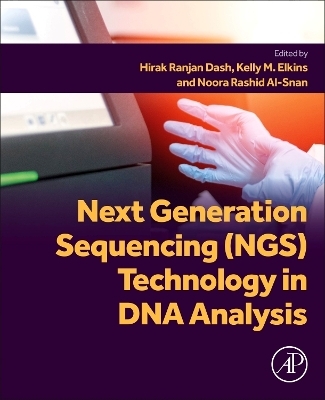
Next Generation Sequencing (NGS) Technology in DNA Analysis
Academic Press Inc (Verlag)
978-0-323-99144-5 (ISBN)
With chapter contributions from an international array of experts and the inclusion of practical case studies, this book is a useful reference for academicians and researchers in genetics, biotechnology, bioinformatics, biology, and medicine as well as forensic DNA scientists and practitioners who aim to learn, use, apply, and validate NGS-based technologies.
Hirak Ranjan Dash is a Researcher for the Forensic Science Laboratory at India’s National Institute of Technology. His expertise is in the field of environmental and forensic microbiology, DNA fingerprinting, microbial phylogeny and diversity, genetics, bioremediation, degradation of biological materials and applied microbiology. He has authored many publications, including articles, book chapters, and books. Dr. Elkins is Assistant Professor of Chemistry at Towson University where she teaches in the Masters of Science in Forensic Chemistry Program. Previously, she was the Director of Forensic Science and Assistant Professor of Chemistry at Metropolitan State College of Denver. She has her Bachelor of Science in Biology, Bachelor of Arts in Chemistry and her PhD in Chemistry with an emphasis on Biochemistry. Focused on the Forensic DNA field, she has developed a network of contacts in crime laboratories throughout Colorado and the Four Corners region and looks forward to extending her network in the Baltimore/DC area. Dr. Noora Rashid Al-Snan is the Head of Biology/DNA Forensic Laboratory for the Directorate of Forensic Science, Ministry of Interior, Kingdom of Bahrain. She has a BSc degree in Molecular Biology –Biochemistry from Kuwait University, an MSc in Medical Biotechnology from Arabian Gulf University, and her PhD in Molecular Medicine from Arabian Gulf University specializing in Medical Genetics.
SECTION 1 Useful applications of NGS-based forensic DNA analysis
1. Transition of capillary electrophoresis to next generation sequencing for forensic DNA analysis: Need of the hour
2. Using conventional STR technology in analyzing biological transfer evidence
3. Overview of NGS platforms and technological advancements for forensic applications
4. Processing of biological samples for forensic NGS analysis
5. Commercial kits commonly used for NGS based forensic DNA analysis
6. Applications of nanopore sequencing for forensic analysis
7. Microhaplotypes analysis for human identification using next-generation sequencing (NGS)
8. Tools and techniques of using NGS technology in population studies
SECTION 2 Useful applications of NGS-based forensic DNA analysis
9. Applications of NGS in analysis of autosomal STRs
10. Differentiating monozygotic twins using NGS
11. Application of NGS in maternal genome analysis in ancient human remains
12. Application of NGS technology for parentage testing and relatedness analysis
13. Forensic relevance of SNP analysis in next-generation sequencing
14. Forensic analysis of hair using NGS technology
15. Forensic DNA phenotyping using next-generation sequencing
16. Forensic DNA phenotyping in the next-generation sequencing era
17. Forensic applications of epigenetic (DNA methylation) markers through NGS
18. Forensic applications of NGS-based microRNA analysis
19. NGS profiling of water and soil microbial DNA in forensic science
20. Applications of NGS in analysis of challenging samples
21. Detection of human body fluid through mRNA analysis using NGS
22. NGS-based detection and differentiation of forensically relevant body fluids using conventional, molecular, and microbial techniques
23. Application of next-generation sequencing technology and investigative genetic genealogy to cold cases
SECTION 3 Challenges in implementing NGS in forensic laboratories
24. Troubleshooting and challenges of Next-generation sequencing technology in forensic use
25. Validation of NGS for casework at forensic DNA laboratories
26. Challenges in using genetic genealogy in forensics
27. The role of artificial intelligence and machine learning in NGS
28. Ethical issues of forensic application of NGS technology
29. Ethical, legal, and social challenges of next-generation sequencing technologies (NGS) in forensic criminal identification
| Erscheinungsdatum | 03.11.2023 |
|---|---|
| Verlagsort | Oxford |
| Sprache | englisch |
| Maße | 191 x 235 mm |
| Gewicht | 1220 g |
| Themenwelt | Naturwissenschaften ► Biologie ► Biochemie |
| Naturwissenschaften ► Biologie ► Genetik / Molekularbiologie | |
| Naturwissenschaften ► Physik / Astronomie ► Angewandte Physik | |
| Technik ► Umwelttechnik / Biotechnologie | |
| ISBN-10 | 0-323-99144-0 / 0323991440 |
| ISBN-13 | 978-0-323-99144-5 / 9780323991445 |
| Zustand | Neuware |
| Informationen gemäß Produktsicherheitsverordnung (GPSR) | |
| Haben Sie eine Frage zum Produkt? |
aus dem Bereich