Principles of Superconducting Quantum Computers (eBook)
384 Seiten
John Wiley & Sons (Verlag)
978-1-119-75074-1 (ISBN)
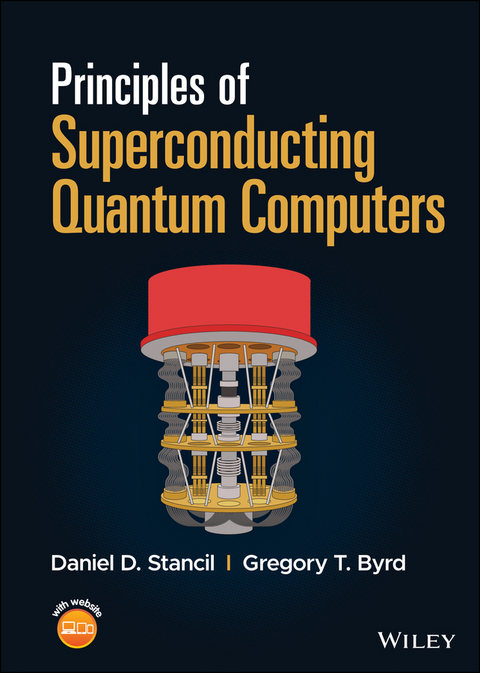
In Principles of Superconducting Quantum Computers, a pair of distinguished researchers delivers a comprehensive and insightful discussion of the building of quantum computing hardware and systems. Bridging the gaps between computer science, physics, and electrical and computer engineering, the book focuses on the engineering topics of devices, circuits, control, and error correction.
Using data from actual quantum computers, the authors illustrate critical concepts from quantum computing. Questions and problems at the end of each chapter assist students with learning and retention, while the text offers descriptions of fundamentals concepts ranging from the physics of gates to quantum error correction techniques.
The authors provide efficient implementations of classical computations, and the book comes complete with a solutions manual and demonstrations of many of the concepts discussed within. It also includes:
* A thorough introduction to qubits, gates, and circuits, including unitary transformations, single qubit gates, and controlled (two qubit) gates
* Comprehensive explorations of the physics of single qubit gates, including the requirements for a quantum computer, rotations, two-state systems, and Rabi oscillations
* Practical discussions of the physics of two qubit gates, including tunable qubits, SWAP gates, controlled-NOT gates, and fixed frequency qubits
* In-depth examinations of superconducting quantum computer systems, including the need for cryogenic temperatures, transmission lines, S parameters, and more
Ideal for senior-level undergraduate and graduate students in electrical and computer engineering programs, Principles of Superconducting Quantum Computers also deserves a place in the libraries of practicing engineers seeking a better understanding of quantum computer systems.
Daniel D. Stancil, PhD, is the Alcoa Distinguished Professor and Head of Electrical and Computer Engineering at North Carolina State University. In addition to quantum computing, his research interests include spin waves, and microwave and optical devices and systems. Gregory T. Byrd, PhD, is Professor and Associate Head of Electrical and Computer Engineering at North Carolina State University. His research focuses on both classical and quantum computer architecture and systems.
| Erscheint lt. Verlag | 19.4.2022 |
|---|---|
| Sprache | englisch |
| Themenwelt | Technik ► Elektrotechnik / Energietechnik |
| Schlagworte | Computer Engineering • Computertechnik • Electrical & Electronics Engineering • Elektrotechnik u. Elektronik • Quantencomputer • Quantenelektronik • Quantum Computing • Quantum Electronics |
| ISBN-10 | 1-119-75074-1 / 1119750741 |
| ISBN-13 | 978-1-119-75074-1 / 9781119750741 |
| Informationen gemäß Produktsicherheitsverordnung (GPSR) | |
| Haben Sie eine Frage zum Produkt? |
 EPUB (Adobe DRM)
Kopierschutz: Adobe-DRM
Adobe-DRM ist ein Kopierschutz, der das eBook vor Mißbrauch schützen soll. Dabei wird das eBook bereits beim Download auf Ihre persönliche Adobe-ID autorisiert. Lesen können Sie das eBook dann nur auf den Geräten, welche ebenfalls auf Ihre Adobe-ID registriert sind.
Details zum Adobe-DRM
Dateiformat: EPUB (Electronic Publication)
EPUB ist ein offener Standard für eBooks und eignet sich besonders zur Darstellung von Belletristik und Sachbüchern. Der Fließtext wird dynamisch an die Display- und Schriftgröße angepasst. Auch für mobile Lesegeräte ist EPUB daher gut geeignet.
Systemvoraussetzungen:
PC/Mac: Mit einem PC oder Mac können Sie dieses eBook lesen. Sie benötigen eine
eReader: Dieses eBook kann mit (fast) allen eBook-Readern gelesen werden. Mit dem amazon-Kindle ist es aber nicht kompatibel.
Smartphone/Tablet: Egal ob Apple oder Android, dieses eBook können Sie lesen. Sie benötigen eine
Geräteliste und zusätzliche Hinweise
Buying eBooks from abroad
For tax law reasons we can sell eBooks just within Germany and Switzerland. Regrettably we cannot fulfill eBook-orders from other countries.
aus dem Bereich