


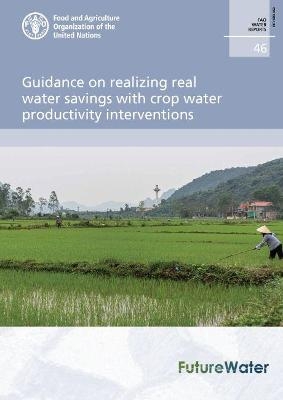
Guidance on realizing real water savings with crop water productivity interventions
an action framework for agriculture and food security
Seiten
2021
Food & Agriculture Organization of the United Nations (FAO) (Verlag)
978-92-5-134136-0 (ISBN)
Food & Agriculture Organization of the United Nations (FAO) (Verlag)
978-92-5-134136-0 (ISBN)
- Keine Verlagsinformationen verfügbar
- Artikel merken
This technical document emphasizes that water savings can help agriculture become more productive. It lists interventions that can increase water productivity and reduce water consumption, such as drip irrigation, regulated deficit irrigation, and sprinkler irrigation.
The new FAO Water Report “Guidance on realizing real water savings with crop water productivity interventions” includes clear and practical guidelines on how to implement 'real' water savings in agriculture through interventions for enhancing crop water productivity.A distinction is made between real water savings and “apparent” water savings. Apparent water savings record reductions in water withdrawals but do not account for changes in water consumption. However, real water savings record reductions in water consumption and non-recoverable return flows (runoff or percolation). This guidance document emphasizes the paradox of water savings at field and basin scales, which usually do not translate into increased water availability for other users as is commonly believed.Following the concepts and guidelines presented in this report, decision-makers can improve the management of their water systems by introducing sustainable interventions to achieve real water savings
The new FAO Water Report “Guidance on realizing real water savings with crop water productivity interventions” includes clear and practical guidelines on how to implement 'real' water savings in agriculture through interventions for enhancing crop water productivity.A distinction is made between real water savings and “apparent” water savings. Apparent water savings record reductions in water withdrawals but do not account for changes in water consumption. However, real water savings record reductions in water consumption and non-recoverable return flows (runoff or percolation). This guidance document emphasizes the paradox of water savings at field and basin scales, which usually do not translate into increased water availability for other users as is commonly believed.Following the concepts and guidelines presented in this report, decision-makers can improve the management of their water systems by introducing sustainable interventions to achieve real water savings
| Erscheinungsdatum | 22.11.2021 |
|---|---|
| Reihe/Serie | FAO water reports ; 46 |
| Zusatzinfo | col. figs, tables |
| Verlagsort | Rome |
| Sprache | englisch |
| Themenwelt | Naturwissenschaften ► Biologie ► Ökologie / Naturschutz |
| Technik ► Umwelttechnik / Biotechnologie | |
| Weitere Fachgebiete ► Land- / Forstwirtschaft / Fischerei | |
| ISBN-10 | 92-5-134136-2 / 9251341362 |
| ISBN-13 | 978-92-5-134136-0 / 9789251341360 |
| Zustand | Neuware |
| Informationen gemäß Produktsicherheitsverordnung (GPSR) | |
| Haben Sie eine Frage zum Produkt? |
Mehr entdecken
aus dem Bereich


aus dem Bereich
Methoden – Lösungen – Anwendungen
Buch | Hardcover (2025)
Hanser (Verlag)
CHF 69,95


