Emerging Technologies for Healthcare (eBook)
John Wiley & Sons (Verlag)
978-1-119-79232-1 (ISBN)
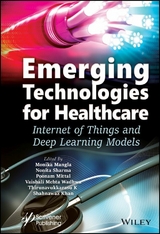
'Emerging Technologies for Healthcare' begins with an IoT-based solution for the automated healthcare sector which is enhanced to provide solutions with advanced deep learning techniques.
The book provides feasible solutions through various machine learning approaches and applies them to disease analysis and prediction. An example of this is employing a three-dimensional matrix approach for treating chronic kidney disease, the diagnosis and prognostication of acquired demyelinating syndrome (ADS) and autism spectrum disorder, and the detection of pneumonia. In addition, it provides healthcare solutions for post COVID-19 outbreaks through various suitable approaches, Moreover, a detailed detection mechanism is discussed which is used to devise solutions for predicting personality through handwriting recognition; and novel approaches for sentiment analysis are also discussed with sufficient data and its dimensions.
This book not only covers theoretical approaches and algorithms, but also contains the sequence of steps used to analyze problems with data, processes, reports, and optimization techniques. It will serve as a single source for solving various problems via machine learning algorithms.
Dr. Monika Mangla, received her PhD from Thapar Institute of Engineering & Technology, Patiala, Punjab, in the year 2019. Currently, she is working as an assistant professor in the Department of Computer Engineering at Lokmanya Tilak College of Engineering (LTCoE), Navi Mumbai.
Dr. Nonita Sharma is working as assistant professor, National Institute of Technology, Jalandhar. She received the B. Tech degree in Computer Science Engineering in 2002, the M. Tech degree in Computer Science engineering in 2004, and the PhD degree in Wireless Sensor Network from the National Institute of Technology, Jalandhar, India in 2017.
Dr. Poonam, received her PhD from J.C Bose University of Science and technology YMCA, Faridabad, India, in the year 2019. Currently, she is working as an assistant professor in the Department of Computer Engineering at J.C Bose University of Science and technology YMCA, Faridabad, India.
Dr. Vaishali Mehta has done her PhD in Facility location problems from Thapar University. Her research interests include approximation algorithms, location modelling, IoT, cloud computing and machine learning.
Dr. Thirunavakkarasu K. is a distinguished academician with over twenty-two years of experience in teaching and working in the software industry. Curently, he is heading the Department of BCA and specialization in Galgotias University. He has done Bachelor in computer science from the University of Madras in 1994 and received 3 master's degrees in computer science, PhD and PostDoc.
Dr. Shahnawaz Khan is an assistant professor and serving as Secretary-General of Scientific Research Council at University College of Bahrain. He holds a PhD (Computer Science) from the Indian Institute of Technology (BHU), India.
Emerging Technologies for Healthcare begins with an IoT-based solution for the automated healthcare sector which is enhanced to provide solutions with advanced deep learning techniques. The book provides feasible solutions through various machine learning approaches and applies them to disease analysis and prediction. An example of this is employing a three-dimensional matrix approach for treating chronic kidney disease, the diagnosis and prognostication of acquired demyelinating syndrome (ADS) and autism spectrum disorder, and the detection of pneumonia. In addition, it provides healthcare solutions for post COVID-19 outbreaks through various suitable approaches, Moreover, a detailed detection mechanism is discussed which is used to devise solutions for predicting personality through handwriting recognition; and novel approaches for sentiment analysis are also discussed with sufficient data and its dimensions. This book not only covers theoretical approaches and algorithms, but also contains the sequence of steps used to analyze problems with data, processes, reports, and optimization techniques. It will serve as a single source for solving various problems via machine learning algorithms.
Monika Mangla, received her PhD from Thapar Institute of Engineering & Technology, Patiala, Punjab, in 2019. Currently, she is working as an assistant professor in the Department of Computer Engineering at Lokmanya Tilak College of Engineering (LTCoE), Navi Mumbai. Nonita Sharma is working as assistant professor, National Institute of Technology, Jalandhar. She received the B. Tech degree in Computer Science Engineering in 2002, the M. Tech degree in Computer Science engineering in 2004, and her PhD degree in Wireless Sensor Network from the National Institute of Technology, Jalandhar, India in 2017. Poonam Mittal received her PhD from J.C Bose University of Science and Technology YMCA, Faridabad, India, in 2019. Currently, she is working as an assistant professor in the Department of Computer Engineering at J.C Bose University of Science and Technology YMCA, Faridabad, India. Vaishali Mehta Wadhwa obtained her PhD in Facility Location Problems from Thapar University. Her research interests include approximation algorithms, location modeling, IoT, cloud computing and machine learning. She has multiple articles and 2 patents to her name. Thirunavakkarasu K. is a distinguished academician with over twenty-two years of experience in teaching and working in the software industry. Curently, he is heading the Department of BCA and Specialization at Galgotias University. He has done Bachelor in computer science from the University of Madras in 1994 and received 3 master's degrees in computer science. Shahnawaz Khan is an assistant professor and serving as Secretary-General of Scientific Research Council at University College of Bahrain. He holds a PhD (Computer Science) from the Indian Institute of Technology (BHU), India.
1
An Overview of IoT in Health Sectors
Sheeba P. S.
Department of Electronics Engineering, Lokmanya Tilak
College of Engineering, Navi Mumbai, India
Abstract
In the recent past, several technological developments have happened owing to the growing demand for connected devices. Applications of Internet of Things (IoT) are vast, and it is used in several fields including home-automation, automated machines, agriculture, finance sectors, and smart cities. Life style diseases are increasing among urban population and lot of money is spent for the diagnosis and treatment of diseases. Adaption of IoTs in health sectors enables real-time monitoring of the patients and alerts the patients for health checkups whenever required and communicate the information from time to time. During pandemic situations like Covid-19 which we are facing today, the need for IoT-enabled services in health sector is essential as the doctors have to treat the patients from remote locations. The connected devices can help in surveillance and disease control, keep track of nutritional needs, mental health, stress management, emergency services, etc., which will lead to an efficient health management system. This article gives an overview of applications of IoT in health sectors and how it can be used for sustainable development and also addresses various challenges involved in it. Efficient use of IoT in health sectors can benefit healthcare professionals, patients, insurance companies, etc.
Keywords: IoT, healthcare, smart gadgets, health monitoring
1.1 Introduction
Due to the increase in awareness of a healthy life style, the number of people depending on smart devices for monitoring their health is increasing day by day. IoT devices have become very essential to be the part of daily life in this technological advanced world. Various advancements are happening in the healthcare sectors from the recent past. With the advancement in technology in the use of IoTs integrated with Artificial Intelligence, a major digital transformation is happening in the healthcare sector. Various research is going on in this area which will add new dimensions to the healthcare system.
Wireless Body Area Networks (WBANs) have also been used extensively in healthcare services due to the advancement in technology. A survey on healthcare application based on WBAN is discussed in [1]. The paper also analyses the privacy and security features that arises by the use of IoTs in healthcare systems.
Use of RFID has become very common owing to the extensive applications of IoTs. A survey on RFID applications for gathering information about the living environment and body centric systems is discussed in [2]. The challenges and open research opportunities are also discussed in the article.
Various research is ongoing on to find the methods to improve the monitoring and tracking of the patients in an efficient manner. In [3], a novel IoT-aware smart architecture is proposed to monitor and track the patients. A smart hospital system is proposed which can collect real-time data and environmental factors by making use of ultra-low power hybrid sensing network.
A secure IoT-based healthcare system which operates with body sensor network architecture is introduced in [4]. Two communication mechanisms for authenticity and secured communication is addressed. The proposed method was implemented and tested using a Raspberry Pi platform.
In [5], authors address a survey paper on the IoT research and the discusses about the challenges, strengths and suitability of IoT healthcare devices and mentions about the future research directions.
One of the challenges faced by the IoT systems is regarding the security and privacy of data. In [6], the authors proposed a hybrid model for securing the medical images data. This model aims to hide the confidential patient data from the image while transmitting it.
Wireless body networks are becoming popular with the increased use of IoT smart devices. In [7], a solar energy powered wearable sensor node is addressed. At various positions of the body multiple sensors are deployed and a web-based application is used for displaying sensor data. Experiment results achieved good results for autonomous operation for 24 hours.
Body sensor networks is the one of the significant technologies used to monitor the patients by means of tiny wireless sensor nodes in the body. Security of such IoT devices poses a major issue in privacy of the patients. A secure system for healthcare called BSN-care is addressed in [8].
Securing the privacy of patients is of utmost importance for IoT-based healthcare systems. Various research is going on this area. In [9], a big data storage system to secure the privacy of the patients is addressed. The medical data generated is encrypted before it is transferred to the data storage. This system is designed as a self-adaptive one where it can operate on emergency and normal conditions.
Various systems are developed to take care of the personal needs while traveling which can aid in travel and tourism. An intelligent travel recommender system called ProTrip is developed in [10]. This system helps travelers who are on strict diet and having long-term diseases in getting proper nutritional value foods according to the climatic conditions. This system supports the IoT healthcare system for food recommendation.
The issues in the security and privacy of IoT-based healthcare system are a major concern. Most of the system is based on cloud computing for IoT solutions which has certain limitations based on economic aspects, storage of data, geographical architecture, etc. To overcome this limitation, a Fog computing approach is addressed in [11] and authors explores the integration of traditional cloud-based structure and Cloud Fog services in interoperable healthcare solutions.
For IoT-based healthcare system efficient authorization and authentication is required for securing the data. Such a system is addressed in [12]. It was found that the proposed model is more secure than the centralized delegation-based architecture as it uses a secure key management between the smart gateway and sensor nodes.
Recent security attacks for the private data and integrity of data is a matter of concern for the IoT healthcare systems. Conventional methods of security solutions are for the protection of data during patient communication but it does not offer the security protection during the data conversion into the cipher. A secure data collection scheme for IoT healthcare system called SecureData scheme is proposed in [13], and the experimental results showed that this scheme is efficient in protecting security risks.
Life style diseases like diabetes are common nowadays. It is very important for such patients to follow a strict diet and most of the time it is difficult for the healthcare professionals to get the precise physiological parameter of the patients. Without the knowledge of the current condition of the patients, it is difficult for the ontologies to recommend a proper diet for such patients. A fuzzy-based ontology recommendation system is proposed in [14] which can determine patient’s conditions and risk factors by means of wearable sensors and accordingly can suggest the diet. The experimental results proved that the system is efficient for diabetes patients.
The data generated through IoT devices are prone to security threats. Maintaining the privacy of the patient data is of utmost importance. Traditional encryption schemes cannot be applied on healthcare data due to the limitations in the properties of digital data. A chaos-based encryption cryptosystem to preserve the privacy of patients is proposed in [15]. Random images are generated by the cryptosystem which ensures highest security level for the patient data. The performance of this model was found to be better than other encryption schemes.
The trends of IoT in healthcare sectors and the future scope for research is discussed in [16]. A sensor-based communication architecture and authentication scheme for IoT-based healthcare systems is addressed in [17]. Various research articles on big data analytics, and IoT in healthcare is addressed in [18].
With the enormous research happening in the field of IoT applications in healthcare sectors, new dimensions to the healthcare treatments and hospital services can be expected in the coming years.
1.2 Influence of IoT in Healthcare Systems
Due to the awareness about the importance of healthy life, people have become more health conscious nowadays. Humans are finding new ways to improve and track their health. Due to the implementation of emerging technologies like IoTs and Artificial Intelligence (AI), the healthcare systems have evolved as an entirely new system replacing the old system. Various stages of IoT system is shown in Figure 1.1.
Various developments have occurred in the healthcare systems in the recent past. Some of the advancements are discussed in this section.
1.2.1 Health Monitoring
Health monitoring on real-time basis became possible due to the invention of wearable smart gadgets. These devices continuously monitor various parameters like blood pressure, heart rate, oxygen level, and calories burnt. Fitness bands helps individuals to maintain their body healthy and fit by regularly alerting them about the steps taken per day and how much calories needs to be burnt to stay healthy.
Figure 1.1 Stages of IoT.
These devices can be interconnected by IoT devices so that the healthcare workers and...
| Erscheint lt. Verlag | 20.7.2021 |
|---|---|
| Reihe/Serie | Machine Learning in Biomedical Science and Healthcare Informatics | Machine Learning in Biomedical Science and Healthcare Informatics |
| Sprache | englisch |
| Themenwelt | Informatik ► Theorie / Studium ► Künstliche Intelligenz / Robotik |
| Medizin / Pharmazie | |
| Technik ► Medizintechnik | |
| Schlagworte | 3D convolutional neural network (3D CNN) • 3D Printing • Additive Manufacturing • anonymization • Artificial Intelligence • Artificial Neural Network • big healthcare data • Biocompatible Materials • biomedical engineering • Biomedizintechnik • biosensors • Blockchain • bone scaffold • Chronic Disease • Cloud Computing • Computer Science • convolutional neural network (CNN) • Covid-19 • Data acquisition • Decision Tree • Deep learning • DICOM • Disease • Handwriting Recognition • Healthcare • healthcare system • Health Monitoring • HIPAA Compliance • Informatics • Informatik • Informatik in der Radiologie • IOT • kidney • Künstliche Intelligenz • Logistic Regression • lung nodule • machine • machine learning • medical IoT • Medical Science • Medizin • neural network • pattern recognition • personality prediction • Q Lattice • quantum mechanics • random forest classifier • remote medicine • Remote-Medizin • Scan • Security and Privacy • sensitive medical data • sentiment analysis • Smart Gadgets • Statistics • Support vector • Support Vector Machine • WBAN • Wireless System |
| ISBN-10 | 1-119-79232-0 / 1119792320 |
| ISBN-13 | 978-1-119-79232-1 / 9781119792321 |
| Informationen gemäß Produktsicherheitsverordnung (GPSR) | |
| Haben Sie eine Frage zum Produkt? |
 EPUB (Adobe DRM)
Kopierschutz: Adobe-DRM
Adobe-DRM ist ein Kopierschutz, der das eBook vor Mißbrauch schützen soll. Dabei wird das eBook bereits beim Download auf Ihre persönliche Adobe-ID autorisiert. Lesen können Sie das eBook dann nur auf den Geräten, welche ebenfalls auf Ihre Adobe-ID registriert sind.
Details zum Adobe-DRM
Dateiformat: EPUB (Electronic Publication)
EPUB ist ein offener Standard für eBooks und eignet sich besonders zur Darstellung von Belletristik und Sachbüchern. Der Fließtext wird dynamisch an die Display- und Schriftgröße angepasst. Auch für mobile Lesegeräte ist EPUB daher gut geeignet.
Systemvoraussetzungen:
PC/Mac: Mit einem PC oder Mac können Sie dieses eBook lesen. Sie benötigen eine
eReader: Dieses eBook kann mit (fast) allen eBook-Readern gelesen werden. Mit dem amazon-Kindle ist es aber nicht kompatibel.
Smartphone/Tablet: Egal ob Apple oder Android, dieses eBook können Sie lesen. Sie benötigen eine
Geräteliste und zusätzliche Hinweise
Buying eBooks from abroad
For tax law reasons we can sell eBooks just within Germany and Switzerland. Regrettably we cannot fulfill eBook-orders from other countries.
aus dem Bereich