Endophytes (eBook)
272 Seiten
Springer Singapore (Verlag)
978-981-15-9371-0 (ISBN)
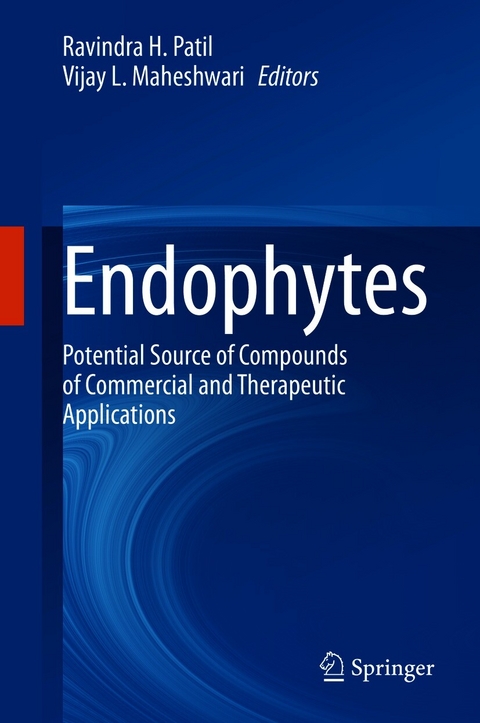
This book describes the various therapeutic and commercial applications of compounds produced by endophytes. Endophytes are microorganisms that reside in the living internal tissues of plants without showing any apparent symptom of their presence. During their life cycle, they establish a symbiotic or parasitic relationship with the host plant. The book discusses different kinds of compounds that these endophytes produce, and their potential properties such as antimicrobial, anti-oxidative, anti-inflammatory, anticancer, neutraceutical, immunomodulatory etc. Other prospects of entophytic biology such as fungi of wild and domesticated crop plants and their applications in sustainable agriculture have also been included. The book also provides details about various techniques used in endophyte research, metabolite detection and bioactivity-based assays to explore endophytes. Endophytes with phytohormones‐producing potential and their role in plant —microbial interactions under stress are also discussed. The book also highlights novel strategies to tap into the hidden potential of endophytic fungi for the production of novel biomolecules using an integrated approach.
These microorganisms have attracted a lot of scientific attention worldwide because of their huge potential for novel phytochemicals, pharmaceuticals and lead compounds. Hundreds of new novel endophytic fungi have been isolated, identified and systematically studied in last decade. However, this is the first of its kind, systematic compilation of potential biotechnological applications of endophytic compounds. Chapter contributions from groups across the globe make this book very up-to-date and informative.
This book is very useful and interesting for students and researchers in the field of microbiology, plant sciences, mycology and pharmacology. It is also helpful for industry experts working on developing novel compounds.
This book describes the various therapeutic and commercial applications of compounds produced by endophytes. Endophytes are microorganisms that reside in the living internal tissues of plants without showing any apparent symptom of their presence. During their life cycle, they establish a symbiotic or parasitic relationship with the host plant. The book discusses different kinds of compounds that these endophytes produce, and their potential properties such as antimicrobial, anti-oxidative, anti-inflammatory, anticancer, neutraceutical, immunomodulatory etc. Other prospects of entophytic biology such as fungi of wild and domesticated crop plants and their applications in sustainable agriculture have also been included. The book also provides details about various techniques used in endophyte research, metabolite detection and bioactivity-based assays to explore endophytes. Endophytes with phytohormones-producing potential and their role in plant -microbial interactions under stress are also discussed. The book also highlights novel strategies to tap into the hidden potential of endophytic fungi for the production of novel biomolecules using an integrated approach.These microorganisms have attracted a lot of scientific attention worldwide because of their huge potential for novel phytochemicals, pharmaceuticals and lead compounds. Hundreds of new novel endophytic fungi have been isolated, identified and systematically studied in last decade. However, this is the first of its kind, systematic compilation of potential biotechnological applications of endophytic compounds. Chapter contributions from groups across the globe make this book very up-to-date and informative. This book is very useful and interesting for students and researchers in the field of microbiology, plant sciences, mycology and pharmacology. It is also helpful for industry experts working on developing novel compounds.
| Erscheint lt. Verlag | 25.3.2021 |
|---|---|
| Zusatzinfo | XI, 272 p. 39 illus., 22 illus. in color. |
| Sprache | englisch |
| Themenwelt | Medizin / Pharmazie ► Gesundheitsfachberufe |
| Medizin / Pharmazie ► Medizinische Fachgebiete ► Pharmakologie / Pharmakotherapie | |
| Medizin / Pharmazie ► Physiotherapie / Ergotherapie ► Orthopädie | |
| Naturwissenschaften ► Biologie ► Mikrobiologie / Immunologie | |
| Naturwissenschaften ► Biologie ► Ökologie / Naturschutz | |
| Technik ► Medizintechnik | |
| Technik ► Umwelttechnik / Biotechnologie | |
| Schlagworte | Endomicrobiome • Endophyes • Endophytes and Plant Protection • Plant microbe interaction • Plant Microbiology • symbiosis |
| ISBN-10 | 981-15-9371-X / 981159371X |
| ISBN-13 | 978-981-15-9371-0 / 9789811593710 |
| Informationen gemäß Produktsicherheitsverordnung (GPSR) | |
| Haben Sie eine Frage zum Produkt? |
 PDF (Wasserzeichen)
DRM: Digitales Wasserzeichen
Dieses eBook enthält ein digitales Wasserzeichen und ist damit für Sie personalisiert. Bei einer missbräuchlichen Weitergabe des eBooks an Dritte ist eine Rückverfolgung an die Quelle möglich.
Dateiformat: PDF (Portable Document Format)
Mit einem festen Seitenlayout eignet sich die PDF besonders für Fachbücher mit Spalten, Tabellen und Abbildungen. Eine PDF kann auf fast allen Geräten angezeigt werden, ist aber für kleine Displays (Smartphone, eReader) nur eingeschränkt geeignet.
Systemvoraussetzungen:
PC/Mac: Mit einem PC oder Mac können Sie dieses eBook lesen. Sie benötigen dafür einen PDF-Viewer - z.B. den Adobe Reader oder Adobe Digital Editions.
eReader: Dieses eBook kann mit (fast) allen eBook-Readern gelesen werden. Mit dem amazon-Kindle ist es aber nicht kompatibel.
Smartphone/Tablet: Egal ob Apple oder Android, dieses eBook können Sie lesen. Sie benötigen dafür einen PDF-Viewer - z.B. die kostenlose Adobe Digital Editions-App.
Buying eBooks from abroad
For tax law reasons we can sell eBooks just within Germany and Switzerland. Regrettably we cannot fulfill eBook-orders from other countries.
aus dem Bereich