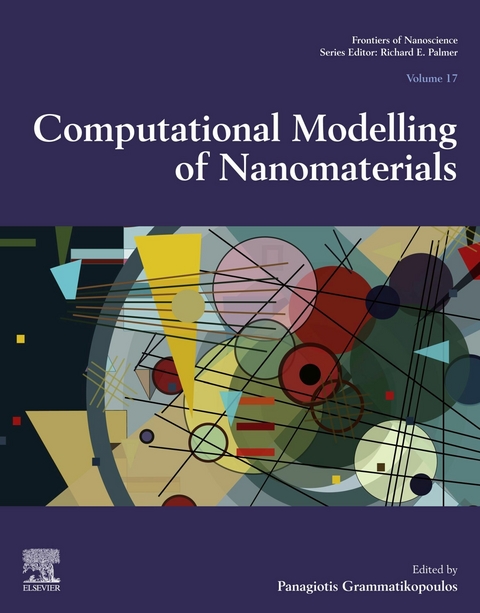
Computational Modelling of Nanomaterials (eBook)
244 Seiten
Elsevier Science (Verlag)
978-0-12-821498-5 (ISBN)
Due to their small size and their dependence on very fast phenomena, nanomaterials are ideal systems for computational modelling. This book provides an overview of various nanosystems classified by their dimensions: 0D (nanoparticles, QDs, etc.), 1D (nanowires, nanotubes), 2D (thin films, graphene, etc.), 3D (nanostructured bulk materials, devices). Fractal dimensions, such as nanoparticle agglomerates, percolating films and combinations of materials of different dimensionalities are also covered (e.g. epitaxial decoration of nanowires by nanoparticles, i.e. 0D+1D nanomaterials). For each class, the focus will be on growth, structure, and physical/chemical properties. The book presents a broad range of techniques, including density functional theory, molecular dynamics, non-equilibrium molecular dynamics, finite element modelling (FEM), numerical modelling and meso-scale modelling. The focus is on each method's relevance and suitability for the study of materials and phenomena in the nanoscale. This book is an important resource for understanding the mechanisms behind basic properties of nanomaterials, and the major techniques for computational modelling of nanomaterials. - Explores the major modelling techniques used for different classes of nanomaterial- Assesses the best modelling technique to use for each different type of nanomaterials- Discusses the challenges of using certain modelling techniques with specific nanomaterials
| Erscheint lt. Verlag | 30.9.2020 |
|---|---|
| Sprache | englisch |
| Themenwelt | Technik ► Maschinenbau |
| ISBN-10 | 0-12-821498-8 / 0128214988 |
| ISBN-13 | 978-0-12-821498-5 / 9780128214985 |
| Informationen gemäß Produktsicherheitsverordnung (GPSR) | |
| Haben Sie eine Frage zum Produkt? |
 EPUB (Adobe DRM)
Kopierschutz: Adobe-DRM
Adobe-DRM ist ein Kopierschutz, der das eBook vor Mißbrauch schützen soll. Dabei wird das eBook bereits beim Download auf Ihre persönliche Adobe-ID autorisiert. Lesen können Sie das eBook dann nur auf den Geräten, welche ebenfalls auf Ihre Adobe-ID registriert sind.
Details zum Adobe-DRM
Dateiformat: EPUB (Electronic Publication)
EPUB ist ein offener Standard für eBooks und eignet sich besonders zur Darstellung von Belletristik und Sachbüchern. Der Fließtext wird dynamisch an die Display- und Schriftgröße angepasst. Auch für mobile Lesegeräte ist EPUB daher gut geeignet.
Systemvoraussetzungen:
PC/Mac: Mit einem PC oder Mac können Sie dieses eBook lesen. Sie benötigen eine
eReader: Dieses eBook kann mit (fast) allen eBook-Readern gelesen werden. Mit dem amazon-Kindle ist es aber nicht kompatibel.
Smartphone/Tablet: Egal ob Apple oder Android, dieses eBook können Sie lesen. Sie benötigen eine
Geräteliste und zusätzliche Hinweise
Buying eBooks from abroad
For tax law reasons we can sell eBooks just within Germany and Switzerland. Regrettably we cannot fulfill eBook-orders from other countries.
aus dem Bereich