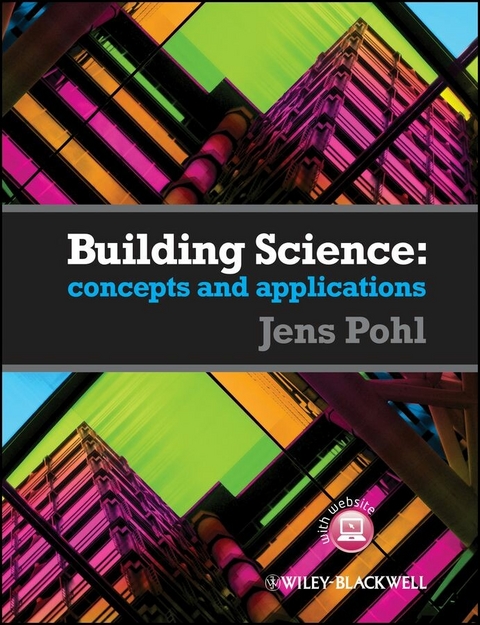
Building Science (eBook)
280 Seiten
John Wiley & Sons (Verlag)
978-1-119-78776-1 (ISBN)
buildings crucial to the low carbon targets of all current
governments, Building Science: Concepts and Applications
provides a timely and much-needed addition to the existing
literature on architectural and environmental design education.
Taking a logical and didactic approach, the author introduces the
reader to the underlying concepts and principles of the thermal,
lighting, and acoustic determinants of building design in four
integrated sections.
The first section explores the thermal building environment and
the principles of thermal comfort, translating these principles
into conceptual building design solutions. The author examines the
heat flow characteristics of the building envelope and explains
steady state design methods that form the basis of most building
codes. He discusses the sun as a natural heat source and describes
the principles of active and passive solar building design
solutions.
The second section introduces the scientific principles of
light, color, and vision, stressing the importance of daylight in
building design, presenting the Daylight Factor design concept and
methodology, and discussing glare conditions and their avoidance.
It also addresses artificial lighting, delving into the prominent
role that electricity plays in the production of light by
artificial means and comparing the efficacy and characteristics of
the various commercially available light sources in terms of the
energy to light conversion ratio, life span, available intensity
range, color rendition properties, and cost.
The third section deals with the various aspects of sound that
impact the design of the built environment, discussing the nature
of sound as a physical force that sets any medium through which it
travels into vibration and laying the foundations for the treatment
of sound as an important means of communication as well as a
disruptive disturbance.
The final section discusses the foundational concepts of
ecological design as a basis for addressing sustainability issues
in building design solutions. These issues include the embedded
energy of construction materials, waste management, preservation of
freshwater and management of graywater, adoption of passive solar
principles, energy saving measures applicable to mechanical
building services, and the end-of-lifecycle deconstruction and
recycling of building materials and components.
* Covers the fundamental building science topics of heat, energy,
light and sound
* Takes a logical and didactic approach, tracing the historical
roots of building science
* Includes summaries of new technologies in solar energy and
photovoltaic systems
* Features a section on the principles of sustainable
architecture
* Website with answers to MC questions testing students'
learning
Jens Pohl, PhD, is Professor of Architecture and Graduate Studies Coordinator, Executive Director of the CAD Research Center (CADRC), College of Architecture and Environmental Design, California Polytechnic State University, San Luis Obispo, California.
| Erscheint lt. Verlag | 14.9.2020 |
|---|---|
| Sprache | englisch |
| Themenwelt | Technik ► Architektur |
| Schlagworte | Architecture • Architektur • Bauentwurf • Building Design |
| ISBN-10 | 1-119-78776-9 / 1119787769 |
| ISBN-13 | 978-1-119-78776-1 / 9781119787761 |
| Informationen gemäß Produktsicherheitsverordnung (GPSR) | |
| Haben Sie eine Frage zum Produkt? |
 EPUB (Adobe DRM)
Kopierschutz: Adobe-DRM
Adobe-DRM ist ein Kopierschutz, der das eBook vor Mißbrauch schützen soll. Dabei wird das eBook bereits beim Download auf Ihre persönliche Adobe-ID autorisiert. Lesen können Sie das eBook dann nur auf den Geräten, welche ebenfalls auf Ihre Adobe-ID registriert sind.
Details zum Adobe-DRM
Dateiformat: EPUB (Electronic Publication)
EPUB ist ein offener Standard für eBooks und eignet sich besonders zur Darstellung von Belletristik und Sachbüchern. Der Fließtext wird dynamisch an die Display- und Schriftgröße angepasst. Auch für mobile Lesegeräte ist EPUB daher gut geeignet.
Systemvoraussetzungen:
PC/Mac: Mit einem PC oder Mac können Sie dieses eBook lesen. Sie benötigen eine
eReader: Dieses eBook kann mit (fast) allen eBook-Readern gelesen werden. Mit dem amazon-Kindle ist es aber nicht kompatibel.
Smartphone/Tablet: Egal ob Apple oder Android, dieses eBook können Sie lesen. Sie benötigen eine
Geräteliste und zusätzliche Hinweise
Buying eBooks from abroad
For tax law reasons we can sell eBooks just within Germany and Switzerland. Regrettably we cannot fulfill eBook-orders from other countries.
aus dem Bereich