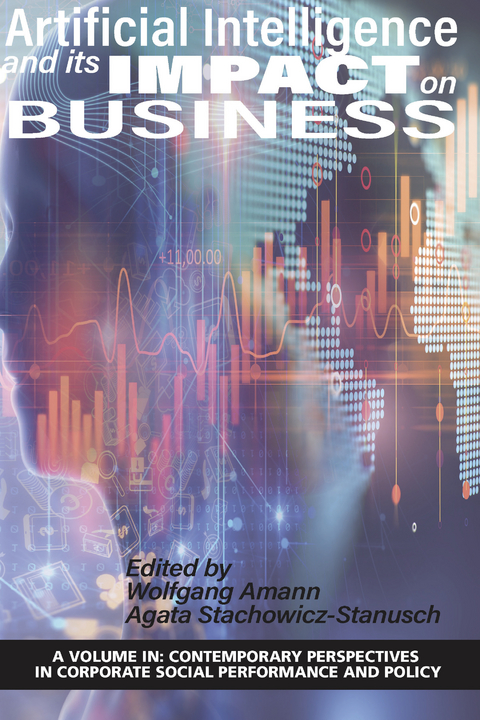
The fourth industrial revolution will replace not only human hands but also human brains, the time of machines requires new forms of work and new ways of business education, however we must be aware that if there is no control of human-chatbot interaction, there is a risk of losing sight of this interaction’s goal. First, it is important to get people to truly understand AI systems, to intentionally participate in their use, as well as to build their trust, because “the measure of success for AI applications is the value they create for human lives” (Stanford University 2016, 33). Consequently, society needs to adapt to AI applications if it is to extend its benefits and mitigate the inevitable errors and failures. This is why it is highly recommended to create new AI-powered tools for education that are the result of cooperation between AI researchers and humanities’ and social sciences’ researchers, who can identify cognitive processes and human behaviors.
This book is authored by a range of international experts with a diversity of backgrounds and perspectives hopefully bringing us closer to the responses for the questions what we should teach (what the ‘right’ set of future skills is), how we should teach (the way in which schools should teach and assess them) and where we should teach (what implications does AI have for today’s education infrastructure). We must remember as we have already noticed before “…education institutions would need to ensure that that they have an appropriate infrastructure, as well as the safety and credibility of AI-based systems. Ultimately, the law and policies need to adjust to the rapid pace of AI development, because the formal responsibility for appropriate learning outcomes will in future be divided between a teacher and a machine. Above all, we should ensure that AI respect human and civil rights (Stachowicz-Stanusch, Amann, 2018).
Artificial intelligence (AI) technologies are one of top investment priorities in these days. They are aimed at finding applications in fields of special value for humans, including education.The fourth industrial revolution will replace not only human hands but also human brains, the time of machines requires new forms of work and new ways of business education, however we must be aware that if there is no control of human-chatbot interaction, there is a risk of losing sight of this interaction's goal. First, it is important to get people to truly understand AI systems, to intentionally participate in their use, as well as to build their trust, because "e;the measure of success for AI applications is the value they create for human lives"e; (Stanford University 2016, 33). Consequently, society needs to adapt to AI applications if it is to extend its benefits and mitigate the inevitable errors and failures. This is why it is highly recommended to create new AI-powered tools for education that are the result of cooperation between AI researchers and humanities' and social sciences' researchers, who can identify cognitive processes and human behaviors.This book is authored by a range of international experts with a diversity of backgrounds and perspectives hopefully bringing us closer to the responses for the questions what we should teach (what the 'right' set of future skills is), how we should teach (the way in which schools should teach and assess them) and where we should teach (what implications does AI have for today's education infrastructure). We must remember as we have already noticed before "e;...education institutions would need to ensure that that they have an appropriate infrastructure, as well as the safety and credibility of AI-based systems. Ultimately, the law and policies need to adjust to the rapid pace of AI development, because the formal responsibility for appropriate learning outcomes will in future be divided between a teacher and a machine. Above all, we should ensure that AI respect human and civil rights (Stachowicz-Stanusch, Amann, 2018)"e;.
| Erscheint lt. Verlag | 1.6.2020 |
|---|---|
| Sprache | englisch |
| Themenwelt | Schulbuch / Wörterbuch ► Lexikon / Chroniken |
| Informatik ► Theorie / Studium ► Künstliche Intelligenz / Robotik | |
| Sozialwissenschaften ► Pädagogik | |
| Technik | |
| Wirtschaft ► Betriebswirtschaft / Management ► Unternehmensführung / Management | |
| ISBN-10 | 1-64802-075-5 / 1648020755 |
| ISBN-13 | 978-1-64802-075-9 / 9781648020759 |
| Informationen gemäß Produktsicherheitsverordnung (GPSR) | |
| Haben Sie eine Frage zum Produkt? |
 PDF (Adobe DRM)
Größe: 1,7 MB
Kopierschutz: Adobe-DRM
Adobe-DRM ist ein Kopierschutz, der das eBook vor Mißbrauch schützen soll. Dabei wird das eBook bereits beim Download auf Ihre persönliche Adobe-ID autorisiert. Lesen können Sie das eBook dann nur auf den Geräten, welche ebenfalls auf Ihre Adobe-ID registriert sind.
Details zum Adobe-DRM
Dateiformat: PDF (Portable Document Format)
Mit einem festen Seitenlayout eignet sich die PDF besonders für Fachbücher mit Spalten, Tabellen und Abbildungen. Eine PDF kann auf fast allen Geräten angezeigt werden, ist aber für kleine Displays (Smartphone, eReader) nur eingeschränkt geeignet.
Systemvoraussetzungen:
PC/Mac: Mit einem PC oder Mac können Sie dieses eBook lesen. Sie benötigen eine
eReader: Dieses eBook kann mit (fast) allen eBook-Readern gelesen werden. Mit dem amazon-Kindle ist es aber nicht kompatibel.
Smartphone/Tablet: Egal ob Apple oder Android, dieses eBook können Sie lesen. Sie benötigen eine
Geräteliste und zusätzliche Hinweise
Buying eBooks from abroad
For tax law reasons we can sell eBooks just within Germany and Switzerland. Regrettably we cannot fulfill eBook-orders from other countries.
 EPUB (Adobe DRM)
Kopierschutz: Adobe-DRM
Adobe-DRM ist ein Kopierschutz, der das eBook vor Mißbrauch schützen soll. Dabei wird das eBook bereits beim Download auf Ihre persönliche Adobe-ID autorisiert. Lesen können Sie das eBook dann nur auf den Geräten, welche ebenfalls auf Ihre Adobe-ID registriert sind.
Details zum Adobe-DRM
Dateiformat: EPUB (Electronic Publication)
EPUB ist ein offener Standard für eBooks und eignet sich besonders zur Darstellung von Belletristik und Sachbüchern. Der Fließtext wird dynamisch an die Display- und Schriftgröße angepasst. Auch für mobile Lesegeräte ist EPUB daher gut geeignet.
Systemvoraussetzungen:
PC/Mac: Mit einem PC oder Mac können Sie dieses eBook lesen. Sie benötigen eine
eReader: Dieses eBook kann mit (fast) allen eBook-Readern gelesen werden. Mit dem amazon-Kindle ist es aber nicht kompatibel.
Smartphone/Tablet: Egal ob Apple oder Android, dieses eBook können Sie lesen. Sie benötigen eine
Geräteliste und zusätzliche Hinweise
Buying eBooks from abroad
For tax law reasons we can sell eBooks just within Germany and Switzerland. Regrettably we cannot fulfill eBook-orders from other countries.
aus dem Bereich