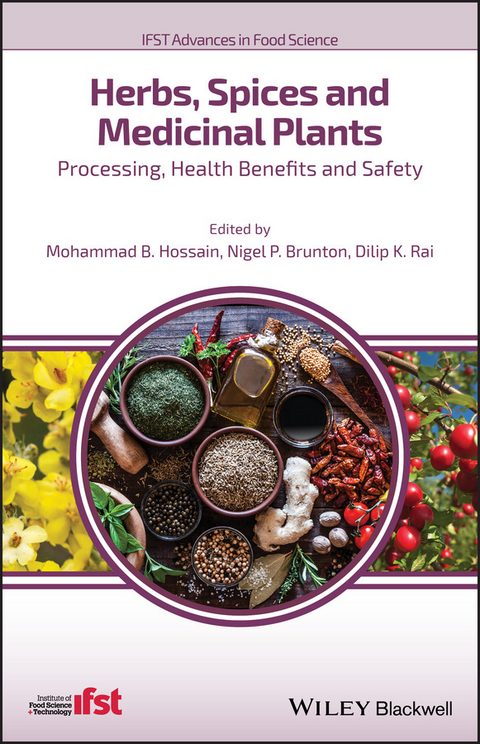
Herbs, Spices and Medicinal Plants (eBook)
John Wiley & Sons (Verlag)
978-1-119-03663-0 (ISBN)
The latest research on the health benefits and optimal processing technologies of herbs and spices
This book provides a comprehensive overview of the health benefits, analytical techniques used, and effects of processing upon the physicochemical properties of herbs and spices. Presented in three parts, it opens with a section on the technological and health benefits of herbs and spices. The second part reviews the effect of classical and novel processing techniques on the properties of herbs/spices. The third section examines extraction techniques and analytical methodologies used for herbs and spices.
Filled with contributions from experts in academia and industry, Herbs, Spices and Medicinal Plants: Processing, Health Benefits and Safety offers chapters covering thermal and non-thermal processing of herbs and spices, recent developments in high-quality drying of herbs and spices, conventional and novel techniques for extracting bioactive compounds from herbs and spices, and approaches to analytical techniques. It also examines purification and isolation techniques for enriching bioactive phytochemicals, medicinal properties of herbs and spices, synergy in whole-plant medicine, potential applications of polyphenols from herbs and spices in dairy products, biotic and abiotic safety concerns, and adverse human health effects and regulation of metal contaminants in terrestrial plant-derived food and phytopharmaceuticals.
- Covers the emerging health benefits of herbs and spices, including their use as anti-diabetics, anti-inflammatories, and anti-oxidants
- Reviews the effect of classical and novel processing techniques on the properties of herbs and spices
- Features informed perspectives from noted academics and professionals in the industry
- Part of Wiley's new IFST Advances in Food Science series
Herbs, Spices and Medicinal Plants is an important book for companies, research institutions, and universities active in the areas of food processing and the agri-food environment. It will appeal to food scientists and engineers, environmentalists, and food regulatory agencies.
About the Editors
Mohammad B. Hossain, is a Research Officer in the Department of Food Biosciences at Teagasc Food Research Centre in Ashtown, Ireland, and is a member of the editorial board of 'Antioxidants' and 'Journal of Food Processing and Beverages'.
Nigel P. Brunton, is an Associate Professor at the School of Agriculture and Food Science, University College Dublin, Ireland.
Dilip K. Rai, is a Senior Research Officer in the Department of Food Biosciences at Teagasc Food Research Centre in Ashtown, Ireland where he focuses on nutraceuticals.
The latest research on the health benefits and optimal processing technologies of herbs and spices This book provides a comprehensive overview of the health benefits, analytical techniques used, and effects of processing upon the physicochemical properties of herbs and spices. Presented in three parts, it opens with a section on the technological and health benefits of herbs and spices. The second part reviews the effect of classical and novel processing techniques on the properties of herbs/spices. The third section examines extraction techniques and analytical methodologies used for herbs and spices. Filled with contributions from experts in academia and industry, Herbs, Spices and Medicinal Plants: Processing, Health Benefits and Safety offers chapters covering thermal and non-thermal processing of herbs and spices, recent developments in high-quality drying of herbs and spices, conventional and novel techniques for extracting bioactive compounds from herbs and spices, and approaches to analytical techniques. It also examines purification and isolation techniques for enriching bioactive phytochemicals, medicinal properties of herbs and spices, synergy in whole-plant medicine, potential applications of polyphenols from herbs and spices in dairy products, biotic and abiotic safety concerns, and adverse human health effects and regulation of metal contaminants in terrestrial plant-derived food and phytopharmaceuticals. Covers the emerging health benefits of herbs and spices, including their use as anti-diabetics, anti-inflammatories, and anti-oxidants Reviews the effect of classical and novel processing techniques on the properties of herbs and spices Features informed perspectives from noted academics and professionals in the industry Part of Wiley's new IFST Advances in Food Science series Herbs, Spices and Medicinal Plants is an important book for companies, research institutions, and universities active in the areas of food processing and the agri-food environment. It will appeal to food scientists and engineers, environmentalists, and food regulatory agencies.
About the Editors Mohammad B. Hossain, is a Research Officer in the Department of Food Biosciences at Teagasc Food Research Centre in Ashtown, Ireland, and is a member of the editorial board of 'Antioxidants' and 'Journal of Food Processing and Beverages'. Nigel P. Brunton, is an Associate Professor at the School of Agriculture and Food Science, University College Dublin, Ireland. Dilip K. Rai, is a Senior Research Officer in the Department of Food Biosciences at Teagasc Food Research Centre in Ashtown, Ireland where he focuses on nutraceuticals.
1. Thermal Processing of Herbs and Spices
2. Non-thermal Processing of Herbs and Spices
3. Recent Developments in High Quality Drying of Herbs and Spices
4. Conventional Extraction Techniques for Bioactive Compounds from Herbs and Spices
5. Novel Extraction Techniques for Bioactive Compounds from Herbs and Spices
6. Approaches to Analytical Techniques - Characterising Phytochemicals in Verbascum spp.
7. Purification and Isolation Techniques for Enrichment of Bioactive Phytochemicals from Herbs and Spices
8. Medicinal Properties of Herbs and Spices: Past, Present and Future
9. Synergy in Whole Plant Medicine: Crataegus spp: An Example
10. Potential Applications of Polyphenols from Herbs and Spices in Dairy Products as Natural Antioxidants
11. Biotic and Abiotic Safety Concerns for Herbs and Spices
12. Adverse Human Health Effects and Regulation of Metal Contaminants in Terrestrial Plant-Derived Food and Phytopharmaceuticals
1
Thermal Processing of Herbs and Spices
Anjali H. Kurup1, Shweta Deotale1, Ashish Rawson1, and Ankit Patras2
1 Indian Institute of Food Processing Technology, Thanjavur, TN 613005, India
2 Department of Agricultural and Environmental Sciences, College of Agriculture, Tennessee State University, Nashville, TN 37209, USA
1.1 Introduction
Herbs and spices are fresh or dried aromatic products obtained from a plant used to impart flavor to foods of plant and animal origin (Shelef 1984; Sung et al. 2012). More than 100 varieties of spices exist across the globe, which are significantly affected by the climatic conditions of the region (Gottardi et al. 2016). Asia is the leading producer of spices, particularly cinnamon, pepper, nutmeg, cloves, and ginger, while in Europe mainly basil, bay leaves, celery leaves, chives, coriander (cilantro), dill tips, thyme, and watercress are produced. America produces spices which include pepper, nutmeg, ginger, allspice, and sesame seed (Prasad et al. 2012; Gottardi et al. 2016). From ancient times, spices and herbs have been used not only for flavoring and preserving foods, but also for medicinal and cosmetic purposes (Simmonds 1982; Subbulakshmi and Naik 2002; Srinivasan 2005). As spices possess antimicrobial, antiviral, and strong flavoring properties, they are used to mask spoilage or off‐flavor in many food products (Risch 1997). India is the largest producer and exporter of spices, which include pepper, followed by Capsicum fruits, turmeric, ginger, cardamom seed spices, curry powders, spice oils, and oleoresins (Risch 1997; Subbulakshmi and Naik 2002; Srinivasan 2005).
The term “herb” is referred to as a subset of spice or leafy spice and belongs to plant sources with aromatic leaves valued for its medicinal and aromatic properties (Zheng and Wang 2001). Spices and herbs are considered rich sources of powerful antioxidants with high bioactivity (Sackewitz 1956; Embuscado 2015). Spices and herbs have also been used for preservation of foods and beverages primarily due to the presence of bioactive phytochemicals (Peter 2006; Singhal et al. 2017). Spices and herbs have been used as antioxidants in the form of whole or ground spice/herb, extracts, encapsulated or as emulsions (Embuscado 2015). Spices and herbs are classified and selected on the basis of their characteristics, such as flavor and color, that they impart to foods, i.e. hot (pepper), pungent (garlic), aromatic (cinnamon, clove), herbaceous (sage, rosemary), and coloring (turmeric) (Clark 1970). By flavor characteristics, spice concentrations in foods are determined, normally ranging from 0.5% to 1% in finished food products (Fischetti 1980). Some of the common spices along with their functional component, parts used, and common names are tabulated in Table 1.1.
Table 1.1 Nomenclature of spices and herb its part which is used as spice and its active component
Source: NIIR Board of Consultants and Engineers (2006), Gottardi et al. (2016), Sorensen (2015).
| Common name | Botanical name/Scientific name | Part used | Active/principle component | Uses |
| Ajowan | Trachyspermum ammi | Whole seed | Thymol (35–60%) α‐pinene, ρ‐cymene | Spice blend, chat masala |
| Allspice (clove pepper) | Pimento dioica | Whole or ground seed | Eugenol (80–90%) | Baked goods, chewing gums, candy, ice cream, fruit soups, tea. |
| Anise/Aniseed (sweet cumin) | Pimpinella anisum | Spice: whole or ground Herb: leaf, fresh or dried. | Trans‐anethol (80–90%) | Sweet rolls, cakes, marinated meat and fish, beef stew, salad dressing, sausages |
| Annatto | Bixa orellana | Seed | Bixin | Butter, margarine, ice cream, sausages, cheese |
| Asafoetida (hing) | Ferula asa‐foetida L | Resin, dried granules, chunks or powder | 2‐butyl‐1‐propenyl disulfide, Sulfur compounds, ferulic ester | Spice blend, chat masala |
| Basil (tulsi) | Sweet basil: Ocimum basilicum Holi basil: Ocimum sanctum | Herb: fresh dried leaves Spice: paste | Linalool (40%), methyl chavicol (25%) | Spice blend |
| Bay/ Laurel leaf (tejpatta) | Laurus nobilis | leaf | 1–8‐cineole (35%), methyl eugenol (4%), α‐pinene (12%) | Spice blend, curry blends |
| Caraway (shai jeera) | Carum carvi | Herb: leaf Spice: dried, ripe fruit, root, seed | d‐carvone (50–85%) and limonene (20–30%) | Soups and salads, pickle blend, spice blend |
| Cardamom (false or greater) | Amomum subulatum Linn. | Fruit and seed | 1–8‐cineole (70%) | Garam masala, curry powder |
| Cardamom (true or lesser) | Elettaria cardamomum | Fruit and seed | 1–8‐cineole (25–45%), α‐terpineol acetate (28–34%) | Cakes, cookies, breads |
| Celery | Apium graveolens | Herb: leaf (fresh and dried) Spice: seed, stalks or stem, root. | Limonene (68%) B‐selinene (8%) | Foods and beverage, tomato juice blend, curry blend, pickling blend |
| Chervil | Anthriscus cerefolium | Herb: leaf (fresh and dried) | Iso‐anethole | Fine herbs, sauce blend |
| Chile peppers (chili) | Capsicum annum | Ground, crushed, chili powder | Capsaicin (50–70%) Dihydrocapasaicin (20–25%) | Chili powder, periperi sauce |
| Chives | Allium schoenoprasum | Herb: stem and leaves (fresh, frozen and dried) | Dipropyl disulfide, methyl pentyl disulfide and Pentanethiol | Cottage cheese, egg dishes, cocktail sauces, dried soups |
| Cinnamon (dalchini) | Cinnamomum zeylanicum | Bark, leaves, buds, roots, flower | Cinnamic aldehyde (65–75%), Eugenol (5–10%), linalool (2–3%) | Sweets, soup, pastries, wines, tea, garam masala |
| Clove | Syzyium aromaticum | Dried unopened flower buds | Eugenol (81%) | Garam masala, curry blends, ketchup blend |
| Coriander | Coriandrum sativum | Herb: fresh and dried leaf Spice: dried seeds, stem, roots | d‐linalool (60–70%) | Curries, pickle, snacks, curry powder, garam masala |
| Cumin and black cumin | Cuminium cyminum, Cuminium ni‐grum | Dried and ripe fruits or seed | Cumin: cuminic aldehyde (33%) Black cumin: carvone (45–60%) | Yogurts, chutneys, curries, biryanies, garam masala, snacks |
| Dill and Dillweed | Anethum graveolens | Dill: seeds Dillweed: leaves (fresh or dried) | Dillapiole (52%) Carvone (21%) | Sauerkraut blend, pickling blend, salad dressing |
| Fennel seed | Foeniculum vulgare | Spice: Seeds Herb: leaf, stalk | Limonene | Cakes, baked goods, curry blends |
| Fenugreek | Trigonella foenum‐graceum | Spice: seed Herb: leaf (fresh or dried) | n‐alkanes, sesquiterpenes and alkanoles | Fish, meat, chicken curries |
| Greater galangal (mild ginger) | Alpinia galanga | Spice: fresh, frozen and canned Rhizome Herb: fresh leaves, flower | 1,8‐cineol, α‐pinene, eugenol, methyl cinnamate | Thai red curry paste blend, meat marinades |
| Garlic | Allilum sativum | Bulb | Diallyl disulfide (60%), Allicin | Soups, curries, stews |
| Ginger | Zingiber officinale | Rhizome | Zingiberene (70%), curcumene | Curry blends, snacks, tea, desserts |
| Juniper berry | Juniperus communis | Dried berry | α‐and β‐pinene (80%) | Cheese, goose, pot roasts, pickled meat, seafoods |
| Kari leaf | Murraya koenigi | Herb: leaf (fresh or dried) | Cabinene (34%), α‐pinene (27%) and dipentene (16%) | Curry blends, chutney blends, fish curry blends |
| Lemongrass | Cymbopogon flexuosus | Herb: dried, fresh and frozen leaves | Citral (80–85%) | Soups, stews, curries, sauces, tea |
| Mace | Myristica... |
| Erscheint lt. Verlag | 17.8.2020 |
|---|---|
| Reihe/Serie | IFST Advances in Food Science |
| IFST Advances in Food Science | IFST Advances in Food Science |
| Sprache | englisch |
| Themenwelt | Naturwissenschaften ► Biologie |
| Technik ► Lebensmitteltechnologie | |
| Weitere Fachgebiete ► Land- / Forstwirtschaft / Fischerei | |
| Schlagworte | analytical methodoligies • applications of polyphenols from herbs in dairy products • biotic and abitotic safety concerns • classical and novel processing techniques • environmentalists • Ernährungslehre • extraction techniques • Food Processing • Food Processing, Production & Manufacture • Food regulations • Food Science & Technology • food scientists • Functional Food • Functional Food, Nutraceuticals • Functional Foods & Nutraceuticals • Gesundheits- u. Sozialwesen • Gewürz • Gewürze • Health & Social Care • health benefits herbs and spices • herbs as antioxidants • Herstellung u. Verarbeitung von Lebensmitteln • Kräuter • Lebensmittelforschung u. -technologie • Non-thermal processing • Nutrition • physicochemical properties of herbs and spices • processing technologies of herbs and spices • purification and isolation techniques • quality drying herbs • research herbs, medicinal plants • thermal processing herbs • whole plant medicine synergy • Wiley IFST Advances in Food Science series |
| ISBN-10 | 1-119-03663-1 / 1119036631 |
| ISBN-13 | 978-1-119-03663-0 / 9781119036630 |
| Informationen gemäß Produktsicherheitsverordnung (GPSR) | |
| Haben Sie eine Frage zum Produkt? |
 EPUB (Adobe DRM)
Kopierschutz: Adobe-DRM
Adobe-DRM ist ein Kopierschutz, der das eBook vor Mißbrauch schützen soll. Dabei wird das eBook bereits beim Download auf Ihre persönliche Adobe-ID autorisiert. Lesen können Sie das eBook dann nur auf den Geräten, welche ebenfalls auf Ihre Adobe-ID registriert sind.
Details zum Adobe-DRM
Dateiformat: EPUB (Electronic Publication)
EPUB ist ein offener Standard für eBooks und eignet sich besonders zur Darstellung von Belletristik und Sachbüchern. Der Fließtext wird dynamisch an die Display- und Schriftgröße angepasst. Auch für mobile Lesegeräte ist EPUB daher gut geeignet.
Systemvoraussetzungen:
PC/Mac: Mit einem PC oder Mac können Sie dieses eBook lesen. Sie benötigen eine
eReader: Dieses eBook kann mit (fast) allen eBook-Readern gelesen werden. Mit dem amazon-Kindle ist es aber nicht kompatibel.
Smartphone/Tablet: Egal ob Apple oder Android, dieses eBook können Sie lesen. Sie benötigen eine
Geräteliste und zusätzliche Hinweise
Buying eBooks from abroad
For tax law reasons we can sell eBooks just within Germany and Switzerland. Regrettably we cannot fulfill eBook-orders from other countries.
aus dem Bereich