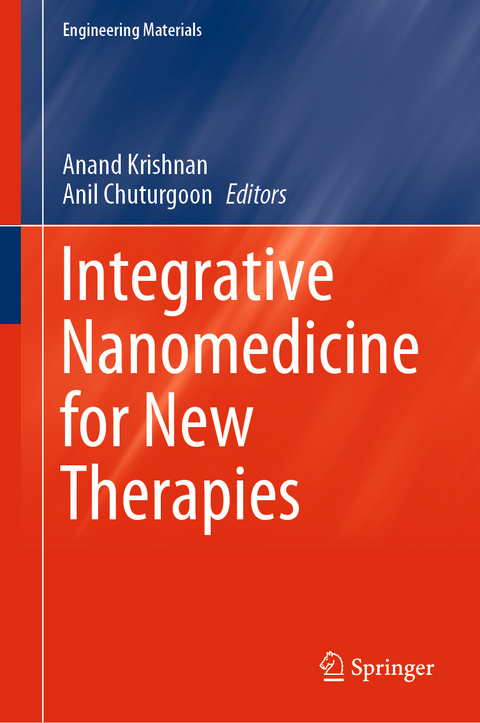
Integrative Nanomedicine for New Therapies (eBook)
435 Seiten
Springer International Publishing (Verlag)
978-3-030-36260-7 (ISBN)
This book presents current laboratory, scientific and clinical aspects of nanomaterials used for medical applications in the fields of regenerative medicine, dentistry and pharmacy. It gives a broad overview of the in vitro compatibility assessment of nanostructured materials implemented in the medical field by the combination of classical biological protocols. The chapters cover all aspects of integrative medicine, such as green derived nanomaterials for biological applications; synthetic and nature-derived lipid nanoparticles and polymer nanoparticles.
Dr. K Anand is a Postdoctoral Fellow at the Department of Chemical Pathology, School of Pathology, Faculty of Health Sciences and National Health Laboratory Service (NHLS), University of the Free State, Bloemfontein, South Africa. He is working in the field of synthetic chemistry and medicinal biochemistry, and his interests include the synthesis of medicinally important fluorinated fused heterocycles as potential anticancer agents, organic and inorganic nanoparticles for drug delivery, sensor and catalytic applications.
Dr. Anil Chuturgoon is a Professor of Medical Biochemistry at the School of Laboratory Medicine and Medical Sciences, University of KwaZulu-Natal, Durban, South Africa. He is passionate about teaching and received the distinguished teacher award from the University of Natal in 2003. Dr. Chuturgoon's research focuses on epigenetic investigations into in-cell survival mechanisms in response to toxic insult. He is a member of the South African Society of Biochemistry and Molecular Biology, and the South African Association of Clinical Biochemists.Preface 6
Contents 8
About the Editors 10
Basic Techniques to Investigate the Nanostructured Materials 12
1 Introduction 12
2 X-Ray Diffraction Analysis 13
2.1 Metal and Metal Oxide 14
2.2 Carbon and Polymer Materials 14
2.3 Ceramic Materials 15
2.4 Polymers and Composites 15
3 Dynamic Light Scattering 16
4 Fourier Transform Infrared Spectroscopy 18
4.1 Metal Oxide and Ceramics 18
4.2 Carbon and Composite Materials 19
5 Microscopic and Spectroscopic Analyses 20
6 Brunauer–Emmett–Teller Surface Area Analysis 22
7 Mechanical Characterisation 24
8 Raman Spectra 25
9 Conclusion 27
References 27
The Importance of Nano-materials Characterization Techniques 30
1 Introduction 30
2 Overview of Physicochemical Properties 31
2.1 Size 31
2.2 Surface Properties 34
2.3 Shape 35
2.4 Composition and Purity 36
2.5 Interaction Between Nanomaterials and Biological Environments 36
3 Techniques for Physicochemical Characterization 37
3.1 Scanning Electron Microscopy (SEM) 37
3.2 Transmission Electron Microscopy (TEM) 38
3.3 Atomic Force Microscopy (AFM) 39
3.4 Dynamic Light Scattering (DLS) 40
3.5 Infrared Spectroscopy (IR) 41
3.6 Zeta Potential (ZP) 42
3.7 X-Ray Diffraction (XRD) 43
4 Conclusion 44
References 44
Biohazards of Nanomaterials 49
1 Introduction 49
2 Nanomaterials 52
2.1 Titanium Dioxide 52
2.2 Zinc Oxide 54
2.3 Gold Silver 56
2.4 Silica NPs 59
2.5 Copper NPs 61
2.6 Chromium Oxide 62
2.7 Carbon Nanoparticles 63
2.8 Cerium 63
2.9 Manganese 64
2.10 Palladium 64
2.11 Rare Earth Oxides 65
3 Genotoxicity Studies 65
3.1 Comet Assay 65
3.2 Micronucleus Assay 73
3.3 Chromosome Aberrations Test 73
4 Cell Line Suitability 74
5 Conclusion 75
References 75
Biosynthesized Nanoparticles and Their Biological Applications 81
1 Introduction 81
2 Biosynthesis of Nanoparticles by Natural Plants and Microorganisms 82
2.1 Metallic Nanoparticles (MNPs) 84
2.2 Alloy Nanoparticles 94
2.3 Oxide Nanoparticles (MONPs) 95
2.4 Metal-Sulfide Nanoparticle 100
2.5 Nanoceramics and Composites 101
3 Mechanisms of Nanoparticle Formation 103
4 Drawbacks of Biosynthesised Nanoparticles 105
5 Biological Applications of Nanoparticles 106
5.1 Drug and Gene Delivery Agents 106
5.2 Antibacterial Agent 107
5.3 Biosensor 108
5.4 Reaction Rate Enhancement Agent 109
5.5 Magnetic Separation and Detection 109
5.6 Other Applications 109
6 Conclusion 110
References 110
An Overview of Nanotoxicological Effects Towards Plants, Animals, Microorganisms and Environment 122
1 Introduction 123
2 Factors Responsible for the Toxicity of Nanoparticles 126
3 Nanoparticles in Agriculture Field 127
3.1 Phytotoxicity of Nanoparticles 127
3.2 Detrimental Effects of Nanoparticle on Biochemical Traits of Plants 128
3.3 Unfortunate Outcomes of Nanoparticles on Plant Morphological Changes 128
3.4 Genotoxic Effects of Nanoparticles in Plants 129
3.5 Depletion of Growth Nutrients in Plants Due to Nanoparticles 129
3.6 Transgenerational Effects in Plants by Nanoparticles 130
4 Nanoparticles on Humans and Animals 130
4.1 BioToxicity of Nanoparticles in Humans and Animals 130
4.2 Factors Affecting Biotoxicity of Nanoparticles—Physicochemical Characteristic 131
4.3 Mode of Internalization of Nanoparticles into Humans 133
4.4 Cytotoxicity of Nanoparticles Towards Animals 134
4.5 Toxicity of Nanoparticles in Organ Development 135
4.6 Immunogenic Responses of Nanoparticles 135
4.7 Genotoxic Effects of Nanoparticles 136
4.8 Tumorigenesis in Animals by Nanoparticles 136
5 Biohazards of Nanoparticle on Environmental Concern 137
6 Hazardous Effects of Nanoparticles Towards Aquatic Organisms 138
6.1 Cytotoxic Effects of Nanoparticles Against Algae 138
6.2 Nanoparticles Effects on Terrestrial Species 141
6.3 Cytotoxic Effects of Nanoparticles Against Beneficial Microbes and Protozoa 141
7 Future Perspectives 142
8 Conclusion 142
References 143
Synthetic, Natural Derived Lipid Nanoparticles and Polymeric Nanoparticles Drug Delivery Applications 156
1 Introduction 157
2 Lipid-Based Nanoparticles for Targeted Drug Delivery 158
2.1 Types of NLC 161
3 Polymeric Nanoparticles (PNPs) 162
3.1 Types of PNPs 163
3.2 PNPs Preparation 163
3.3 Distinct Advantages of Nanostructured Lipid Carriers 164
3.4 PNPs for Oral Drugs Delivery 164
3.5 PNPs for Central Nervous System 165
3.6 PNPs Applications in Cancer Therapy 166
3.7 PNPs Applications in Gene Delivery and Therapy 166
4 Conclusion 167
References 168
Lipid and Polymeric Nanoparticles: Drug Delivery Applications 175
1 Introduction 175
2 Lipid Nanoparticles 177
2.1 General Characteristics, Structure and Advantages 177
2.2 Ingredients for Lipid Nanoparticles 181
2.3 Preparation Methods of Lipid Nanoparticles 183
2.4 Drug Incorporation in Lipid Nanoparticles 190
2.5 Physicochemical Characterization of Lipid Nanoparticles (After Preparation) 191
2.6 Applications of Lipid Nanoparticles in Drug Delivery 194
3 Polymeric Nanoparticles 202
3.1 Advantages of Polymeric Nanoparticles 203
3.2 General Types of Polymeric Nanoparticles 203
3.3 Polymers Used to Prepare of Polymeric Nanoparticles 204
3.4 Preparation Methods for Polymeric Nanoparticles 207
3.5 Application of Polymeric Nanoparticles in Drug Delivery 211
3.6 Polymeric Micelles as Polymeric Nanoparticles and Their Applications in Drug Delivery 224
4 Conclusion 226
References 227
Biodegradable Natural Polymeric Nanoparticles as Carrier for Drug Delivery 239
1 Introduction 239
2 Methods for Synthesis of Polymeric Nanoparticles 241
3 Nanoparticles Obtained by the Polymerization of a Polymer 242
3.1 Emulsion Polymerization 242
4 Interfacial Polymerisation 243
5 Interfacial Polycondensation 244
6 Nanoprecipitation 244
6.1 Emulsification/Solvent Evaporation 244
6.2 Scaling Out with Synthetic Polymers 245
6.3 Solvent Displacement and Interfacial Deposition 245
6.4 Emulsification/Solvent Diffusion 246
7 Drug Loading 247
8 Drug Release 250
9 Applications of Nanoparticles in the Biomedical Field 251
9.1 Tumour Targeting 251
9.2 Oral Delivery 251
9.3 Gene and Vaccine Delivery 252
9.4 Brain Targeting 252
10 Conclusions 252
References 253
Quantum Dots Application in Biomolecules Interaction and Bioimaging 255
1 Introduction 255
1.1 Overview of Quantum Dots 256
2 Synthesis of Semiconductor Quantum Dots 258
2.1 Surface Functionalisation Strategies of Quantum Dots 259
2.2 Biofunctionalisation of QDs 261
2.3 Merits of QDs in Biological Assays 265
3 Application of Quantum Dots in Medical Diagnosis 265
3.1 Fluorescence Resonance Energy Transfer Analysis 265
3.2 Live Cell Labelling 266
3.3 Cellular Tracking and Imaging 267
3.4 In Vitro and In Vivo Application of QDs 270
3.5 QDs as Photosensitiser (PS) in Cancer Treatment 272
3.6 QDs and Neuroscience 272
3.7 QDs Drug Delivery Systems 274
3.8 Cytotoxicity of QDs 275
4 Conclusion 276
References 277
Molecular Dynamics Simulations in Drug Discovery and Drug Delivery 283
1 Introduction 284
2 Brief Introduction to MD 285
3 MD in Computer-Aided Drug Design 290
4 MD Simulations in the Development of Drug Delivery Strategies 293
4.1 Dendrimers as Drug-Carriers 294
4.2 Carbon Nanotubes for Translocating Drugs and Drug-Carriers 299
4.3 Drugs in Liposomes 300
4.4 DNA Nanostructures for Drug Delivery 303
5 Summary and Conclusion 304
References 305
Nanomedicine for Treating Specific Disorders 310
1 Introduction 311
1.1 Nanomedicine 311
1.2 Scope of Nanomedicines 312
1.3 Design of Nanomedicine 314
1.4 Advantages of Nanomedicines 315
1.5 Disadvantages of Nanomedicines 315
2 Analytical Techniques in the Characterization of Nanomedicines 315
2.1 Magnetic Resonance Imaging 315
2.2 Immuno-Fluorescence Techniques 316
2.3 Electron Microscopy 316
2.4 Fourier Transform Infrared Spectroscopy 317
3 Nanomedicines for Treating Specific Disorders 317
3.1 Nanomedicines for Treating AIDS 317
3.2 Nanomedicines for Treating Cancer 318
3.3 Nanomedicines for Treating Kidney Disease 318
3.4 Nanomedicines for the Treatment of Atherosclerosis 319
3.5 Nanomedicines for the Treatment of Angiogenesis 319
3.6 Nanomedicines for the Treatment of Ocular Diseases 320
3.7 Nanomedicines for the Treatment of Periodontal Diseases 320
3.8 Nanomedicines for the Central Nervous System Diseases 321
3.9 Nanomedicines for the Treatment of Diabetes 321
3.10 Nanomedicines for the Treatment of Antibacterial Resistance Cases 322
4 Toxicity Concern 322
5 Conclusions and Future Perspectives 322
References 324
Nanomedicines in Cancer Therapy 327
1 Introduction 328
2 Cancer Therapy 329
3 Drug Resistance in Cancer Chemotherapy 331
4 Limitations of Conventional Therapy 332
5 Gene Therapy 333
6 Nanomedicine 335
7 Significance of Nanomedicine in Cancer 336
8 The Design of the Nanocarriers for Tumor Targeting 337
9 Types of Nanocarriers 338
9.1 Dendrimers 338
9.2 Polymeric Micelles 338
9.3 Silica Nanoparticles 338
9.4 Liposomes 338
9.5 Metal Nanoparticles 339
10 Mechanism of Targeting to Tumor Tissues 339
10.1 Passive Targeting 340
10.2 Active Targeting 340
10.3 Stimuli Responsive Release 342
11 Nanomedicines in the Therapy of Cancers 344
11.1 Brain Cancer 344
11.2 Breast Cancer 347
11.3 Prostate Cancer 349
12 FDA Approved Nanomedicines 350
13 Future of Nanomedicines 350
14 Timeline for the Development of Nanomedicines 356
15 Conclusion 356
References 357
Nanomedicines in Tuberculosis: Diagnosis, Therapy and Nanodrug Delivery 363
1 Introduction 363
2 Present Measures for TB Determination 364
3 Recognizing High-Hazard Gatherings for M. tuberculosis Testing 365
4 Interferon-Gamma (IFN-?) Discharge Tests 366
5 Indicative Holes Between Present Advances and Neglected Clinical Need 366
6 TB Current Treatment and Confinements 367
7 The Respiratory Administration Course: Favorable Circumstances and Difficulties 368
8 Lung Affidavit 369
9 Nanosystems for the Pneumonic Conveyance of Hostile to TB Drugs 370
9.1 Liposomes 371
9.2 Lipid Nanoparticles 376
9.3 Polymeric Nanoparticles 379
9.4 Different Nanocarriers 386
10 The Potential Application of Nanotechnology/Microfluidics in TB Diagnosis 388
10.1 Biosensors in View of Identifying Antigen/Neutralizer/Entire Mycobacteria 388
10.2 Biosensors in Light of Nucleic Acid Hybridization 394
10.3 Phone-Based Fluorescence Microscopy 395
11 Elective Non-intrusive Courses of Organization of Nanomedicines Against TB 395
11.1 Oral Nanosystems Delivery for TB Treatment 396
11.2 Topical Nanosystems Delivery for TB Treatment 397
12 Difficulties and Future Points of View 399
13 Conclusion 401
References 401
Nanomaterials in Nutraceuticals Applications 411
1 Introduction 412
2 Nano-nutraceuticals 413
3 Classification of Nano-nutraceuticals 415
4 Lipid-Based Nanomaterials for Nutraceuticals 417
4.1 Solid Lipid Nanoparticles (SLNs) 417
4.2 Nanostructured Lipid Carriers (NLCs) 419
4.3 Liposomes 420
4.4 Nanoliposomes 423
4.5 Nanoemulsions 424
5 Protein-Based Nanomaterials for Nutraceuticals 427
6 Cellulosic-Based Nanomaterials in Nutraceuticals 431
7 Polysaccharide-Based Nanoparticles 433
8 Conclusion 433
References 437
471342_1_En_15_Chapter_OnlinePDF.pdf 1
15 Correction to: Integrative Nanomedicine for New Therapies 442
Correction to: A. Krishnan and A. Chuturgoon (eds.), Integrative Nanomedicine for New Therapies, Engineering Materials, https://doi.org/10.1007/978-3-030-36260-7 442
Blank Page 7
| Erscheint lt. Verlag | 2.3.2020 |
|---|---|
| Reihe/Serie | Engineering Materials | Engineering Materials |
| Zusatzinfo | X, 435 p. 110 illus., 55 illus. in color. |
| Sprache | englisch |
| Themenwelt | Naturwissenschaften ► Biologie |
| Technik ► Maschinenbau | |
| Schlagworte | Chronic non-communicable diseases • Integrative Nanomedicine • medical applications • nanoparticles • Nanosensor application • Nutraceutical applications • Regenerative medicine |
| ISBN-10 | 3-030-36260-4 / 3030362604 |
| ISBN-13 | 978-3-030-36260-7 / 9783030362607 |
| Informationen gemäß Produktsicherheitsverordnung (GPSR) | |
| Haben Sie eine Frage zum Produkt? |
 PDF (Wasserzeichen)
DRM: Digitales Wasserzeichen
Dieses eBook enthält ein digitales Wasserzeichen und ist damit für Sie personalisiert. Bei einer missbräuchlichen Weitergabe des eBooks an Dritte ist eine Rückverfolgung an die Quelle möglich.
Dateiformat: PDF (Portable Document Format)
Mit einem festen Seitenlayout eignet sich die PDF besonders für Fachbücher mit Spalten, Tabellen und Abbildungen. Eine PDF kann auf fast allen Geräten angezeigt werden, ist aber für kleine Displays (Smartphone, eReader) nur eingeschränkt geeignet.
Systemvoraussetzungen:
PC/Mac: Mit einem PC oder Mac können Sie dieses eBook lesen. Sie benötigen dafür einen PDF-Viewer - z.B. den Adobe Reader oder Adobe Digital Editions.
eReader: Dieses eBook kann mit (fast) allen eBook-Readern gelesen werden. Mit dem amazon-Kindle ist es aber nicht kompatibel.
Smartphone/Tablet: Egal ob Apple oder Android, dieses eBook können Sie lesen. Sie benötigen dafür einen PDF-Viewer - z.B. die kostenlose Adobe Digital Editions-App.
Buying eBooks from abroad
For tax law reasons we can sell eBooks just within Germany and Switzerland. Regrettably we cannot fulfill eBook-orders from other countries.
aus dem Bereich