A Critical Reflection on Automated Science (eBook)
302 Seiten
Springer International Publishing (Verlag)
978-3-030-25001-0 (ISBN)
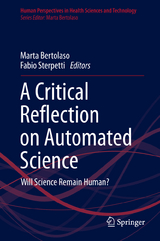
This book provides a critical reflection on automated science and addresses the question whether the computational tools we developed in last decades are changing the way we humans do science. More concretely: Can machines replace scientists in crucial aspects of scientific practice? The contributors to this book re-think and refine some of the main concepts by which science is understood, drawing a fascinating picture of the developments we expect over the next decades of human-machine co-evolution. The volume covers examples from various fields and areas, such as molecular biology, climate modeling, clinical medicine, and artificial intelligence. The explosion of technological tools and drivers for scientific research calls for a renewed understanding of the human character of science. This book aims precisely to contribute to such a renewed understanding of science.
Foreword: The Social Trends Institute 6
Acknowledgments 7
Contents 8
Introduction. Human Perspectives on the Quest for Knowledge 10
Introducing the New Series 10
The Theme of the Volume 11
Overview of the Volume 13
References 17
Part I: Can Discovery Be Automated? 18
Why Automated Science Should Be Cautiously Welcomed 19
Introduction 19
Some Advantages of Automated Science 20
Styles of Automated Representation 21
Two Views on Science 22
Epistemic Opacity 23
Representational Opacity 24
Problems with Automated Science 25
Types of Representation 27
Reliabilism 32
Conclusion 33
References 33
Instrumental Perspectivism: Is AI Machine Learning Technology Like NMR Spectroscopy? 35
Introduction 35
Routes to Scientific Knowledge 37
The New Technologies 39
The Instrumental Stance 40
Theoretical Support 42
Replicability and Convergence 45
AI Instrumental Perspectives 46
References 48
How Scientists Are Brought Back into Science—The Error of Empiricism 51
Introduction 51
Machine-Learning 55
Machine-Learning Technologies 55
What Machines Can Do 56
Empiricist Epistemologies 58
Basic Assumptions of Empiricism 58
Scientific Explanation 59
Data and Phenomena 61
The Semantic View of Theories 63
Knowledge in the Age of Machine-Learning Technologies 65
Empiricist Epistemologies: Theories Add Absolutely Nothing to Data-Models 65
Scientific Realism in Defense of Science 66
The Pragmatic Value of Scientific Knowledge in Epistemic Tasks 66
Preparing the Data 67
Epistemic Tasks in Engineering and Biomedical Sciences 69
The Error of Empiricism 70
References 70
Information at the Threshold of Interpretation: Science as Human Construction of Sense 74
Introduction: The Origin of Sense 74
The Modern Origin of Elaboration of Information as Formal Deduction: Productivity and Limits of ‘Nonsense’ in the Foundational Debate in Mathematics 76
Reconquering Meaning 78
The Role of ‘Interpretation’ in Programming, as Elaboration of Information 81
Which Information Is Handled by a Magic Demon? 82
The Biology of Molecules, Well Before the Threshold of Biological Meaning 86
From Geodetics to Formal Rules and Back Again 90
Computations as Norms 92
Back to Geodetics in Artificial Intelligence and to Sense Construction 95
Input-Output Machines and Brain Activity 97
A Societal Conclusion 98
References25 101
Mathematical Proofs and Scientific Discovery 107
The Method of Mathematics and the Automation of Science 107
The Analytic View of the Method of Mathematics 110
The Analytic Method as a Heuristic Method 112
The Analytic View and the Automation of Science 118
Proofs and Programs 119
Mathematical Knowledge 122
Mathematical Starting Points 123
Gödel’s Disjunction 124
Intrinsic and Extrinsic Justification 128
Lucas’ and Penrose’s Arguments 131
Lucas’s and Penrose’s Arguments and the Axiomatic View 133
Absolute Provability and the Axiomatic View 135
The Debate on Gödel’s Disjunction and the Axiomatic View 137
Conclusions 138
References 139
Part II: Automated Science and Computer Modelling 143
The Impact of Formal Reasoning in Computational Biology 144
Introduction 144
Formal and Informal Reasoning 145
Informal Reasoning in Molecular and Cell Biology 148
Examples of Computational Methods 151
Computational Models in Cell Biology 151
Image Analysis 154
Bioinformatics 156
Discussion 158
References 159
Phronesis and Automated Science: The Case of Machine Learning and Biology 161
Introduction 161
Machine Learning and Its Scope 162
Automated Science 163
Rules Are Not Enough in Machine Learning 164
Experimental Science and Rules 167
Techne, Phronesis and Automated Science 169
A Possible Objection and Reply 173
Conclusion 175
References 175
A Protocol for Model Validation and Causal Inference from Computer Simulation 177
Introduction 177
Modelling and Simulation in Systems Biology 179
Case Study: Cell Proliferation Modelling 181
First Model: Bottom-Up ABM Modelling of Epithelial Cell Growth 183
Second Model: Integration of the First Agent-Based Model and an ODE System into a Multiscale Model 185
Third Model: Simplified Educated-Phenomenological Model 189
Towards a Protocol for Causal Inference from Computer Simulation 189
From Formal Model to Stable Code 189
Measurement by Simulation 192
Verification, Validation, Revision 193
Accuracy and Robustness 195
Causal Inference 197
Computer Simulation, Causal Discovery Algorithms, and RCTs 202
Causal Inference from Modeling and Simulation 205
Appendices 207
Appendix A: Rules Dictating Cell Behaviour 207
Appendix B: The Causal Structure Underpinning the Set of Rules 211
Appendix C: Cell Growth Benchmark 212
Appendix D: Modifications of the ABM Component for the Second Model 212
Appendix E: Testing the Modelling Assumptions of the Second Model 213
References 217
Can Models Have Skill? 220
Introduction 220
Verification and Validation 221
An Alternative Picture 225
Tuning 228
Conclusion 236
References 236
Virtually Extending the Bodies with (Health) Technologies 238
Introduction 238
The Extension Thesis 239
The EMT Bodily Extension 240
Social and Second Bodies 241
Extending the Body and the Health-Extended Bodies 242
Conclusion and What’s Next 246
References 247
Part III: Automated Science and Human Values 249
Behold the Man: Figuring the Human in the Development of Biotechnology 250
Introduction 250
Perfecting What? 252
From Understanding to Know-How 253
From Purpose to Risk 255
From Risk to Telos 259
Figuring the Human 263
What Science, Which Human? 266
References 268
The Dehumanization of Technoscience 270
Diagnosis of a Problem: The Dehumanization of Technoscience 270
Technoscience and Its Semantic Field 270
The Symptoms of the Problem 271
Possible Causes 272
Searching for a Solution 273
A Pluralist Ontology and a Systemic Model 273
Technoscience as a Personal Action 274
Technoscience at the Service of a (Truly) Human Life 276
Concluding Summary 277
References 278
What Is ‘Good Science’? 279
Introduction 279
The External Ethics of Science 281
The Social Ethics of Science 284
The Internal Ethics of Science 288
Conclusion 291
References 291
Cultivating Humanity in Bio- and Artificial Sciences 293
The Humanity of Technoscience in Biotechnology 293
Technologies of Life and the Separation of Facts and Values 294
Reductionist Assumptions in Life Sciences and Artificial Sciences 297
For Science to Remain Human: Normatively Defining Human Nature or Cultivating Human Skills? 299
References 302
| Erscheint lt. Verlag | 5.2.2020 |
|---|---|
| Reihe/Serie | Human Perspectives in Health Sciences and Technology | Human Perspectives in Health Sciences and Technology |
| Zusatzinfo | X, 302 p. 24 illus. |
| Sprache | englisch |
| Themenwelt | Geisteswissenschaften ► Philosophie ► Erkenntnistheorie / Wissenschaftstheorie |
| Sozialwissenschaften ► Soziologie | |
| Technik | |
| Schlagworte | automated science • auto-reflexitivity • bio-medical sciences • Computational Biology • ethics of digital networks • Philosophy of Technology • research ethics • social games • technology and the body • technoscience and humanity |
| ISBN-10 | 3-030-25001-6 / 3030250016 |
| ISBN-13 | 978-3-030-25001-0 / 9783030250010 |
| Informationen gemäß Produktsicherheitsverordnung (GPSR) | |
| Haben Sie eine Frage zum Produkt? |
 PDF (Wasserzeichen)
DRM: Digitales Wasserzeichen
Dieses eBook enthält ein digitales Wasserzeichen und ist damit für Sie personalisiert. Bei einer missbräuchlichen Weitergabe des eBooks an Dritte ist eine Rückverfolgung an die Quelle möglich.
Dateiformat: PDF (Portable Document Format)
Mit einem festen Seitenlayout eignet sich die PDF besonders für Fachbücher mit Spalten, Tabellen und Abbildungen. Eine PDF kann auf fast allen Geräten angezeigt werden, ist aber für kleine Displays (Smartphone, eReader) nur eingeschränkt geeignet.
Systemvoraussetzungen:
PC/Mac: Mit einem PC oder Mac können Sie dieses eBook lesen. Sie benötigen dafür einen PDF-Viewer - z.B. den Adobe Reader oder Adobe Digital Editions.
eReader: Dieses eBook kann mit (fast) allen eBook-Readern gelesen werden. Mit dem amazon-Kindle ist es aber nicht kompatibel.
Smartphone/Tablet: Egal ob Apple oder Android, dieses eBook können Sie lesen. Sie benötigen dafür einen PDF-Viewer - z.B. die kostenlose Adobe Digital Editions-App.
Buying eBooks from abroad
For tax law reasons we can sell eBooks just within Germany and Switzerland. Regrettably we cannot fulfill eBook-orders from other countries.
aus dem Bereich