Introduction to Human Nutrition (eBook)
John Wiley & Sons (Verlag)
978-1-119-47702-0 (ISBN)
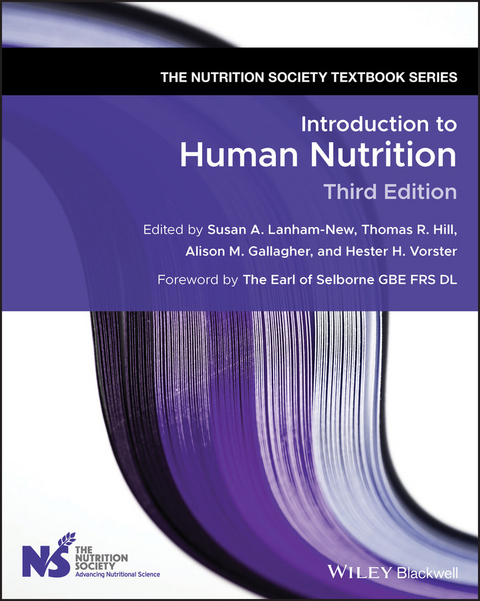
Now in its third edition, the best-selling Introduction to Human Nutrition continues to foster an integrated, broad knowledge of the discipline and presents the fundamental principles of nutrition science in an accessible way. With up-to-date coverage of a range of topics from food composition and dietary reference standards to phytochemicals and contemporary challenges of global food safety, this comprehensive text encourages students to think critically about the many factors and influences of human nutrition and health outcomes.
- Offers a global, multidisciplinary perspective on food and nutrition
- Covers nutrition and metabolism of proteins, lipids, carbohydrates and vitamins and minerals
- Explores new developments in functional foods, supplements and food fortification, and future challenges for nutrition research and practice
- Explains the digestion, absorption, circulatory transport, and cellular uptake of nutrients
- Demonstrates the structure and characteristics of nutrients, and the relationship with disease prevention
A primary text in nutritional science classes worldwide, Introduction to Human Nutrition is a vital resource for students in areas of nutrition, dietetics, and related subjects that involve principles of nutrition science.
Susan A. Lanham-New is Head of the Department, Nutritional Sciences, University of Surrey, Guildford, UK.
Thomas R. Hill is Professor of Nutrition, Newcastle University, Newcastle-upon-Tyne, UK.
Alison M. Gallagher is Head of the Doctoral College, Ulster University, Coleraine, NI.
Hester H. Vorster is Emeritus Professor, North-West University, Potchefstroom, ZA.
Susan A. Lanham-New is Head of the Department, Nutritional Sciences, University of Surrey, Guildford, UK. Thomas R. Hill is Professor of Nutrition, Newcastle University, Newcastle-upon-Tyne, UK. Alison M. Gallagher is Head of the Doctoral College, Ulster University, Coleraine, NI. Hester H. Vorster is Emeritus Professor, North-West University, Potchefstroom, ZA.
Contributors vii
Preface ix
Series Foreword xi
About the Companion Website xii
1 Introduction to Human Nutrition: A Global Perspective on Food and Nutrition 1
Susan A. Lanham-New, Marcela Moraes Mendes, and Hester H. Vorster
2 Measuring Dietary Intake 13
Una E. MacIntyre and Friedeburg AM. Wenhold
3 Food Composition 56
Hettie C. Schönfeldt and Beluah Pretorius
4 Dietary Reference Standards 74
Kate M. Younger
5 Body Composition 85
Anja Bosy-Westphal, Paul Deurenberg, and Manfred James Müller
6 Energy Metabolism 113
Gareth A. Wallis
7 Nutrition and Metabolism of Proteins and Amino Acids 131
D. Joe Millward
8 Digestion and Metabolism of Carbohydrates 161
John C. Mathers
9 Nutrition and Metabolism of Lipids 177
Bruce A. Griffin and Stephen C. Cunnane
10 The Vitamins 218
David A. Bender
11 Minerals and Trace Elements 280
JJ. Strain, Alison J. Yeates, and Kevin D. Cashman
12 Phytochemicals 339
Gary Williamson
13 Physical Activity: Concepts, Assessment Methods and Public Health Considerations 352
Angela Carlin, Marie H. Murphy, and Alison M. Gallagher
14 Nutrition Research Methodology 367
J. Alfredo Martínez, Estefania Toledo, and Miguel A. Martinez-Gonzalez
15 Food Safety: A Public Health Issue of Growing Importance 388
Catherine M. Burgess, Cristina Arroyo, Declan J. Bolton, Martin Danaher, Lisa O'Connor, Patrick J. O'Mahony, and Christina Tlustos
16 Food and Nutrition: Policy and Regulatory Issues 418
Aideen McKevitt, James Gallagher, and Cassandra H. Ellis
17 Food and Nutrition-Related Diseases: The Global Challenge 439
Thomas R. Hill and Georg Lietz
Introduction to Human Nutrition, Editor Biographies 453
Index 456
1
Introduction to Human Nutrition: A Global Perspective on Food and Nutrition
Susan A. Lanham‐New, Marcela Moraes Mendes, and Hester H. Vorster
Key messages
- Human nutrition is a complex, multifaceted scientific domain indicating how substances in foods provide essential nourishment for the maintenance of life.
- To understand, study, research, and practice nutrition, a holistic integrated approach from molecular to societal level is needed.
- Optimal, balanced nutrition is a major determinant of health. It can be used to promote health and well‐being, to prevent ill‐health, and to treat disease.
- The study of the structure, chemical and physical characteristics, and physiological and biochemical effects of the more than 50 nutrients found in foods underpins the understanding of nutrition.
- The hundreds of millions of food‐ and nutrition‐insecure people globally, the coexistence of undernutrition and overnutrition, and inappropriate nutritional behaviors are challenges that face the nutritionist of today.
- Nutrition practice has a firm and well‐developed research and knowledge base. There are, however, many areas where more information is needed to solve global, regional, communal and individual nutrition problems.
- The development of ethical norms, standards, and values in nutrition research and practice is needed.
1.1 Orientation to human nutrition
The major purpose of this series of four textbooks on nutrition is to guide the nutrition student through the exciting journey of discovery of nutrition as a science. As apprentices in nutrition science and practice students will learn how to collect, systemise, and classify knowledge by reading, experimentation, observation, and reasoning. The road for this journey was mapped out millennia ago. The knowledge that nutrition – what we choose to eat and drink – influences our health, well‐being, and quality of life is as old as human history. For millions of years the quest for food has helped to shape human development, the organisation of society and history itself. It has influenced wars, population growth, urban expansion, economic and political theory, religion, science, medicine, and technological development.
It was only in the second half of the eighteenth century that nutrition started to experience its first renaissance with the observation by scientists that intakes of certain foods, later called nutrients, and eventually other substances not yet classified as nutrients, influence the function of the body, protect against disease, restore health, and determine people’s response to changes in the environment. During this period, nutrition was studied from a medical model or paradigm by defining the chemical structures and characteristics of nutrients found in foods, their physiological functions, biochemical reactions and human requirements to prevent, first, deficiency diseases and, later, also chronic noncommunicable diseases.
Since the late 1980s nutrition has experienced a second renaissance with the growing perception that the knowledge gained did not equip mankind to solve the global problems of food insecurity and malnutrition. The emphasis shifted from the medical or pathological paradigm to a more psychosocial, behavioral one in which nutrition is defined as a basic human right, not only essential for human development but also as an outcome of development.
In this first, introductory text, the focus is on the principles and essentials of human nutrition, with the main purpose of helping the nutrition student to develop a holistic and integrated understanding of this complex, multifaceted scientific domain.
1.2 An integrated approach
Human nutrition describes the processes whereby cellular organelles, cells, tissues, organs, systems, and the body as a whole obtain and use necessary substances obtained from foods (nutrients) to maintain structural and functional integrity. For an understanding of how humans obtain and utilise foods and nutrients from a molecular to a societal level, and of the factors determining and influencing these processes, the study and practice of human nutrition involve a spectrum of other basic and applied scientific disciplines. These include molecular biology, genetics, biochemistry, chemistry, physics, food science, microbiology, physiology, pathology, immunology, psychology, sociology, political science, anthropology, agriculture, pharmacology, communications, and economics. Nutrition departments are, therefore, often found in Medical (Health) or Social Science, or Pharmacy, or Agriculture Faculties at tertiary training institutions. The multidisciplinary nature of the science of nutrition, lying in both the natural (biological) and social scientific fields, demands that students of nutrition should have a basic understanding of many branches of science and that they should be able to integrate different concepts from these different disciplines. It implies that students should choose their accompanying subjects (electives) carefully and that they should read widely in these different areas.
1.3 A conceptional framework for the study of nutrition
In the journey of discovery into nutrition science it will often be necessary to put new knowledge, or new applications of old knowledge, into the perspective of the holistic picture. For this, a conceptual framework of the multidisciplinary nature of nutrition science and practice may be of value. Such a conceptual framework, illustrating the complex interactions between internal or constitutional factors and external environmental factors which determine nutritional status and health, is given in Figure 1.1.
Figure 1.1 Conceptual framework for a holistic, integrated understanding of human nutrition.
On a genetic level it is now accepted that nutrients dictate phenotypic expression of an individual’s genotype by influencing the processes of transcription, translation, or post‐translational reactions. In other words, nutrients can directly influence genetic (DNA) expression, determining the type of RNA formed (transcription) and also the proteins synthesised (translation). For example, glucose, a carbohydrate macronutrient, increases transcription for the synthesis of glucokinase, the micronutrient iron increases translation for the synthesis of ferritin, while vitamin K increases post‐translational carboxylation of glutamic acid residues for the synthesis of prothrombin. Nutrients, therefore, influence the synthesis of structural and functional proteins, by influencing gene expression within cells.
Nutrients also act as substrates and cofactors in all the metabolic reactions in cells necessary for the growth and maintenance of structure and function. Cells take up nutrients (through complex mechanisms across cell membranes) from their immediate environment, also known as the body’s internal environment. The composition of this environment is carefully regulated to ensure optimal function and survival of cells, a process known as homeostasis, which gave birth to a systems approach in the study of nutrition.
Nutrients and oxygen are provided to the internal environment by the circulating blood, which also removes metabolic end‐products and harmful substances from this environment for excretion through the skin, the kidneys, and the large bowel.
The concerted function of different organs and systems of the body ensures that nutrients and oxygen are extracted or taken up from the external environment and transferred to the blood for transport and delivery to the internal environment and cells. The digestive system, for example, is responsible for the ingestion of food and beverages, the breakdown (digestion and fermentation) of these for extraction of nutrients, and the absorption of the nutrients into the circulation, while the respiratory system extracts oxygen from the air. These functions are coordinated and regulated by the endocrine and central nervous systems in response to the chemical and physical composition of the blood and internal environment, and to cellular needs.
The health or disease state of the different organs and systems will determine the nutrient requirements of the body as a whole.
The central nervous system is also the site or “headquarters” of the higher, mental functions related to conscious or cognitive, spiritual, religious, and cultural behaviors, which will determine, in response to the internal and external environments, what and how much will be eaten. What and how much is eaten will further depend on what is available, influenced by a host of factors determining food security. All of these factors, on an individual, household, community, national, or international level, shape the external environment.
During the first renaissance of nutrition, emphasis was placed on the study of nutrients and their functions. A medical, natural science, or biological model underpinned the study of the relationships between nutrition and health or ill‐health. During the second renaissance, these aspects are not neglected, but expanded to include the study of all other external environmental factors that determine what and how much food and nutrients are available on a global level. These studies are underpinned by social, behavioral, economic, agricultural, and political sciences. The study of human nutrition therefore seeks to understand the complexities of both social and biological...
| Erscheint lt. Verlag | 9.10.2019 |
|---|---|
| Reihe/Serie | The Nutrition Society Textbook |
| The Nutrition Society Textbook | The Nutrition Society Textbook |
| Sprache | englisch |
| Themenwelt | Medizin / Pharmazie ► Gesundheitsfachberufe ► Diätassistenz / Ernährungsberatung |
| Medizin / Pharmazie ► Medizinische Fachgebiete | |
| Technik | |
| Schlagworte | Clinical Nutrition • Ernährung • Ernährung u. Diätetik • Food Science & Technology • Gesundheits- u. Sozialwesen • Health & Social Care • human nutrition intro • Klinische Ernährung • Lebensmittelforschung u. -technologie • nutrients and health • Nutrition • Nutrition & Dietetics General • nutrition essentials • nutrition evidence • nutrition fundamentals • Nutrition Principles • Nutrition Science • nutrition science textbook • Nutrition Society textbook • nutrition studies • nutrition textbook |
| ISBN-10 | 1-119-47702-6 / 1119477026 |
| ISBN-13 | 978-1-119-47702-0 / 9781119477020 |
| Informationen gemäß Produktsicherheitsverordnung (GPSR) | |
| Haben Sie eine Frage zum Produkt? |
 EPUB (Adobe DRM)
Kopierschutz: Adobe-DRM
Adobe-DRM ist ein Kopierschutz, der das eBook vor Mißbrauch schützen soll. Dabei wird das eBook bereits beim Download auf Ihre persönliche Adobe-ID autorisiert. Lesen können Sie das eBook dann nur auf den Geräten, welche ebenfalls auf Ihre Adobe-ID registriert sind.
Details zum Adobe-DRM
Dateiformat: EPUB (Electronic Publication)
EPUB ist ein offener Standard für eBooks und eignet sich besonders zur Darstellung von Belletristik und Sachbüchern. Der Fließtext wird dynamisch an die Display- und Schriftgröße angepasst. Auch für mobile Lesegeräte ist EPUB daher gut geeignet.
Systemvoraussetzungen:
PC/Mac: Mit einem PC oder Mac können Sie dieses eBook lesen. Sie benötigen eine
eReader: Dieses eBook kann mit (fast) allen eBook-Readern gelesen werden. Mit dem amazon-Kindle ist es aber nicht kompatibel.
Smartphone/Tablet: Egal ob Apple oder Android, dieses eBook können Sie lesen. Sie benötigen eine
Geräteliste und zusätzliche Hinweise
Buying eBooks from abroad
For tax law reasons we can sell eBooks just within Germany and Switzerland. Regrettably we cannot fulfill eBook-orders from other countries.
aus dem Bereich