


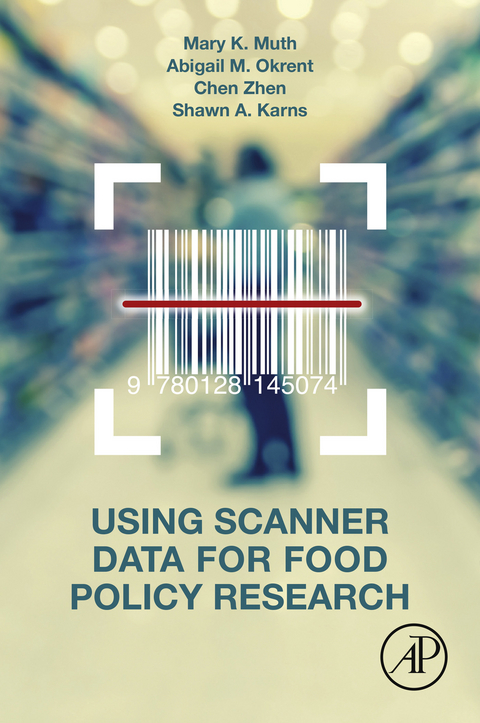
Using Scanner Data for Food Policy Research (eBook)
342 Seiten
Elsevier Science (Verlag)
978-0-12-814547-0 (ISBN)
Mary K. Muth, PhD, is director of RTI International's Food, Nutrition, and Obesity Policy Research Program. Muth conducts research studies for government agencies and other organizations to analyse the impacts of policies, regulations, and other initiatives affecting food and agriculture. She specializes in the areas of nutrition, food security, food waste, food pricing, food labelling, food reformulation, and food safety. She has extensive experience analysing food availability, purchase, and consumption data and developing economic models of the impacts of food policy. Dr. Muth is also an adjunct associate professor in the Department of Agricultural and Resource Economics at North Carolina State University.
Using Scanner Data for Food Policy Research is a practitioners' guide to using and interpreting scanner data obtained from stores and households in policy research. It provides practical advice for using the data and interpreting their results. It helps the reader address key methodological issues such as aggregation, constructing price indices, and matching the data to nutrient values. It demonstrates some of the key econometric and statistical applications of the data, including estimating demand systems for policy simulation, analyzing effects of food access on food choices, and conducting cost-benefit analysis of food policies. This guide is intended for early-career researchers, particularly those working with scanner data in agricultural and food economics, nutrition, and public health contexts. - Describe different types of scanner data, the types of information available in the data, and the vendors that offer these data- Describe food-label data that can be appended to scanner data- Identify key questions that researchers should consider when acquiring scanner and label data for food policy research- Demonstrate how to use scanner data using tools from econometric and statistical analyses, including the limitations in interpreting results using the data- Describe and resolve key methodological issues related to using the data to facilitate more rapid analyses- Provide an overview of published literature as background for designing new studies- Demonstrate key applications of the data for food policy research
| Erscheint lt. Verlag | 12.10.2019 |
|---|---|
| Sprache | englisch |
| Themenwelt | Technik ► Lebensmitteltechnologie |
| Wirtschaft ► Betriebswirtschaft / Management | |
| Wirtschaft ► Volkswirtschaftslehre | |
| Weitere Fachgebiete ► Land- / Forstwirtschaft / Fischerei | |
| ISBN-10 | 0-12-814547-1 / 0128145471 |
| ISBN-13 | 978-0-12-814547-0 / 9780128145470 |
| Informationen gemäß Produktsicherheitsverordnung (GPSR) | |
| Haben Sie eine Frage zum Produkt? |
 EPUB (Adobe DRM)
Kopierschutz: Adobe-DRM
Adobe-DRM ist ein Kopierschutz, der das eBook vor Mißbrauch schützen soll. Dabei wird das eBook bereits beim Download auf Ihre persönliche Adobe-ID autorisiert. Lesen können Sie das eBook dann nur auf den Geräten, welche ebenfalls auf Ihre Adobe-ID registriert sind.
Details zum Adobe-DRM
Dateiformat: EPUB (Electronic Publication)
EPUB ist ein offener Standard für eBooks und eignet sich besonders zur Darstellung von Belletristik und Sachbüchern. Der Fließtext wird dynamisch an die Display- und Schriftgröße angepasst. Auch für mobile Lesegeräte ist EPUB daher gut geeignet.
Systemvoraussetzungen:
PC/Mac: Mit einem PC oder Mac können Sie dieses eBook lesen. Sie benötigen eine
eReader: Dieses eBook kann mit (fast) allen eBook-Readern gelesen werden. Mit dem amazon-Kindle ist es aber nicht kompatibel.
Smartphone/Tablet: Egal ob Apple oder Android, dieses eBook können Sie lesen. Sie benötigen eine
Geräteliste und zusätzliche Hinweise
Buying eBooks from abroad
For tax law reasons we can sell eBooks just within Germany and Switzerland. Regrettably we cannot fulfill eBook-orders from other countries.
aus dem Bereich


