Introduction to Materials Chemistry (eBook)
John Wiley & Sons (Verlag)
978-1-119-34725-5 (ISBN)
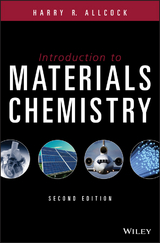
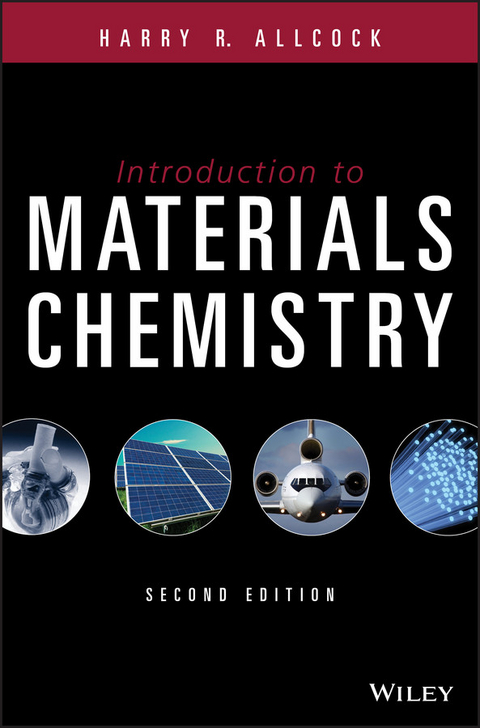
This textbook introduces the reader to the elementary chemistry on which materials science depends by discussing the different classes of materials and their applications. It shows the reader how different types of materials are produced, why they possess specific properties, and how they are used in technology. Each chapter contains study questions to enable discussions and consolidation of the acquired knowledge.
The new edition of this textbook is completely revised and updated to reflect the significant expansion of the field of materials chemistry over the last years, covering now also topics such as graphene, nanotubes, light emitting diodes, extreme photolithography, biomedical materials, and metal organic frameworks.
From the reviews of the first edition:
'This book is not only informative and comprehensive for a novice reader, but also a valuable resource for a scientist and/or an industrialist for new and novel challenges.' (Materials and Manufacturing Process, June 2009)
'Allcock provides a clear path by first describing basic chemical principles, then distinguishing between the various major materials groups, and finally enriching the student by offering a variety of special examples.' (CHOICE, April 2009)
'Proceeding logically from the basics to materials in advanced technology, it covers the fundamentals of materials chemistry, including principles of materials synthesis and materials characterization methods.' (Internationale Fachzeitschrift Metall, January 2009)
HARRY R. ALLCOCK, PHD, is an Evan Pugh Professor of Chemistry at The Pennsylvania State University. His research interests include applications of chemical synthesis to polymer chemistry, materials science, energy research, and biomedicine; and the correlation of molecular structure with properties for hybrid inorganic-organic macromolecules and materials.
This textbook introduces the reader to the elementary chemistry on which materials science depends by discussing the different classes of materials and their applications. It shows the reader how different types of materials are produced, why they possess specific properties, and how they are used in technology. Each chapter contains study questions to enable discussions and consolidation of the acquired knowledge. The new edition of this textbook is completely revised and updated to reflect the significant expansion of the field of materials chemistry over the last years, covering now also topics such as graphene, nanotubes, light emitting diodes, extreme photolithography, biomedical materials, and metal organic frameworks. From the reviews of the first edition: "e;This book is not only informative and comprehensive for a novice reader, but also a valuable resource for a scientist and/or an industrialist for new and novel challenges."e; (Materials and Manufacturing Process, June 2009) "e;Allcock provides a clear path by first describing basic chemical principles, then distinguishing between the various major materials groups, and finally enriching the student by offering a variety of special examples."e; (CHOICE, April 2009) "e;Proceeding logically from the basics to materials in advanced technology, it covers the fundamentals of materials chemistry, including principles of materials synthesis and materials characterization methods."e; (Internationale Fachzeitschrift Metall, January 2009)
HARRY R. ALLCOCK, PHD, is an Evan Pugh Professor of Chemistry at The Pennsylvania State University. His research interests include applications of chemical synthesis to polymer chemistry, materials science, energy research, and biomedicine; and the correlation of molecular structure with properties for hybrid inorganic-organic macromolecules and materials.
Second Edition of Introduction to Materials Chemistry
Harry R. Allcock
Part I Introduction to Materials Chemistry
Chapter 1 What is Materials Chemistry?
Chapter 2 Fundamental Principles that Underlie Materials Chemistry
Chapter 3 General Background to Materials Synthesis and Isolation
Chapter 4 Chemistry of Representative Elements
Chapter 5 Characterization
Part II Different Types of Materials
Chapter 6 Small Molecules in Solids
Chapter 7 Porous Solids
Chapter 8 Ceramics and Inorganic Glasses
Chapter 9 Polymers: Fundamental Aspects
Chapter 10 Polymer Morphology and Fabrication
Chapter 11 Carbon-Based Materials
Chapter 12 Metals and Alloys
Chapter 13 Superconductors
Part III Materials in Advanced Technology
Chapter 14 Semiconductor Basics
Chapter 15 Photolithography
Chapter 16 Semiconductor Devices
Chapter 17 Optical and Photonic Devices
Chapter 18 Materials for Energy Generation and Storage
Chapter 19 Membranes
Chapter 20 Surface Science
Chapter 21 Biomedical Materials
Chapter 22 Miniaturization in Materials Science
Glossary
Index
1
What Is Materials Chemistry?
A. Different Types of Materials
Materials science is mainly the science of solids, a field that encompasses most aspects of modern life. This book provides an introductory, qualitative overview of the role of chemistry in important and expanding areas of materials science, with an emphasis on the ways in which materials are designed, synthesized, evaluated, and used. It starts from the recognition that Chemistry is one of the key components of Materials Science, and that it is connected directly to the fields of Condensed Matter Physics, and to Engineering and Medicine (Figure 1.1). Materials chemistry, if carried out correctly, is a transformational subject. In other words, it is capable of initiating major, often revolutionary, changes to the other fields.
Figure 1.1 Materials science involves research and technology derived from all four of the main technical fields.
A starting point for understanding this subject is to recognize that there are a number of different types of substances that are the basis of materials science. These are ceramics, metals, polymers, carbon materials, superconductors, element and inter‐element semiconductors, optical materials, and a range of species in which small molecules are packed into ordered solids (Figure 1.2). These fields were once separate disciplines with little or no exchange of ideas across the boundaries. This is no longer true, and the central area in Figure 1.2 symbolizes research and technology that joins and crosses the different disciplines.
Figure 1.2 Different types of materials. Ceramics, metals, semiconductors, superconductors, and optical materials are traditionally derived from inorganic sources. Polymers and small molecules in solids are normally obtained from organic or organometallic starting materials. The central area represents the development of new types of materials that combine ideas and structures from the traditional areas in order to generate new combinations of properties. It is in this central area that some of the most important future advances can be expected.
These cross‐disciplinary interactions exist at three different levels. First, the central area in Figure 1.2 symbolizes the many devices and machines that utilize different materials. For example, integrated semiconductor microcircuits are based on the properties of doped silicon, silicon dioxide, and copper but the patterning of the devices depends on the properties of polymers. Aircraft are constructed from metals such as aluminum or titanium together with polymer/carbon fiber composites. Lens systems utilize inorganic glasses and polymers. Optical communications equipment makes use of silicate–germanate glasses and inorganic semiconductor lasers.
Second, the central area in Figure 1.2 represents materials that are themselves hybrids of traditional solids both in composition and properties. Sometimes, a hybrid material derived from, for example, small molecules trapped in an organic or inorganic lattice has superior properties to those of the individual components. Or, a polymer that contains both organic and inorganic components may have characteristics that are an advance over those found in classical organic polymers or in traditional inorganic solids.
Third, the central area is where ideas developed in one field are used to promote advances in another. For example, concepts that were once thought to be specific to inorganic semiconductors may stimulate thinking about the behavior of some layered solids such as carbon nanotubes or graphene, or of unsaturated organic polymers. Many of the ideas developed originally to explain the behavior of clathrated small molecules trapped in crystal lattices are applicable to the properties of materials such as zeolites or metal–organic frameworks.
The cross‐disciplinary nature of materials science is particularly important when the sources of different materials are considered (Figure 1.3) and the different property combinations that are involved. Each of the classical materials has advantages and disadvantages. Some of these are also summarized in Figure 1.3.
Figure 1.3 Sources of the main classes of materials and the properties that determine their uses.
For instance, classical ceramics are rigid, chemically inert, and withstand high temperatures, but they are heavy, often brittle, and are difficult to fabricate into complex shapes. Most common metals are strong, tough, and are good electrical conductors, but nearly all are heavy and prone to corrosion. There are also serious environmental penalties to be paid for their extraction from minerals and in their refining. Inorganic semiconductors play a vital role in communications technology and computing but newer materials are often difficult to purify and fabricate and are thus expensive. Classical polymers are inexpensive because they are derived from petroleum. They are easily fabricated because of their low softening temperatures, are corrosion resistant, and are excellent electrical insulators. However, most polymers melt at only moderate temperatures, decompose when heated to high temperatures in air, and are flammable. Materials derived from small molecules packed into solids may be semiconductors, but they are brittle and melt at relatively low temperatures. These advantages and disadvantages further illustrate the importance of the central area in Figure 1.2, where cross‐disciplinary research aims to produce materials that retain the advantages but minimize the disadvantages of existing materials.
All but two of the main materials areas were once based exclusively on inorganic chemistry. The main exception was the field of polymer science, which traditionally depended on organic chemistry. However, here too the classical boundaries are disappearing, as easily fabricated organic semiconductors become alternatives to traditional silicon semiconductors for specialized applications such as light‐emitting materials. Moreover, transparent organic glasses increasingly replace the heavier silicate‐based glasses in lenses, prisms, and some optical waveguides and switches. Ultra‐strong polymer–ceramic composites have grown in importance as replacements for metals.
Modern materials science also covers substances that have properties that are intermediate between those of solids and liquids such as elastomers and gels.
Finally, it is essential for the reader to recognize the fundamental principle that materials science extends across all areas of chemistry, physics, engineering, biology, and medicine, and that breadth of knowledge across the physical and biological sciences is an essential requirement for understanding the scope and utility of this field. This is illustrated by the wide range of disciplines that went into the design and construction of the International Space Station (Figure 1.4).
Figure 1.4 The International Space Station showing the silicon semiconductor solar panels and the metal main structure.
Source: Courtesy of N.A.S.A.
B. The Role of Chemistry in Materials Science
All the different aspects of chemistry – organic and inorganic synthesis, analytical, physical, biological, and theory – provide an entry point into materials science. Synthetic chemistry is needed to produce new materials, while analytical and physical chemistry are the basis of characterization. Biological chemistry provides techniques to immobilize cells, enzymes, or other biomolecules to surfaces or gels. Theory helps to explain unexpected solid‐state behavior. It is also important to remember that solutions to many often‐complex material problems lie in the utilization of small‐molecule science. Thus, a fundamental approach derived from the synthesis of small molecules, and an understanding of their structure–property relationships, is often an important starting point for progress in materials science.
Thus, small‐molecule chemistry (i.e. 2–100 atoms per molecules) provides us with many of the initial insights that underlie our fundamental knowledge of more complex substances. They also account for many of the traditional uses for small‐molecule chemicals in modern life (Table 1.1). Small‐molecule chemistry is often the first step for the development of more complex systems such as macromolecules, “extended lattices,” and ultrastructures, which are extremely large species in which a visible object consists of one giant molecule. These more complicated molecules and network systems are the basis for many rapidly advancing technologies such as the examples shown in Table 1.1. Some solids occupy an intermediate category between small and large molecules. Other areas of materials science are based on a combination of small molecules with larger structures.
Table 1.1 Comparison of uses for small molecules and materials.
| Small molecules | Materials |
| Pharmaceuticals | Structural solids |
| Fire retardants | Elastomers |
| Dyes | Textile fibers |
| Inks | Films and... |
| Erscheint lt. Verlag | 2.10.2019 |
|---|---|
| Sprache | englisch |
| Themenwelt | Naturwissenschaften ► Chemie |
| Technik ► Maschinenbau | |
| Schlagworte | Basic Synthesis and Reaction Chemistry • biomedical materials • Carbon-Based Materials • Ceramics and Inorganic Glasses • Chemie • Chemistry • definition of materials chemistry • Festkörperchemie • fundamental aspects of polymers • fundamental principles that underlie materials chemistry • introduction to material science • <p>Guide to Materials Chemistry • Materials for Energy Generation and Energy Storage • materials in advanced technology • Materials Science • Materialwissenschaften • Membranes • Metals and Alloys • Miniaturization in Materials Science </p> • Optical and Photonic devices • photolithography • Porous Solids • resource to materials chemistry • Semiconductor basics • Semiconductor Devices • Small Molecules in Solids • solid state chemistry • special aspects of polymers • Structure Determination and Special Techniques for Materials Characterization • superconductors • Surface Science • Understanding Materials Chemistry • various types of chemistry materials |
| ISBN-10 | 1-119-34725-4 / 1119347254 |
| ISBN-13 | 978-1-119-34725-5 / 9781119347255 |
| Informationen gemäß Produktsicherheitsverordnung (GPSR) | |
| Haben Sie eine Frage zum Produkt? |
 EPUB (Adobe DRM)
Kopierschutz: Adobe-DRM
Adobe-DRM ist ein Kopierschutz, der das eBook vor Mißbrauch schützen soll. Dabei wird das eBook bereits beim Download auf Ihre persönliche Adobe-ID autorisiert. Lesen können Sie das eBook dann nur auf den Geräten, welche ebenfalls auf Ihre Adobe-ID registriert sind.
Details zum Adobe-DRM
Dateiformat: EPUB (Electronic Publication)
EPUB ist ein offener Standard für eBooks und eignet sich besonders zur Darstellung von Belletristik und Sachbüchern. Der Fließtext wird dynamisch an die Display- und Schriftgröße angepasst. Auch für mobile Lesegeräte ist EPUB daher gut geeignet.
Systemvoraussetzungen:
PC/Mac: Mit einem PC oder Mac können Sie dieses eBook lesen. Sie benötigen eine
eReader: Dieses eBook kann mit (fast) allen eBook-Readern gelesen werden. Mit dem amazon-Kindle ist es aber nicht kompatibel.
Smartphone/Tablet: Egal ob Apple oder Android, dieses eBook können Sie lesen. Sie benötigen eine
Geräteliste und zusätzliche Hinweise
Buying eBooks from abroad
For tax law reasons we can sell eBooks just within Germany and Switzerland. Regrettably we cannot fulfill eBook-orders from other countries.
aus dem Bereich