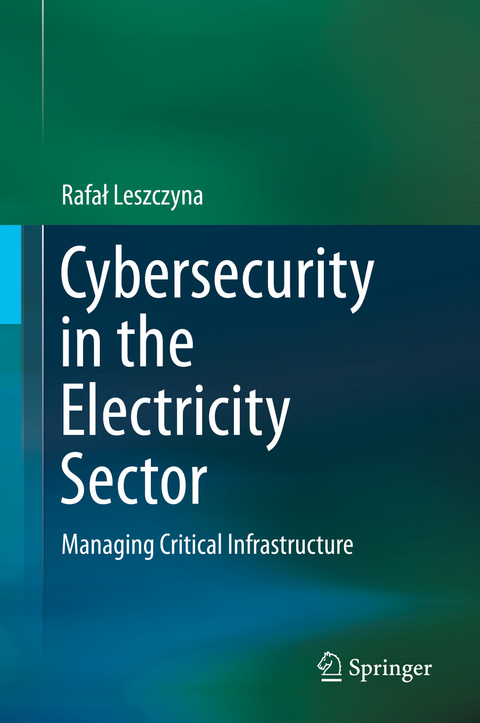
Cybersecurity in the Electricity Sector (eBook)
XVI, 213 Seiten
Springer International Publishing (Verlag)
978-3-030-19538-0 (ISBN)
This book offers a systematic explanation of cybersecurity protection of electricity supply facilities, including discussion of related costs, relevant standards, and recent solutions. The author explains the current state of cybersecurity in the electricity market, and cybersecurity standards that apply in that sector. He then offers a systematic approach to cybersecurity management, including new methods of cybersecurity assessment, cost evaluation and comprehensive defence.
This monograph is suitable for practitioners, professionals, and researchers engaged in critical infrastructure protection.
Preface 5
Acknowledgements 6
Contents 7
Acronyms 12
Chapter 1 Introduction 14
1.1 Transformation 14
1.1.1 Smart Grid 16
1.1.2 Internet of Energy 19
1.1.3 Industrial CPS, Industrial Cloud, Industry 4.0 and Industrial Internet 20
1.2 Dependence on the ICT 21
1.3 Cybersecurity 22
1.4 Priority Critical Infrastructure 24
1.5 The Structure of This Book 25
References 26
Chapter 2 The Current State of Cybersecurity in the Electricity Sector 31
2.1 Introduction 31
2.2 Studies 32
2.2.1 ENISA Study on the Security of Smart Grids 32
2.2.1.1 Research methodology and scope 32
2.2.1.2 Results, key findings and recommendations 33
2.2.1.3 Impact 34
2.2.2 ENISA Study on the Security of IACS 35
2.2.3 Other Studies 37
2.3 Vulnerabilities 39
2.3.1 Vulnerabilities Brought in by IACS 39
2.3.1.1 Insecure communication protocols 40
2.3.1.2 Broad use of commodity software and devices 40
2.3.1.3 Increased utilisation of IP-based network connections, vast connectivity 41
2.3.1.4 Limited or ineffective network segmentation 41
2.3.1.5 Limited applicability of standard (ICT-oriented) cybersecurity solutions 42
2.3.1.6 Increased availability of technical specifications of IACS 42
2.3.2 Smart Meters as a Point of Exposure to Cyberattacks 43
2.3.3 Misconfigured Firewalls and Firewall Limitations 44
2.3.4 Insecure Communication Protocols and Devices 44
2.3.5 Use of TCP/IP-Based and Wireless Communication 45
2.3.6 Vast Use of Commodity Software and Devices 46
2.3.7 Physical Exposure 46
2.4 Threats 47
2.4.1 Data Injection Attacks Against State Estimation 48
2.4.2 DoS and DDoS 49
2.4.3 Targeted Attacks, Coordinated Attacks, Hybrid Attacks, Advanced Persistent Threats 51
2.5 Challenges 52
2.5.1 Specific Properties and Environmental Constraints of Power Systems 53
2.5.2 Complexity 54
2.5.3 Secure Integration of Legacy Systems and Proprietary Systems 54
2.5.4 Privacy 55
2.5.5 Limitations in the Application of Cryptography 56
2.5.6 Hindered Key Management 57
2.5.7 Lack of Awareness 58
2.5.8 Marginal Exchange of Information 58
2.5.9 Security in the Supply Chain 59
2.6 Initiatives 60
2.7 Future Directions 60
References 67
Chapter 3 Cybersecurity Standards Applicable to the Electricity Sector 71
3.1 Introduction 71
3.2 Literature Search 72
3.3 Literature Analysis 73
3.4 Standards’ Selection and Evaluation Criteria 73
3.5 Results 74
3.5.1 Standards with Security Controls 74
3.5.2 Standards Defining Cybersecurity Requirements 76
3.5.3 Standards Describing Cybersecurity Assessment Methods 78
3.5.4 Standards Addressing Privacy Issues 80
3.6 Most Relevant Standards 80
3.6.1 NISTIR 7628 81
3.6.2 ISO/IEC 27001 and ISO/IEC 27000 Series 82
3.6.3 IEC 62351 83
3.6.4 NERC CIP 84
3.6.5 IEEE 1686 85
3.6.6 ISA/IEC 62443 (ISA 99) 85
3.7 Standards’ Limitations 88
3.8 Standards’ Implementation and Awareness 90
References 92
Chapter 4 A Systematic Approach to Cybersecurity Management 99
4.1 Introduction 99
4.2 Cybersecurity Management Approaches in Standards 100
4.2.1 NERC CIP 100
4.2.2 IEC 62443-2-1 102
4.2.3 NIST SP 800-82 110
4.2.4 NISTIR 7628 112
4.2.5 ISO/IEC 27001 114
4.2.6 ISO/IEC 27019 117
4.2.7 NIST SP 800-53 119
4.2.8 NRC RG 5.71 121
4.2.9 NIST SP 800-64 123
4.2.10 NIST SP 800-124 123
4.3 The Systematic Approach to Cyberseurity Management in the Electricity Sector 126
4.3.1 Cybersecurity Programme Establishment 126
4.3.1.1 Developing a business rationale for cybersecurity 126
4.3.1.2 Obtaining the management’s support and funding 127
4.3.1.3 Building a cybersecurity team 128
4.3.1.4 Defining the scope of cybersecurity management 128
4.3.1.5 Defining policies and procedures 129
4.3.1.6 Identifying assets 129
4.3.1.7 Categorising cyberassets 130
4.3.2 Risk Assessment 130
4.3.3 Risk Treatment 133
4.3.3.1 Risk modification 133
4.3.3.2 Risk sharing 133
4.3.3.3 Risk avoidance 134
4.3.3.4 Risk retention 134
4.3.4 Cybersecurity Assessment, Monitoring and Improvement 134
4.3.5 Communication and Consultation 135
References 136
Chapter 5 Cost of Cybersecurity Management 138
5.1 Introduction 138
5.2 Economic Studies 140
5.3 Organisation Management Studies 141
5.4 Cost-Benefit Analysis 143
5.4.1 I-CAMP and I-CAMP II 143
5.4.2 SAEM 144
5.4.3 SQUARE 145
5.5 Cost Calculators 145
5.6 Costing Metrics 145
5.6.1 NPV 146
5.6.2 RR 146
5.6.3 ROI 146
5.6.4 ALE 146
5.6.5 Cost of Vulnerability Mitigation 147
5.7 CAsPeA 147
5.7.1 Selected and Adapted Costing System 148
5.7.2 List of Activities 149
5.7.3 Cost Centres and Activity Cost Drivers 150
5.7.4 Input Data 152
5.7.5 Output Data 153
5.8 Chapter Summary 154
References 155
Chapter 6 Cybersecurity Assessment 159
6.1 Introduction 159
6.2 Security Assessment Methods for the Electricity Sector 161
6.3 Cybersecurity Testbeds for Power Systems 163
6.3.1 National SCADA Test Bed 163
6.3.2 DETERLab 163
6.3.3 PowerCyber Testbed and Other Academic, Hybrid Testbeds 164
6.3.4 ERNCIP Inventory of Laboratories 164
6.4 JRC Cybersecurity Assessment Method 165
6.4.1 Analysis of Networks, Systems and Assets 165
6.4.2 Reproduction of Networks, Systems and Cyberassets in a Cybersecurity Laboratory 166
6.4.3 Determination and Analysis of Usage Patterns 167
6.4.4 Design of Experiments 167
6.4.5 Performance of Experiments 168
6.4.6 Analysis of Results 168
6.5 Laboratory Infrastructure 169
6.5.1 Mirrored System 169
6.5.2 Threat and Attack Centre 170
6.5.3 Observer Terminal 172
6.5.4 Vulnerabilities and Countermeasures Repository 173
6.5.5 Testbed Master Administrator 174
6.5.6 Horizontal Services 175
6.6 MAlSim 176
6.6.1 Mobile Agents 177
6.6.2 JADE 178
6.6.3 MAlSim Architecture 179
6.6.4 Malware Templates 180
6.6.5 Experiments’ Life Cycle 186
References 186
Chapter 7 Cybersecurity Controls 190
7.1 Introduction 190
7.2 Standard Technical Solutions 193
7.2.1 Cryptographic Mechanisms 193
7.2.2 Key Management 195
7.2.3 Identification, Authentication and Authorisation 197
7.2.4 Access Control 198
7.2.5 Firewalls 199
7.2.6 Intrusion Detection and Prevention Systems 200
7.3 Information Sharing Platform on Cybersecurity Incidents for the Energy Sector 203
7.3.1 Anonymisation Mechanisms 204
7.3.2 Cybersecurity Requirements and Measures 204
7.3.3 Data Model 205
7.3.4 Data Sanitisation Rules 206
7.4 Situation Awareness Network 208
7.4.1 Architecture 209
7.4.2 Security Requirements for Sensors 210
7.4.3 Event Correlation Rules 211
7.4.4 Testing Metrics 212
References 213
Chapter 8 Conclusions 219
8.1 Challenges 219
8.2 Solutions 220
8.3 Systematic Cybersecurity Management 220
| Erscheint lt. Verlag | 30.8.2019 |
|---|---|
| Zusatzinfo | XVI, 213 p. |
| Sprache | englisch |
| Themenwelt | Mathematik / Informatik ► Informatik |
| Technik ► Maschinenbau | |
| Schlagworte | Critical Infrastructure Protection • cybersecurity • Cybersecurity Assessment • electricity sector • Information Security • Internet of Energy • power grid • Security standards • Smart Grid |
| ISBN-10 | 3-030-19538-4 / 3030195384 |
| ISBN-13 | 978-3-030-19538-0 / 9783030195380 |
| Informationen gemäß Produktsicherheitsverordnung (GPSR) | |
| Haben Sie eine Frage zum Produkt? |
 PDF (Wasserzeichen)
DRM: Digitales Wasserzeichen
Dieses eBook enthält ein digitales Wasserzeichen und ist damit für Sie personalisiert. Bei einer missbräuchlichen Weitergabe des eBooks an Dritte ist eine Rückverfolgung an die Quelle möglich.
Dateiformat: PDF (Portable Document Format)
Mit einem festen Seitenlayout eignet sich die PDF besonders für Fachbücher mit Spalten, Tabellen und Abbildungen. Eine PDF kann auf fast allen Geräten angezeigt werden, ist aber für kleine Displays (Smartphone, eReader) nur eingeschränkt geeignet.
Systemvoraussetzungen:
PC/Mac: Mit einem PC oder Mac können Sie dieses eBook lesen. Sie benötigen dafür einen PDF-Viewer - z.B. den Adobe Reader oder Adobe Digital Editions.
eReader: Dieses eBook kann mit (fast) allen eBook-Readern gelesen werden. Mit dem amazon-Kindle ist es aber nicht kompatibel.
Smartphone/Tablet: Egal ob Apple oder Android, dieses eBook können Sie lesen. Sie benötigen dafür einen PDF-Viewer - z.B. die kostenlose Adobe Digital Editions-App.
Buying eBooks from abroad
For tax law reasons we can sell eBooks just within Germany and Switzerland. Regrettably we cannot fulfill eBook-orders from other countries.
aus dem Bereich