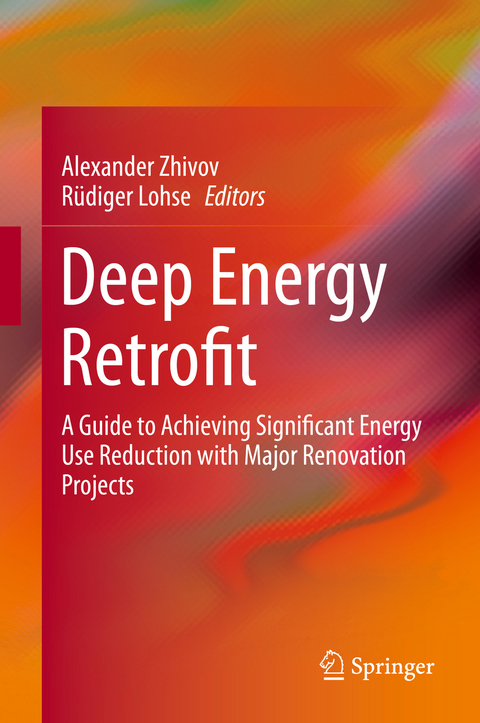
Deep Energy Retrofit
Springer International Publishing (Verlag)
978-3-030-30678-6 (ISBN)
This book provides detailed information on how to set up Deep Energy Retrofits (DERs) in public buildings, and shares in-depth insights into the current status of the major technologies, strategies and best practice examples of how to cost-effectively combine them. Case studies from the U.S.A. and Europe show that that Deep Energy Retrofit can be achieved with a limited core technologies bundle readily available on the market. Characteristics of some of these core technology measures depend on the technologies available on an individual nation's market, on the minimum requirements of national standards, and on economics (as determined by a life cycle cost analysis). Also, requirements to building envelope-related technologies (e.g., insulation levels, windows, vapor and water barriers, and requirements for building airtightness) depend on specific climate conditions. This Guide provides best practice examples of how to apply these technologies in different construction situations.
High levels of energy use reduction using core technology bundles along with improvements in indoor climate and thermal comfort can be only achieved when a Deep Energy Retrofit adopts a quality assurance process. In addition to design, construction, commissioning, and post-occupancy phases of the quality assurance process, the Guide emphasizes the importance of clearly and concisely formulating and documenting the Owner's goals, expectations, and requirements for the renovated building during development of the statement of work. Another important component of the quality assurance process is a procurement phase, during which bidders' qualifications, their understanding of the scope of work and its requirements, and their previous experience are analyzed.
The building sector holds the potential for tremendous improvements in terms of energy efficiency and reducing carbon emissions, and energy retrofits to the existing building stock represent a significant opportunity inthe transition to a low-carbon future. Moreover, investing in highly efficient building materials and systems can replace long-term energy imports, contribute to cost cutting, and create a wealth of new jobs. Yet, while the technologies needed in order to improve energy efficiency are readily available, significant progress has not yet been made, and "best practices" for implementing building technologies and renewable energy sources are still relegated to small "niche" applications.
Offering essential information on Deep Energy Retrofits, the book offers a valuable asset for architects, public authorities, project developers, and engineers alike.
To follow
1. Introduction.- What is Deep Energy Retrofit:.- 3. Deep vs. Shallow Energy Retrofit.- 4. Major Renovation and Deep Energy Retrofit.- 5. Core Bundles of Technologies to Achieve Deep Energy Retrofit with Major Building Renovation Projects.- 6. Building Envelope Technologies. 7. Windows.- 8. Thermal Bridges.- Improved Building Airtightness.- 10 Vapor Control.- 11. Lighting Systems.- 12. HVAC Equipment and Systems.- 13. Quality Assurance.-14. Economic Analysis.- Conclusions.
| Erscheinungsdatum | 08.07.2020 |
|---|---|
| Zusatzinfo | XXXII, 566 p. 726 illus., 534 illus. in color. |
| Verlagsort | Cham |
| Sprache | englisch |
| Maße | 155 x 235 mm |
| Gewicht | 1057 g |
| Themenwelt | Technik ► Maschinenbau |
| Schlagworte | Deep energy retrofit for buldings • Energy efficient and retrofit • international energy agency • Low carbon futures • Renewable Energy Resources • Sustainable architecture and building maintenance |
| ISBN-10 | 3-030-30678-X / 303030678X |
| ISBN-13 | 978-3-030-30678-6 / 9783030306786 |
| Zustand | Neuware |
| Informationen gemäß Produktsicherheitsverordnung (GPSR) | |
| Haben Sie eine Frage zum Produkt? |
aus dem Bereich