


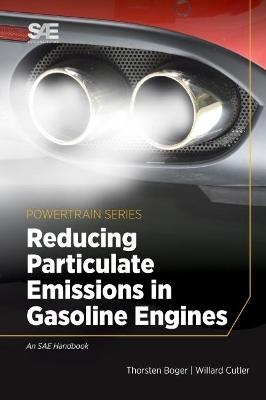
Reducing Particulate Emissions in Gasoline Engines
Seiten
2018
SAE International (Verlag)
978-0-7680-9417-6 (ISBN)
SAE International (Verlag)
978-0-7680-9417-6 (ISBN)
- Verlag liefert leider nicht an den Buchhandel
- Artikel merken
Examines the current strategies and technologies used to reduce particulates to meet regulatory requirements and curtail health hazards - reviewing principles and applications of these techniques.
For years, diesel engines have been the focus of particulate matter emission reductions. Now, however, modern diesel engines emit less particles than a comparable gasoline engine. This transformation necessitates an introduction of particulate reduction strategies for the gasoline-powered vehicle.
Many strategies can be leveraged from diesel engines, but new combustion and engine control technologies will be needed to meet the latest gasoline regulations across the globe. Particulate reduction is a critical health concern in addition to the regulatory requirements. This is a vital issue with real-world implications.
Reducing Particulate Emissions in Gasoline Engines encompasses the current strategies and technologies used to reduce particulates to meet regulatory requirements and curtail health hazards – reviewing principles and applications of these techniques. Highlights and features in the book include:
Gasoline particulate filter design, function and applications
Coated and uncoated three way catalyst design and integration
Measurement of gasoline particulate matter emission, both laboratory and PEMS
The goal is to provide a comprehensive assessment of gasoline particulate emission control to meet regulatory and health requirements - appealing to calibration, development and testing engineers alike.
For years, diesel engines have been the focus of particulate matter emission reductions. Now, however, modern diesel engines emit less particles than a comparable gasoline engine. This transformation necessitates an introduction of particulate reduction strategies for the gasoline-powered vehicle.
Many strategies can be leveraged from diesel engines, but new combustion and engine control technologies will be needed to meet the latest gasoline regulations across the globe. Particulate reduction is a critical health concern in addition to the regulatory requirements. This is a vital issue with real-world implications.
Reducing Particulate Emissions in Gasoline Engines encompasses the current strategies and technologies used to reduce particulates to meet regulatory requirements and curtail health hazards – reviewing principles and applications of these techniques. Highlights and features in the book include:
Gasoline particulate filter design, function and applications
Coated and uncoated three way catalyst design and integration
Measurement of gasoline particulate matter emission, both laboratory and PEMS
The goal is to provide a comprehensive assessment of gasoline particulate emission control to meet regulatory and health requirements - appealing to calibration, development and testing engineers alike.
| Erscheinungsdatum | 21.11.2019 |
|---|---|
| Verlagsort | Warrendale |
| Sprache | englisch |
| Maße | 152 x 229 mm |
| Gewicht | 700 g |
| Themenwelt | Technik ► Fahrzeugbau / Schiffbau |
| ISBN-10 | 0-7680-9417-8 / 0768094178 |
| ISBN-13 | 978-0-7680-9417-6 / 9780768094176 |
| Zustand | Neuware |
| Informationen gemäß Produktsicherheitsverordnung (GPSR) | |
| Haben Sie eine Frage zum Produkt? |
Mehr entdecken
aus dem Bereich
aus dem Bereich
Grundlagen, Komponenten und Systeme für assistiertes und …
Buch | Hardcover (2024)
Springer Vieweg (Verlag)
CHF 389,95
Biomechanik, Unfallvermeidung, Insassenschutz, Sensorik, Sicherheit …
Buch | Hardcover (2024)
Springer Vieweg (Verlag)
CHF 139,95


