


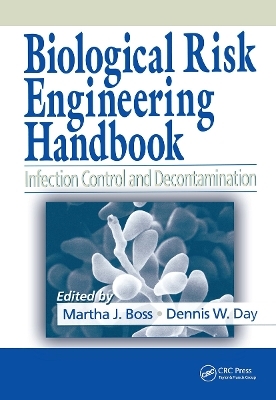
Biological Risk Engineering Handbook
Infection Control and Decontamination
Seiten
2002
Crc Press Inc (Verlag)
978-1-56670-606-3 (ISBN)
Crc Press Inc (Verlag)
978-1-56670-606-3 (ISBN)
Biological risk engineering is an extension of industrial hygiene that involves the assessment, control, and decontamination of indoor biological risks. This handbook analyzes the fundamentals of biological risk and the engineering methods used to determine and reduce this risk.
This handbook discusses biological risk engineering, an extension of industrial hygiene that involves the assessment, control, and decontamination of indoor biological risks. The book synergizes the knowledge of experts in various fields, from law to toxicology, to provide a compendium of information for applying science to limit biological risk.
Biological Risk Engineering Handbook: Infection Control and Decontamination begins with a microbiological dictionary, using pictures to illustrate the basic morphology and culture appearance of fungi, bacteria, viruses and prions. The text then reviews sampling and laboratory procedures to ensure coordination between sampling teams and their ultimate receiving laboratory. The contributing authors further examine interpretation issues associated with toxicological studies and risk assessment in hopes of providing further impetus for synergistic studies related to risk assessment and management of biohazardous agents. Other topics include ventilation design, infection control, and the use of biocides. The discussion of Legionella control and cooling towers serves as a case study of how design, maintenance, and decontamination should be a seamless process. The contributors also discuss patent utility requirements, insurance processes, laws, and current regulations, including a chapter on Tuberculosis that compares OSHA and CDC guidelines. Finally, security is addressed from the standpoint of both homeland security in the United States and the security of individual laboratories.
From assessment methods to design options, Biological Risk Engineering Handbook presents state-of-the-art techniques and practices to measure, control, and contain human exposure to biological contaminants. With the concern of biological risk on the rise and the emerging fear today of biological warfare, this handbook allows you to move into the future armed with the information needed to limit this threat.
This handbook discusses biological risk engineering, an extension of industrial hygiene that involves the assessment, control, and decontamination of indoor biological risks. The book synergizes the knowledge of experts in various fields, from law to toxicology, to provide a compendium of information for applying science to limit biological risk.
Biological Risk Engineering Handbook: Infection Control and Decontamination begins with a microbiological dictionary, using pictures to illustrate the basic morphology and culture appearance of fungi, bacteria, viruses and prions. The text then reviews sampling and laboratory procedures to ensure coordination between sampling teams and their ultimate receiving laboratory. The contributing authors further examine interpretation issues associated with toxicological studies and risk assessment in hopes of providing further impetus for synergistic studies related to risk assessment and management of biohazardous agents. Other topics include ventilation design, infection control, and the use of biocides. The discussion of Legionella control and cooling towers serves as a case study of how design, maintenance, and decontamination should be a seamless process. The contributors also discuss patent utility requirements, insurance processes, laws, and current regulations, including a chapter on Tuberculosis that compares OSHA and CDC guidelines. Finally, security is addressed from the standpoint of both homeland security in the United States and the security of individual laboratories.
From assessment methods to design options, Biological Risk Engineering Handbook presents state-of-the-art techniques and practices to measure, control, and contain human exposure to biological contaminants. With the concern of biological risk on the rise and the emerging fear today of biological warfare, this handbook allows you to move into the future armed with the information needed to limit this threat.
Martha J. Boss, Dennis W. Day
Micro Dictionary. Industrial Hygeine Sampling. Biological Sampling and Lab Interpretation. Toxicology. Risk Assessment. Ventilation System. Maintenance. General Infection Control. Medical Setting Infection Control. Decontamination and Assessment. Legionella and Cooling Towers. Biocides. Law and Regulations. Tuberculosis. Security.
| Erscheint lt. Verlag | 26.11.2002 |
|---|---|
| Reihe/Serie | Industrial Hygiene Engineering |
| Zusatzinfo | 1 Tables, black and white; 62 Halftones, black and white; 32 Illustrations, color; 96 Illustrations, black and white |
| Verlagsort | Bosa Roca |
| Sprache | englisch |
| Maße | 178 x 254 mm |
| Gewicht | 1140 g |
| Themenwelt | Technik ► Umwelttechnik / Biotechnologie |
| ISBN-10 | 1-56670-606-8 / 1566706068 |
| ISBN-13 | 978-1-56670-606-3 / 9781566706063 |
| Zustand | Neuware |
| Informationen gemäß Produktsicherheitsverordnung (GPSR) | |
| Haben Sie eine Frage zum Produkt? |
Mehr entdecken
aus dem Bereich
aus dem Bereich
Kommentar der DIN 15905-5, LärmVibrationsArbSchV und …
Buch | Softcover (2023)
DIN Media (Verlag)
CHF 79,95
Buch | Softcover (2023)
DIN Media (Verlag)
CHF 105,55
Buch | Softcover (2024)
Verlag Dr. Köster
CHF 48,90


