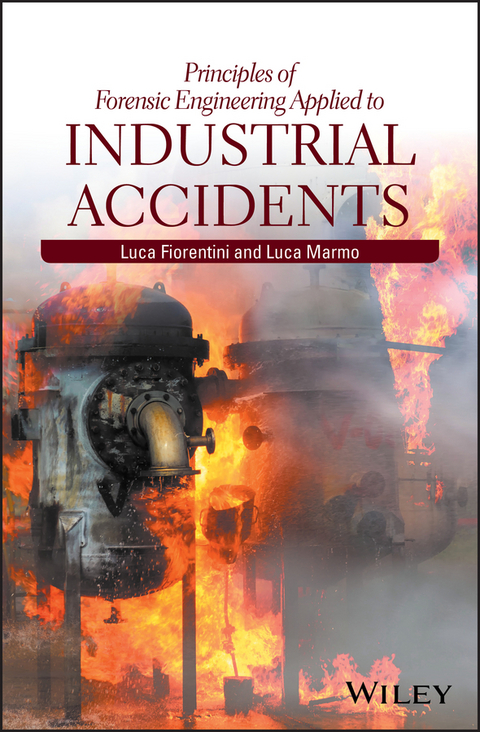
Principles of Forensic Engineering Applied to Industrial Accidents (eBook)
John Wiley & Sons (Verlag)
978-1-118-96279-4 (ISBN)
An introductory text on the investigation of industrial accidents
Forensic engineering should be seen as a rigorous approach to the discovery of root causes that lead to an accident or near-miss. The approach should be suitable to identify both the immediate causes as well as the underlying factors that affected, amplified, or modified the events in terms of consequences, evolution, dynamics, etc., as well as the contribution of an eventual 'human error'.
This book is a concise and introductory volume to the forensic engineering discipline which helps the reader to recognize the link among those important, very specialized aspects of the same problem in the global strategy of learning from accidents (or near-misses). The reader will benefit from a single point of access to this very large, technical literature that can be only correctly understood with the right terms, definitions, and links in mind.
Keywords:
- Presents simple (real) cases, as well as giving an overview of more complex ones, each of them investigated within the same framework;
- Gives the readers the bibliography to access more in-depth specific aspects;
- Offers an overview of the most commonly used methodologies and techniques to investigate accidents, including the evidence that should be collected to define the cause, dynamics and responsibilities of an industrial accident, as well as the most appropriate methods to collect and preserve the evidence through an appropriate chain of security.
Principles of Forensic Engineering Applied to Industrial Accidents is essential reading for researchers and practitioners in forensic engineering, as well as graduate students in forensic engineering departments and other professionals.
Professor Luca Fiorentini is an internationally recognized expert in the field of industrial, process safety and fire engineering. He is owner and CEO of TECSA S.r.l. international consulting company working in the field of loss prevention and industrial safety, fire engineering and environmental protection. He is senior process safety, HSE, fire engineering and reliability consultant. Professor Fiorentini has experience in QRA (Hazop, LOPA, FTA, ETA, Consequence analysis), CFD and FEM methods, RAM analysis and industrial risk assessment for a number of industries: major hazard industries, refineries, chemical and petrochemical plants, liquid hydrocarbons and LPG storage farms, oil and gas onshore installations and offshore platforms, steelwork plants, food processing facilities, pharmaceutical and fine chemicals production plants, hospitals and health care facilities, ports and piers. He is an expert of fire engineering and fire risk assessment. Fiorentini is a recognized forensic engineer and investigator for fires, explosions and industrial and marine accidents. He is the author of several books, articles and conference papers as well as a reviewer for a number of scientific magazines. He is also a professional member of the Chartered Society of Forensic Sciences (UK) and an editorial board member of 'International Journal of Forensic Engineering' and 'Fire Protection Engineering Magazine' (SFPE).
Professor Luca Marmo is a researcher at Politecnico di Torino technical university, holder of the chair of 'Safety of industrial Processes' on the Chemical Engineering course, and director of the 'Experimental Centre for Explosive Atmosphere Safety' at the Politecnico di Torino Scientific Activity. Consultant to the Public prosecutor and to the Court as a forensic engineer, he has investigated more than one hundred industrial and civil accidents, mainly fires and explosions. The skills of his research group are mainly focused on industrial safety and risk analysis, production of microorganisms and biomolecules of industrial interest, valorisation processes of wastes and industrial by-products, and production of microorganisms and enzymes applied in toxic compounds biodegradation processes. Other research fields concern experimental activity on fluidised bed reactors, CFD modelling of gas-solid multiphase reactors, and experimental activity on the valorisation of wastes. Author of more than 60 papers on international journals or presented at conferences, he is also a consultant to many companies and public bodies in the field of industrial safety and accident prevention, including government agencies at national and European level.
An introductory text on the investigation of industrial accidents Forensic engineering should be seen as a rigorous approach to the discovery of root causes that lead to an accident or near-miss. The approach should be suitable to identify both the immediate causes as well as the underlying factors that affected, amplified, or modified the events in terms of consequences, evolution, dynamics, etc., as well as the contribution of an eventual "e;human error"e;. This book is a concise and introductory volume to the forensic engineering discipline which helps the reader to recognize the link among those important, very specialized aspects of the same problem in the global strategy of learning from accidents (or near-misses). The reader will benefit from a single point of access to this very large, technical literature that can be only correctly understood with the right terms, definitions, and links in mind. Keywords: Presents simple (real) cases, as well as giving an overview of more complex ones, each of them investigated within the same framework; Gives the readers the bibliography to access more in-depth specific aspects; Offers an overview of the most commonly used methodologies and techniques to investigate accidents, including the evidence that should be collected to define the cause, dynamics and responsibilities of an industrial accident, as well as the most appropriate methods to collect and preserve the evidence through an appropriate chain of security. Principles of Forensic Engineering Applied to Industrial Accidents is essential reading for researchers and practitioners in forensic engineering, as well as graduate students in forensic engineering departments and other professionals.
Professor Luca Fiorentini is an internationally recognized expert in the field of industrial, process safety and fire engineering. He is owner and CEO of TECSA S.r.l. international consulting company working in the field of loss prevention and industrial safety, fire engineering and environmental protection. He is senior process safety, HSE, fire engineering and reliability consultant. Professor Fiorentini has experience in QRA (Hazop, LOPA, FTA, ETA, Consequence analysis), CFD and FEM methods, RAM analysis and industrial risk assessment for a number of industries: major hazard industries, refineries, chemical and petrochemical plants, liquid hydrocarbons and LPG storage farms, oil and gas onshore installations and offshore platforms, steelwork plants, food processing facilities, pharmaceutical and fine chemicals production plants, hospitals and health care facilities, ports and piers. He is an expert of fire engineering and fire risk assessment. Fiorentini is a recognized forensic engineer and investigator for fires, explosions and industrial and marine accidents. He is the author of several books, articles and conference papers as well as a reviewer for a number of scientific magazines. He is also a professional member of the Chartered Society of Forensic Sciences (UK) and an editorial board member of "International Journal of Forensic Engineering" and "Fire Protection Engineering Magazine" (SFPE). Professor Luca Marmo is a researcher at Politecnico di Torino technical university, holder of the chair of "Safety of industrial Processes" on the Chemical Engineering course, and director of the "Experimental Centre for Explosive Atmosphere Safety" at the Politecnico di Torino Scientific Activity. Consultant to the Public prosecutor and to the Court as a forensic engineer, he has investigated more than one hundred industrial and civil accidents, mainly fires and explosions. The skills of his research group are mainly focused on industrial safety and risk analysis, production of microorganisms and biomolecules of industrial interest, valorisation processes of wastes and industrial by-products, and production of microorganisms and enzymes applied in toxic compounds biodegradation processes. Other research fields concern experimental activity on fluidised bed reactors, CFD modelling of gas-solid multiphase reactors, and experimental activity on the valorisation of wastes. Author of more than 60 papers on international journals or presented at conferences, he is also a consultant to many companies and public bodies in the field of industrial safety and accident prevention, including government agencies at national and European level.
1
Introduction
Who Should Read This Book?
“Principles of forensic engineering applied to industrial accidents” is intended to be an introductory volume on the investigation of industrial accidents. Forensic engineering should be seen as a rigorous approach to the discovery of root causes that lead to an accident or a near‐miss. The approach should be suitable to identify both the immediate causes as well as the underlying factors that affected, amplified or modified the events (regarding consequences, evolution, dynamics), and the contribute by an eventual “human error”.
A number of books have already been published on similar topics. The idea behind this book is not to replace those important volumes but to obtain a single concise and introductory volume (also for students and authorities) to the forensic engineering discipline that helps understand the link among those critical but very functional aspects of the same problem in the global strategy of learning from accidents (or near‐misses). The reader, in this sense, will benefit from a single point of access to this vast technical literature that can be only accessed with proficiency having the right terms, definitions, and links in mind. On the contrary, the reader could get lost in all the quoted literature that day by day increases due to the speed of the research in this complex field.
The intent of the book is:
- Presenting simple real cases as well as give an overview of more complex ones, each of them investigated with the same framework;
- giving the readers the bibliography to access more in‐depth specific aspects;
- giving them an overview of the most and commonly used methodologies and techniques to investigate accidents;
- giving them a summary of the evidence, which should be collected to define the cause, dynamics, and responsibilities of an industrial accident;
- giving them an overview of the most appropriate methods to collect and to preserve evidence through an appropriate chain of custody; and
- giving an overview of the main mistakes that can lead to misjudgment or loss of proof.
The book is an introductory volume for readers in academia as well as professionals who want to know more about the forensic engineering methodologies to be applied to discover more about the causes of industrial accidents in order to derive lessons. Among those professionals, we can identify process and safety managers, risk managers, industrial risks consultants, attorneys, authorities having jurisdiction, judges and prosecutors, and so on.
It is particularly addressed to those who would like to approach the fundamentals of forensic engineering discipline without directly going to specialised already available volumes and handbooks that need a sound background to be read. Nonetheless, reading this book may help professionals (e.g. loss adjusters, risk engineers, safety professionals, safety management systems consultants.) and students who want to have a concise book as prompt reference towards the main important recognised resources available (e.g. CCPS©‐AIChE© books also edited by Wiley, NFPA© 921 Standard, etc.) or as a bridge between risk assessment and accidents investigation (as a tool to learn from real accidents or near‐misses in order to improve safety).
1.2 Going Beyond the Widget!
When investigating an industrial accident or a near miss, it should be well kept in mind that the primary goal to be reached is not to find a concise fault of a well‐defined widget, confined to a distinct domain. A rigorous approach to the forensic discipline requires going much deeper in the investigation, not stopping at the main relevant evidence, even if properly gathered and analysed. It often happens that accident reports are one‐dimensional [1]: in simple words, they identify only a single cause, usually corresponding to the outer layer of the complexity that surrounds the reconstruction of the incidental dynamics. Even when multiple causes are discovered, the investigator seldom looks beyond them.
In the industrial context, a complex system of relations, information, and people is present, with its peculiarity and hierarchy, creating a structured entity that needs to be considered when investigating an accident or a near miss. Thus, it becomes necessary to consider as an element of investigation the management systems as well, as some causes of the accident may be related to management failure, so to take the corrective actions and to prevent a further similar failure. A good investigator does not find culprits, does not blame. A good investigator collects evidence, analyses it and finds the root causes and the relations among them that lead to the accident, whilst also considering the managerial duties and, as usually happens, then provides suggestions about corrective actions to avoid the reoccurrence of the undesired event.
Focusing on the system, rather than the individual, represents the right way to face an investigation, at least for two reasons [2]. Firstly, if equipment and systems provided to persons reveal to be not effective, thus it is not the individual responsibility that has to be pointed out as the fault cause. Secondly, it is much easier to change a managerial choice rather than a person or his/her behavior, which is susceptible to vary daily. Third, human errors may often be the consequence of insufficient training, motivation or attention to safety, all being aspects that the management should promote and monitor. It is a matter of controllability and reliability, as they are the two most essential ingredients to ensure that the lesson learnt will guarantee an increasing, or a restoration at least, of the safety level accepted in the industry at the corporate, field and line levels. Metaphorically speaking, an accident investigation is like peeling an onion: this concept, cited in [3], gives us a live image of what we are called to solve (see Figure 1.1). Technical problems and mechanical failures are the outer layers of the onion: they are the immediate causes. Only once you peel them you can find the inner layers, thus the underlying causes like those involving the management weaknesses.
Figure 1.1 The onion‐like structure between immediate causes and root causes.
Going beyond the widget is what a professional investigator does. Let us consider a relief valve that fails, causing harm and loss (thus an accident) also involving some injuries to the line operators. A neophyte may conclude: “It was a fault in the relief valve. Case is closed, people”. On the contrary, a good investigator may wonder: “Is it a consequence of an unexpected running condition, exceeding the operational limits? Was there an erroneous maintenance procedure? Was it installed correctly? Is it a result of an entire procurement of damaged relief valves?”. The differences in the two extreme examples are clear: it is highly recommended to investigate spanning at least over the following three levels: line, field, and corporate levels. This good practice should suggest what a proper investigation requires: a project management and a variously skilled team of investigators.
Conducting an investigation means to plan the activities, to organise meetings, to schedule recognitions of the accident area, to inform and to be informed, to commission tests to external laboratories, to manage resources, mainly time and budget. But most of all conducting an investigation means to link the collected elements in a multidisciplinary network. To do this you need many different skills to work together. Many people get confused about how to conduct an investigation. The best way to face such a complex challenge is to consider it as an ordinary project: organisational and managerial skills, listening capacity in addition to a problem‐solving attitude, are the desirable features of the investigator.
The recent approach in accident investigation reflects the simple concept discussed in this Paragraph. Indeed, over the past decade, a transition has occurred not only in the way accidents are investigated, but also in the way they are perceived [4]. One more time, the transition has shown an increasing focus on the organisational context rather than on the technical failures and human errors. This transition is also felt by the public opinion that forms after an industrial accident and is broadcasted by media. It is interesting to observe that such a transition can also be noted from the legal point of view, with an evolution of national laws and international technical standards and codes supporting a progressive shift of liability from the worker to the contractor and, more recently, to the top management of the company or, in some countries like Italy, to the Company itself. It is possible to claim that there is a sort of alignment among the technical aspects implicated in the forensic science, including the procedural way to conduct an investigation, and the legal issues. This transition has given rise to new methods to analyse an industrial accident, whose attention is primarily focused on the so‐called “organisational network” and whose objective is to reconstruct empirically the real accidental phenomenon exploring the theoretical organisational structures. The goal is very ambitious and hard. It requires a multiplicity of transversal scientific skills, attitude, intuition and managerial capabilities. It requires ground competencies to find, gather and analyse that evidence that may be the trace of some...
| Erscheint lt. Verlag | 21.11.2018 |
|---|---|
| Sprache | englisch |
| Themenwelt | Technik ► Bauwesen |
| Technik ► Elektrotechnik / Energietechnik | |
| Schlagworte | Biowissenschaften • Electrical & Electronics Engineering • Elektrotechnik u. Elektronik • fire and explosion investigation • Fire Investigation • Forensic Engineering • Forensic Science • Forensik • Hazardous accidents investigation • Human Error • Human Factors & Risk Assessment • Industrial accidents • Industrial Engineering • Industrial Engineering / Manufacturing • Industrielle Verfahrenstechnik • learning from accidents • Life Sciences • Menschliche Faktoren u. Risikobewertung • Near-miss • Produktion i. d. Industriellen Verfahrenstechnik • risk assessment • root cause analysis |
| ISBN-10 | 1-118-96279-6 / 1118962796 |
| ISBN-13 | 978-1-118-96279-4 / 9781118962794 |
| Informationen gemäß Produktsicherheitsverordnung (GPSR) | |
| Haben Sie eine Frage zum Produkt? |
 EPUB (Adobe DRM)
Kopierschutz: Adobe-DRM
Adobe-DRM ist ein Kopierschutz, der das eBook vor Mißbrauch schützen soll. Dabei wird das eBook bereits beim Download auf Ihre persönliche Adobe-ID autorisiert. Lesen können Sie das eBook dann nur auf den Geräten, welche ebenfalls auf Ihre Adobe-ID registriert sind.
Details zum Adobe-DRM
Dateiformat: EPUB (Electronic Publication)
EPUB ist ein offener Standard für eBooks und eignet sich besonders zur Darstellung von Belletristik und Sachbüchern. Der Fließtext wird dynamisch an die Display- und Schriftgröße angepasst. Auch für mobile Lesegeräte ist EPUB daher gut geeignet.
Systemvoraussetzungen:
PC/Mac: Mit einem PC oder Mac können Sie dieses eBook lesen. Sie benötigen eine
eReader: Dieses eBook kann mit (fast) allen eBook-Readern gelesen werden. Mit dem amazon-Kindle ist es aber nicht kompatibel.
Smartphone/Tablet: Egal ob Apple oder Android, dieses eBook können Sie lesen. Sie benötigen eine
Geräteliste und zusätzliche Hinweise
Buying eBooks from abroad
For tax law reasons we can sell eBooks just within Germany and Switzerland. Regrettably we cannot fulfill eBook-orders from other countries.
aus dem Bereich