


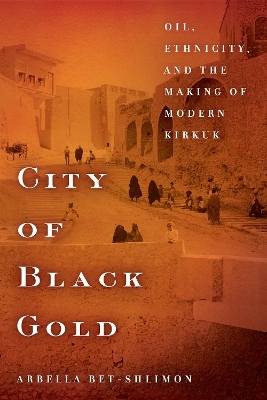
City of Black Gold
Oil, Ethnicity, and the Making of Modern Kirkuk
Seiten
2019
|
New edition
Stanford University Press (Verlag)
978-1-5036-0812-2 (ISBN)
Stanford University Press (Verlag)
978-1-5036-0812-2 (ISBN)
Kirkuk is Iraq's most multilingual city, for millennia home to a diverse population. It was also where, in 1927, a foreign company first struck oil in Iraq. Over the following decades, Kirkuk became the heart of Iraq's booming petroleum industry. City of Black Gold tells a story of oil, urbanization, and colonialism in Kirkuk—and how these factors shaped the identities of Kirkuk's citizens, forming the foundation of an ethnic conflict.
Arbella Bet-Shlimon reconstructs the twentieth-century history of Kirkuk to question the assumptions about the past underpinning today's ethnic divisions. In the early 1920s, when the Iraqi state was formed under British administration, group identities in Kirkuk were fluid. But as the oil industry fostered colonial power and Baghdad's influence over Kirkuk, intercommunal violence and competing claims to the city's history took hold. The ethnicities of Kurds, Turkmens, and Arabs in Kirkuk were formed throughout a century of urban development, interactions between communities, and political mobilization. Ultimately, this book shows how contentious politics in disputed areas are not primordial traits of those regions, but are a modern phenomenon tightly bound to the society and economics of urban life.
Arbella Bet-Shlimon reconstructs the twentieth-century history of Kirkuk to question the assumptions about the past underpinning today's ethnic divisions. In the early 1920s, when the Iraqi state was formed under British administration, group identities in Kirkuk were fluid. But as the oil industry fostered colonial power and Baghdad's influence over Kirkuk, intercommunal violence and competing claims to the city's history took hold. The ethnicities of Kurds, Turkmens, and Arabs in Kirkuk were formed throughout a century of urban development, interactions between communities, and political mobilization. Ultimately, this book shows how contentious politics in disputed areas are not primordial traits of those regions, but are a modern phenomenon tightly bound to the society and economics of urban life.
Arbella Bet-Shlimon is Assistant Professor of History at the University of Washington.
Introduction
1. The Forging of Iraq
2. The British Mandate
3. Oil and Urban Growth
4. The Ideology of Urban Development
5. The Intercommunal Fight
6. Nationalization and Arabization
Conclusion
| Erscheinungsdatum | 18.05.2019 |
|---|---|
| Verlagsort | Palo Alto |
| Sprache | englisch |
| Maße | 152 x 229 mm |
| Themenwelt | Sachbuch/Ratgeber ► Geschichte / Politik ► Allgemeines / Lexika |
| Geschichte ► Allgemeine Geschichte ► Neuzeit (bis 1918) | |
| Geisteswissenschaften ► Geschichte ► Regional- / Ländergeschichte | |
| Technik ► Elektrotechnik / Energietechnik | |
| ISBN-10 | 1-5036-0812-3 / 1503608123 |
| ISBN-13 | 978-1-5036-0812-2 / 9781503608122 |
| Zustand | Neuware |
| Informationen gemäß Produktsicherheitsverordnung (GPSR) | |
| Haben Sie eine Frage zum Produkt? |
Mehr entdecken
aus dem Bereich
aus dem Bereich
Geschichte einer wilden Handlung
Buch | Hardcover (2024)
C.H.Beck (Verlag)
CHF 47,60


