Human Impact on the Natural Environment (eBook)
John Wiley & Sons (Verlag)
9781119403920 (ISBN)
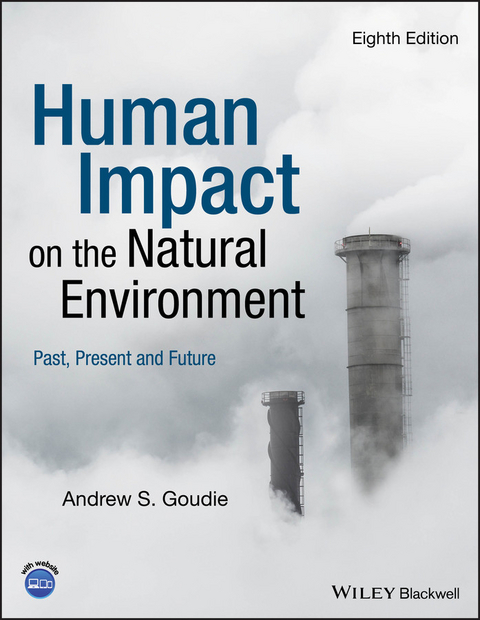
A brand new edition of the definitive textbook on humankind's impact on the Earth's environment-now in full color
This classic text explores the multitude of impacts that humans have had over time upon vegetation, animals, soils, water, landforms, and the atmosphere. It considers the ways in which climate changes and modifications in land cover may change the environment in coming decades. Thoroughly revised to cover the remarkable transformation in interest that humans are having in the environment, this book examines previously uncovered topics, such as rewilding, ecosystem services, techniques for study, novel and no analogue ecosystems, and more. It also presents the latest views on big themes such as human origins, the anthropocene, domestication, extinctions, and ecological invasions.
Extensively re-written, Human Impact on the Natural Environment, Eighth Edition contains many new and updated statistical tables, figures, and references. It offers enlightening chapters that look at the past and present state of the world-examining our impact on the land itself and the creatures that inhabit it; the oceans, lakes, rivers and streams; and the climate and atmosphere. The book also takes a deep look at our future impact on the planet and its resources-our affect on the coastal environments, the cryosphere and the drylands, as well as the hydrological and geomorphological impacts.
- Fully updated to take account of recent advances in our understanding of global warming and other phenomena
- Offers current opinions on such topics as human origins, the anthropocene, domestication, extinctions, and ecological invasions
- Features a full-color presentation to allow for more and clearer photographs and diagrams
- Contains more international case studies than previous editions to balance UK examples
Human Impact on the Natural Environment is essential reading for undergraduates in geography and environmental science, and for those who want a thorough, wide-ranging and balanced overview of the impacts of humans upon natural processes and systems from the Stone Age to the Anthropocene and who wish to understand the major environmental issues that concern the human race at the present time.
ANDREW S. GOUDIE is Emeritus Professor of Geography and former Master of St. Cross College, Oxford.
A brand new edition of the definitive textbook on humankind s impact on the Earth s environment now in full color This classic text explores the multitude of impacts that humans have had over time upon vegetation, animals, soils, water, landforms, and the atmosphere. It considers the ways in which climate changes and modifications in land cover may change the environment in coming decades. Thoroughly revised to cover the remarkable transformation in interest that humans are having in the environment, this book examines previously uncovered topics, such as rewilding, ecosystem services, techniques for study, novel and no analogue ecosystems, and more. It also presents the latest views on big themes such as human origins, the anthropocene, domestication, extinctions, and ecological invasions. Extensively re-written, Human Impact on the Natural Environment, Eighth Edition contains many new and updated statistical tables, figures, and references. It offers enlightening chapters that look at the past and present state of the world examining our impact on the land itself and the creatures that inhabit it; the oceans, lakes, rivers and streams; and the climate and atmosphere. The book also takes a deep look at our future impact on the planet and its resources our affect on the coastal environments, the cryosphere and the drylands, as well as the hydrological and geomorphological impacts. Fully updated to take account of recent advances in our understanding of global warming and other phenomena Offers current opinions on such topics as human origins, the anthropocene, domestication, extinctions, and ecological invasions Features a full-color presentation to allow for more and clearer photographs and diagrams Contains more international case studies than previous editions to balance UK examples Human Impact on the Natural Environment is essential reading for undergraduates in geography and environmental science, and for those who want a thorough, wide-ranging and balanced overview of the impacts of humans upon natural processes and systems from the Stone Age to the Anthropocene and who wish to understand the major environmental issues that concern the human race at the present time.
ANDREW S. GOUDIE is Emeritus Professor of Geography and former Master of St. Cross College, Oxford.
Cover 1
Title Page 5
Copyright 6
Contents 7
Preface to the Eighth Edition 13
About the Companion Website 15
Chapter 1 Introduction 17
1.1 The Development of Ideas 17
1.2 The Anthropocene 21
1.3 The Development of Human Population and Stages of Cultural Development 22
1.4 Hunting and Gathering 26
1.5 Humans as Cultivators and Keepers 28
1.6 Mining and Metals 34
1.7 Modern Industrial and Urban Civilizations 35
1.8 The Great Acceleration 37
1.9 Methods of Study 40
Guide to Reading 41
Chapter 2 The Human Impact on Vegetation 43
2.1 Human Impacts on Nature 43
2.2 Vegetation Change: Introduction 44
2.3 The Use of Fire 48
2.4 Fires: Natural and Anthropogenic 50
2.5 Some Consequences of Fire Suppression 50
2.6 Some Effects of Fire on Vegetation 51
2.7 The Role of Grazing 53
2.8 Deforestation 55
2.9 Tropical Forests 56
2.10 The Forest Transition 61
2.11 Secondary Rain Forest 64
2.12 The Human Role in the Creation and Maintenance of Savanna 65
2.13 The Spread of Desert Vegetation on Desert Margins 68
2.14 The Maquis of the Mediterranean Lands 72
2.15 The Prairies and Other Mid?latitude and High?altitude Grasslands 72
2.16 Post?glacial Vegetational Change in Britain and Europe 75
2.17 Lowland Heaths 76
2.18 Introduction, Invasion, and Explosion 77
2.19 Air Pollution and Its Effects on Plants 81
2.20 Forest Decline 83
2.21 Miscellaneous Causes of Plant Decline 86
2.22 The Change in Genetic and Species Diversity 87
2.23 Conclusion: Threats to Plant Life 88
Guide to Reading 88
Chapter 3 The Human Impact on Animals 91
3.1 Domestication of Animals 91
3.2 Dispersal and Invasions of Animals 92
3.3 Human Influence on the Expansion of Animal Populations 98
3.4 Causes of Animal Contractions and Decline: Pollution 102
3.5 Habitat Change and Animal Decline 105
3.6 Other Causes of Animal Decline 109
3.7 Animal Extinctions in Prehistoric Times 114
3.8 Modern?day Extinctions 118
Guide to Reading 124
Chapter 4 The Human Impact on the Soil 127
4.1 Introduction 127
4.2 Salinity: Natural Sources 128
4.3 Human Agency and Increased Salinity 128
4.4 Irrigation Salinity 129
4.5 Dryland Salinity 130
4.6 Urban Salinity 132
4.7 Inter?basin Water Transfers 132
4.8 Coastal Zone Salinity 132
4.9 Consequences of Salinity 134
4.10 Reclamation of Salt?affected Lands 134
4.11 Lateritization 136
4.12 Accelerated Podzolization and Acidification 137
4.13 Soil Carbon 138
4.14 Soil Structure Alteration 139
4.15 Soil Drainage and its Impact 141
4.16 Soil Fertilization 142
4.17 Fires and Soil Quality 142
4.18 Some Anthrosols Resulting from Agriculture and Urbanization 143
4.19 Soil Erosion: General Considerations 143
4.20 The Causes of Soil Erosion 144
4.21 Forest Removal 145
4.22 Soil Erosion Associated with Grazing 148
4.23 Irrigation and Erosion 148
4.24 Replacement of Grassland by Shrubland in Drylands 149
4.25 Soil Erosion Produced by Fire 149
4.26 Soil Erosion Associated with Construction and Urbanization 150
4.27 Long?term Studies of Rates of Erosion 150
4.28 Peat Bog Erosion 153
4.29 Accelerated Wind Erosion 154
4.30 Soil Conservation 156
4.31 Soils, Microbiology, and the Earth System 159
Guide to Reading 160
Chapter 5 The Human Impact on the Waters 161
5.1 Introduction 161
5.2 Deliberate Modification of River Systems Connectivity 162
5.3 Changes in River Flow 170
5.3.1 The Effects of Dams 170
5.3.2 Vegetation Modification and its Effect on River Flow 170
5.3.3 The Role of Invasive Plants 174
5.3.4 Land Drainage 174
5.3.5 Groundwater Exploitation 176
5.3.6 Urbanization and its Effects on River Flow 176
5.4 The Human Impact on Lake Levels 178
5.5 Changes in Groundwater Conditions 184
5.6 Water Pollution 187
5.7 Eutrophication 193
5.8 Pollution by Acid Rain 194
5.9 Deforestation and its Effects on Water Quality 196
5.10 Thermal Pollution 197
5.11 Pollution with Suspended Sediments 198
5.12 Marine Pollution 198
Guide to Reading 201
Chapter 6 Human Agency in Geomorphology 203
6.1 Introduction 203
6.2 Landforms Produced by Excavation 204
6.3 Landforms Produced by Construction and Dumping 208
6.4 Ground Subsidence 208
6.5 The Human Impact on Seismicity and Volcanoes 214
6.6 Accelerated Sedimentation 216
6.7 Sediment Transport by Rivers 219
6.8 Deliberate Modification of Channels 221
6.9 Non?deliberate River Channel Changes 224
6.10 Arroyo Trenching and Gullies 229
6.11 Accelerated Mass Movements 232
6.12 Accelerated Weathering and the Tufa Decline 235
6.13 Reactivation and Stabilization of Sand Dunes 236
6.14 Accelerated Coastal Erosion 239
6.15 Changing Rates of Salt Marsh Accretion 245
Guide to Reading 247
Chapter 7 The Human Impact on Climate and the Atmosphere 249
7.1 World Climates 249
7.2 The Greenhouse Gases Carbon Dioxide 251
7.3 Other Gases 252
7.4 Ozone Depletion and Climate Change 255
7.5 Aerosols 255
7.6 Global Dimming and Global Brightening 257
7.7 Vegetation and Albedo Change 258
7.8 Forests, Irrigation, and Climate 260
7.9 The Possible Effects of Water Diversion Schemes 260
7.10 Lakes and Climate 261
7.11 Urban Climates 261
7.12 Deliberate Climatic Modification 266
7.13 Geoengineering 268
7.14 Urban Air Pollution 268
7.15 Air Pollution: Some Further Effects 272
7.16 Stratospheric Ozone Depletion 279
7.17 Conclusions 281
Guide to Reading 282
Chapter 8 The Future: Introduction 283
8.1 Introduction 283
8.2 Changes in the biosphere 287
8.3 Climate and geomorphology 294
Guide to Reading 298
Chapter 9 The Future: Coastal Environments 299
9.1 Introduction 299
9.2 The Steric Effect 300
9.3 Anthropogenic Contributions to Sea?Level Change 300
9.3.1 Reduction in Lake?Water Volumes 300
9.3.2 Water Impoundment in Reservoirs 301
9.3.3 Groundwater Mining 301
9.3.4 Urbanization and Runoff 301
9.3.5 Deforestation and Runoff 301
9.3.6 Wetland Losses 301
9.3.7 Irrigation 302
9.3.8 Synthesis 302
9.4 Permafrost Degradation, Melting of Glaciers, and Sea?Level Rise 302
9.5 Ice Sheets and Sea?Level Rise 302
9.6 How Fast are Sea Levels Rising? 303
9.7 The Amount of Sea?Level Rise By 2100 303
9.8 Land Subsidence 303
9.9 Coral Reefs 305
9.10 Salt Marshes and Mangrove Swamps 308
9.11 River Deltas 312
9.12 Estuaries 313
9.13 Cliffed coasts 314
9.14 Sandy Beaches 314
9.15 Conclusions 316
Guide to Reading 316
Chapter 10 The Future: Hydrological and Geomorphological Impacts 317
10.1 Introduction 317
10.2 Rainfall Intensity 318
10.3 Changes in Tropical Cyclones 318
10.4 Runoff Response 320
10.5 Cold Regions 321
10.6 Changes in Runoff in the UK 323
10.7 Europe 323
10.8 Geomorphological Consequences of Hydrological and Other Changes 325
10.9 Weathering 326
Guide to Reading 327
Chapter 11 The Future: The Cryosphere 329
11.1 The nature of the cryosphere 329
11.2 The Polar Ice Sheets and Ice Caps 329
11.3 Valley Glaciers and Small Ice Caps 332
11.4 Predicted Rates of Glacier Retreat and Some Environmental Consequences 336
11.5 Sea Ice in the Arctic and Antarctic 338
11.6 Permafrost Regions 339
Guide to Reading 344
Chapter 12 The Future: Drylands 345
12.1 Introduction 345
12.2 Climate Changes in the Past 346
12.3 Future Changes in Climate in Drylands 347
12.4 Wind Erosivity and Erodibility 348
12.5 Future Dust Storm Activity 349
12.6 Sand Dunes 350
12.7 Rainfall and Runoff 353
12.8 Lake Levels 354
12.9 Sea?level Rise and Arid?zone Coastlines 354
12.10 Salt Weathering and Salinization 355
Guide to Reading 356
Chapter 13 Conclusion 357
13.1 The Power of Non?industrial and Pre?industrial Civilizations 357
13.2 The Proliferation of Impacts 358
13.3 The Inter?relationships of Changes in the Earth System 362
13.4 Human Impacts on the Environment in China 364
13.5 Are Changes Reversible? 365
13.6 The Susceptibility to Change 370
13.7 Human Influence or Nature? 372
13.8 Global Warming and Other Pressures 373
13.9 Into the Unknown 374
Guide to Reading 375
References 377
Index 467
EULA 475
| Erscheint lt. Verlag | 15.6.2018 |
|---|---|
| Sprache | englisch |
| Themenwelt | Naturwissenschaften ► Biologie ► Ökologie / Naturschutz |
| Naturwissenschaften ► Geowissenschaften | |
| Technik ► Bauwesen | |
| Schlagworte | Bauingenieur- u. Bauwesen • cause and effect of humanity on earth • Civil Engineering & Construction • earth sciences • Environmental Geoscience • Environmental impact • Environmental Science • Environmental Studies • Geowissenschaften • global warming and humankind • guide to the environment • how humans cause environmental change • how humans have affected the planet • how humans hurt the earth • human impact on the earth • human influence on the environment • humanity’s impact on the earth • impact of humans on natural processes • impact of humans on natural systems • industrialization and the environment • pollution impact on earth • the effects of humanity on the earth • Umweltbelastung • Umweltforschung • Umweltgeowissenschaften • Umweltwissenschaften |
| ISBN-13 | 9781119403920 / 9781119403920 |
| Informationen gemäß Produktsicherheitsverordnung (GPSR) | |
| Haben Sie eine Frage zum Produkt? |
 PDF (Adobe DRM)
Kopierschutz: Adobe-DRM
Adobe-DRM ist ein Kopierschutz, der das eBook vor Mißbrauch schützen soll. Dabei wird das eBook bereits beim Download auf Ihre persönliche Adobe-ID autorisiert. Lesen können Sie das eBook dann nur auf den Geräten, welche ebenfalls auf Ihre Adobe-ID registriert sind.
Details zum Adobe-DRM
Dateiformat: PDF (Portable Document Format)
Mit einem festen Seitenlayout eignet sich die PDF besonders für Fachbücher mit Spalten, Tabellen und Abbildungen. Eine PDF kann auf fast allen Geräten angezeigt werden, ist aber für kleine Displays (Smartphone, eReader) nur eingeschränkt geeignet.
Systemvoraussetzungen:
PC/Mac: Mit einem PC oder Mac können Sie dieses eBook lesen. Sie benötigen eine
eReader: Dieses eBook kann mit (fast) allen eBook-Readern gelesen werden. Mit dem amazon-Kindle ist es aber nicht kompatibel.
Smartphone/Tablet: Egal ob Apple oder Android, dieses eBook können Sie lesen. Sie benötigen eine
Geräteliste und zusätzliche Hinweise
Buying eBooks from abroad
For tax law reasons we can sell eBooks just within Germany and Switzerland. Regrettably we cannot fulfill eBook-orders from other countries.
aus dem Bereich