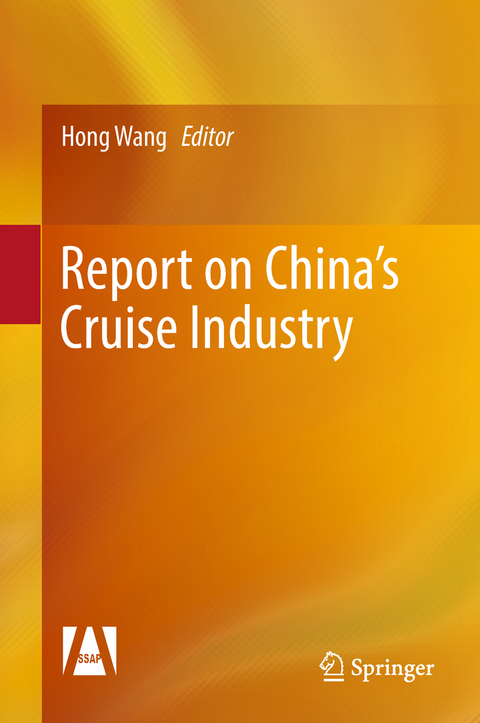
Report on China’s Cruise Industry (eBook)
VI, 279 Seiten
Springer Singapore (Verlag)
978-981-10-8165-1 (ISBN)
The book contains 12 contributions that explain the current state of China's cruise industry and future development. Dating from the 1960s and with the rapid development of over 50 years, the modern cruise industry has developed into one of the fastest growing industries with the most remarkable economic benefits in the global tourism and hospitality industry, known as a "e;golden industry on the golden waterway"e;. In recent years, with the gradual saturation of international cruise market and the eastward-moving trend of the center of cruise market, China has become a strategic emerging market with which international cruise lines have been competing. A number of international cruise lines, including Costa Crociere, Royal Caribbean Cruises, Princess Cruises, MSC Cruises, Star Cruises, Norwegian Cruise Line and Dream Cruises, have entered the cruise market in Mainland China.
WANG Hong, Doctor of Enterprise Management of Shanghai Jiao Tong University and Postdoctor of Applied Economics of Fudan University, is currently assuming the office of Secretary of Baoshan Party Committee of CCP and Director of Shanghai International Cruise Economy Research Center; as a doctoral tutor and professor of Shanghai Jiao Tong University, she also enjoys the special allowance of the State Council, and is one of the members of the 10th, 11th, 12th and 14th NPC of Shanghai Municipal, and anational candidate for the New Century National Hundred, Thousand and TenThousand Talent Project. Professor WANG Hong assumed the office of Vice Chairman of the Committee of Teaching for Business Administration of Higher Education under the Ministry of Education, and held the position Vice Chairman of the Committee of Teaching for Management Science and Engineering of Higher Education under the Ministry of Education. At present, Professor Wang Hong is in the list of the scholars chosen for the New Century Talent Support Program of the Ministry of Education as well as the Dawn Plan and DawnTracking Plan of Shanghai Municipality, honored as the leading talent and excellent academic leader of Shanghai Municipality.Professor WANG Hong initiatively interfaces with the general trend of development of the international cruise industry, and has innovatively extended the content of teaching of the discipline of tourism management. She is the first person in China to start the undergraduate and graduate programs for cruise economy and becomes the discipline leader. She led the Program of Innovative Practices for Cultivating Badly-Needed Talents of the International Cruise Industry on the Basis of Government Support, Industry Development, Talent Cultivation, Scientific Research and User Application, and won the second prize for 2014 National Teaching Achievements and the outstanding award for Shanghai Teaching Achievements. Professor Wang Hong emphasizes the direct transformation of research achievements into productivity and application. Some of the achievements have been converted into the basis for decision-making by cruise companies and the government. She has successively held several major projects of National Social Science Foundation, National Soft Science projects, 6 major projectsof National Development and Reform Commission (NDRC) and over 30 provincial and ministerial research projects, published over 70 monographs and essays, many of which have been included by EI and ISTP. More than 30 of his research achievements have been successively awarded the first prize for Shanghai Governmental Decision-Making and Consultation Research Achievements, the second prize for Shanghai Science and Technology Progress Award, the excellent award of Shanghai Deng Xiaoping Theory Research and Propaganda, the excellent award of Shanghai Philosophy and Social Science Community Discussion, the first prize for Shanghai Teaching Achievements, and the first prize for Shanghai Education and Scientific Research Achievements and other provincial and ministerial awards.Professor WANG Hong is also the former member of the Execution Committee of All-China Federation of Trade Unions, member of All-China Women’s Federation, Dean of Shanghai University of Engineering Science, Vice Chairman of Shanghai Federation of Trade Unions, Vice Chairman of Shanghai Association of Enterprise Management, Vice Chairman of Shanghai Creative Industry Association, and Vice President of Shanghai Association of Science and Art, etc.
Contents 5
1 China’s Cruise Industry in 2016–2017: Transformation, Upgrading and Steady Development 7
1 Development Environment of China’s Cruise Industry in 2017 7
1.1 International Environment: Continual Growth in Spite of Sluggish Economy of the World 8
1.1.1 Sluggish Global Economy and Increased Development Uncertainty 8
1.1.2 Continual Growth of Cruise Market and Promoted International Status of the Asia-Pacific Region 9
The Global Cruise Market Scales up Rapidly, and Regional Concentration of FDI Is Still High 9
The International Cruise Tourism Market Sees a Clear Trend of Younger 11
The Scale of Cruise Transport Capacity Is Increasing at a High Pace Globally, with Large and New Ships Being Continually Introduced to the World 12
The Economic Contribution of the International Cruise Industry Is Increasing 14
The Asian Cruise Market Grows Vigorously with Increased Global Influences 14
The Global Cruise Building Market Is Highly Concentrated and Shows Obvious Trend of Monopoly 18
1.2 Domestic Environment: New National Strategies Bring Along New Opportunities for Rapid Development of the Tourism Industry 20
1.2.1 “The Belt and Road” Initiative Brings Along New Opportunities for Development of Cruise Economy 20
1.2.2 The Tourism Industry Develops Fast, Increasing the Demand for Both Domestic and International Tourism 23
2 Development Status of China’s Cruise Industry in 2017 24
2.1 The Cruise Market Continues to Scale up, Leading to a Highly Improved International Status 24
2.2 The Cruise Ship fleet Is Expanding and the Cruise Market Witnesses fierce Competition 26
2.3 Preferential Policies Are Introduced to Support the Manufacture of Home-Made Cruise Ships and the Era of Manufacturing Cruise Ships Starts in China 28
2.4 China’s Home-Made Cruise Industry Is Beset with Difficulties and Huge Operation Stress 30
2.5 Overseas Shopping Is Still the Focus and There Is a Lack of In-Depth Experience in Cruise Tours 31
2.6 The Consciousness of Cruise Ship as the Travel Destination Is Weak and There Is a Long Way to Go to Realize Cultural Building 33
2.7 The International Political Environment Is Complex and Tricky and the Weakness of Cruise Tourism Is Highlighted 34
3 Puzzles Faced by China’s Cruise Industry in 2017 34
3.1 The National Development Plan Needs to Be Innovated and Improved 34
3.2 China’s Cruise Route Policies Call for Innovation 35
3.3 The “Multi-port Call” Business Policy Needs to Be Innovated 37
3.4 The Cruise Ship Provisioning Policy Calls for Innovation 38
3.5 New Policies Towards the Purchase of Cruise Ships Are Needed 38
3.6 Considerable Challenges Are Faced by the Domestic Cruise Industry 40
3.7 There Is Insufficient Innovation in Marketing and the Drawback of the “Chartered” Mode Starts to Show 41
4 Development Trend of China’s Cruise Industry in 2018 42
4.1 The Development of the Country’s Cruise Tourism Industry Will Focus More on the Globalism and Coordination 43
4.2 The Development of the Country’s Cruise Tourism Industry Will Focus More on the Stability and Sustainability 43
4.3 The Design for China’s Cruise Tourism Products Will Be More Characteristic and Differentiated 44
5 Countermeasures for Achieving Steady and Sustainable Development of China’s Cruise Industry 46
5.1 Enhance Publicity and Advocacy of Cruise Tours and Establish Reputation of Cruise Tourism 46
5.2 Improve Quality of Cruise Products and Enhance the Experience in Cruise Tours 47
5.3 Proactively Innovate the Distribution Mode and Eliminate Drawbacks of the “Chartered” Mode 48
5.4 Build a Favorable Industrial Soft Environment and Restructure the Cruise Industry Environment 49
5.5 Accelerate the Integration of Cruise Tourism into Regional Economy and Generate the Driven Effect 50
5.6 Follow “The Belt and Road” Initiative and Realize Internationally Coordinated Development 51
2 Ten Hot Spots of China’s Cruise Industry Development During 2016–2017 54
1 Hot Spot 1 Cruise Industry Proactively Follows “The Belt and Road” Initiative and Develops a New Open and Cooperation Pattern for the Cruise Industry 55
1.1 Hot Event 55
1.2 Comments on the Event 56
1.3 Important Enlightenment 56
2 Hot Spot 2 China’s Cruise Market Has Risen to the Second of the World and Wusongkou International Cruise Terminal Has Joined the First Group 57
2.1 Hot Event 57
2.2 Comments on the Event 57
2.3 Important Enlightenment 58
3 Hot Spot 3 The First Industrial Fund for Cruise Industry Is Founded and China Force Joins the Building of Luxury Cruise 58
3.1 Hot Event 58
3.2 Comments on the Event 59
3.2.1 Follow the Concept of “The Belt and Road” and Promote the Development of the Cruise Industry 59
3.2.2 Introduce Flowing “Financial” Water to Irrigate the Cruise Industry and Set Up the Example of “Finance Supports Entity” 60
3.3 Important Enlightenment 60
3.3.1 China’s Cruise Industry Develops Rapidly and Lots of Good Opportunities Come in the Cruise Ship Building Field 60
3.3.2 Develop Good Relations with Neighbors and Realize Localization of Cruise Ship Building Under Joint Efforts 61
4 Hot Spot 4 Shanghai Takes the Lead to Innovate the Mode of Provisioning for Cruise Ships and Makes Great Effort to Build the Asia-Pacific Center for Global Cruise Ship Provisioning 61
4.1 Hot Event 61
4.2 Comments on the Event 62
4.3 Important Enlightenment 62
5 Hot Spot 5 New Voices Rise in International and Domestic Cruise Conferences and Forums, Exploring a New Chinese Model of International Cruise Industry 63
5.1 Hot Event 63
5.2 Comments on the Event 64
5.3 Important Enlightenment 64
6 Hot Spot 6 with Increasing Attraction of Chinese Cruise Market, Famous International Cruise Lines Compete to Capture the Chinese Market 65
6.1 Hot Event 65
6.2 Comments on the Event 66
6.3 Important Enlightenment 67
7 Hot Spot 7 Enhanced Industrial Policy and Research Support from National Ministries and Commissions Help Promote Stable and Further Development of Chinese Cruise Industry 68
7.1 Hot Event 68
7.2 Comments on the Event 70
7.3 Important Enlightenment 70
8 Hot Spot 8 Academic Research of Chinese Cruise Industry Finds a Brand-New Perspective, Exploring the New Rules of International Cruise Industry in Depth 71
8.1 Hot Event 71
8.1.1 Cruise Ship Building 72
8.1.2 Cruise Market 73
8.1.3 Cruise Tourism 73
8.1.4 Environmental Impact 73
8.1.5 Relevant Researches 74
8.2 Comments on the Event 75
8.3 Enlightenments 75
9 Hot Spot 9 Exploring the Chinese Path of Cruise Distribution Model Under the Heated Debate on Cruise Distribution Model Innovation and Transformation 76
9.1 Hot Event 76
9.2 Comments on the Event 76
9.3 Important Enlightenment 77
10 Hot Spot 10 The Nanhai Cruises Opens up Xisha Islands Route, Setting off on a Path to Off-Shore Cruise Ship in China 78
10.1 Hot Event 78
10.2 Comments on the Event 79
10.3 Important Enlightenment 79
3 Active Connection to “The Belt and Road” Initiative to Enable the Great-Leap-Forward Development of Shanghai Cruise Economy 81
1 Background and Significance of Research 82
1.1 Accelerated Integration of “The Belt and Road” Initiative with Cruise Industry 82
1.2 Active Participation of Port Cities in the Construction of 21st Century Maritime Silk Road 82
2 Literature Review 84
3 Object and Goal of Research 86
4 The Development Opportunity for Chinese Cruise Industry Under the Belt and Road Strategy 86
4.1 The Belt and Road Provides New Development Concepts for Cruise Industry 86
4.2 The Belt and Road Provides New Development Patterns for Cruise Tourism 87
4.3 The Belt and Road Provides New Development Motivation for Cruise Industry 87
4.4 The Belt and Road Provides New Development Space for Cruise Industry 88
5 Development Status of Shanghai Cruise Industry 88
5.1 Shanghai Cruise Industry Economy Grows Continuously to Raise Its International Position 88
5.2 Baoshan Puts Great Efforts into the Development of Cruise Economy to Be the first to Create Cruise Industry Chain 88
5.3 Wusongkou International Cruise Terminal Leads Chinese Cruise Industry into an Era of Big Ships While It Is Making Leap-Forward Development 90
6 Recommendation on the Connection of Shanghai Cruise Industry with the Belt and Road Strategy 90
6.1 Promote the Internationalized Application of Port Advantages and Standards Along the Belt and Road 91
6.2 Promote the Development of Cruise Products Along the Belt and Road 91
6.3 Promote the International Marketing Promotion Along the Belt and Road 92
6.4 Promote the Interconnection of Cruise Industry Development Along the Belt and Road 92
6.5 Carry Out Researches on Talents Fostering Programs for International Cruise Tourism Along the Belt and Road and the Related Subjects 93
7 Conclusion 93
References 94
4 The Development and Changes of Cruise Industry in China Over the Decade 95
1 Introduction 95
2 Literature Review 96
2.1 Overseas Research 96
2.2 Domestic Research 97
2.3 Summary 98
3 The Development of Cruise Market in China in the Past Decade 99
3.1 Continuous Scale-Up of China’s Cruise Industry Over the Past Decade 99
3.2 Improvement of Distribution of Cruise Ports in China Over the Decade 100
3.3 Increased Input of Transport Capacity into Chinese Market by International Cruise Lines Over the Decade 101
3.4 Rapid Development of Online Cruise Tourism in China 102
3.5 Continuously Increasing Policy Support 103
4 Analysis on the Issues in the Development of Cruise Industry in China in the Past Decade 104
4.1 Market Dominated by Foreign Cruise Ships and Slow Development of Domestic Cruise Ships 104
4.2 Missed Upstream and Downstream Segments of the Cruise Industry Chain and Limited Economic Contribution 105
4.3 Low Richness and Diversity in Cruise Routes 106
4.4 Slow Cultivation of Cruise Tourism Consumption Culture 107
4.5 Big Gap Between Demand and Supply of Cruise Tourism Talents 107
5 Forecasts and Analysis on Future Development of Cruise Industry in China 108
5.1 Continuous Expansion of the Cruise Tourism Consumption Market with an Obvious Trend Towards Demand Diversity 108
5.2 Accelerated Port Integration with the Trend of Oligopoly Competition 108
5.3 Accelerated Development and Increased Market Influence of Local Cruise Ships 109
5.4 Constantly Revised Laws, Regulations and Standards for the Cruise Industry 109
6 Recommendations on the Development of Cruise Industry in China 110
6.1 Operation and Management of Cruise Ports 110
6.2 Operation and Management of Cruise Lines 111
6.3 Improvement of Special Laws and Regulations on Cruise Tourism 111
6.4 Improvement of Talent Training Mode 112
5 Research on Asian Cruise Business Climate Index 113
1 Introduction 113
2 Literature Review 114
2.1 Research Status of Climate Index 114
2.1.1 Foreign Research 114
2.1.2 Domestic Research 115
2.2 Research Status of Climate Index in Tourism Industry 115
2.2.1 Foreign Research 115
2.2.2 Domestic Research 116
2.2.3 A Review of Literature Researches on Tourism Climate 116
3 Definition of Cruise Business Climate 117
3.1 Climate Index 117
3.2 Cruise Business Climate Index 117
4 Establishment of a Climate Index Evaluation System for Asian Cruise Business 118
4.1 Indicator Selection Principle 118
4.2 Indicators Classification Methods 118
4.2.1 Leading Indicators 118
4.2.2 Coincident Indicators 119
4.2.3 Lagging Indicators 119
4.3 Establishment of the Evaluation Index System 119
4.4 Determining Weights of Evaluation Indicators 119
5 Research on Determination of Cruise Business Climate Index of Asia 121
5.1 Methods for Determining Cruise Business Climate Index of Asia 121
5.1.1 Obtaining and Standardizing Symmetric Change Rate of Indicators 122
5.1.2 Obtaining Standardized Average Change Rate 122
5.1.3 Obtaining Initial Composite Index Ij(t) 123
5.1.4 Trend Adjustment 123
5.1.5 Calculation of Composite Index 124
5.2 Data Collection 125
5.3 Measurement of Business Climate Index of China’s Cruise Industry 125
5.4 Measurement of Business Climate Index of Asian Cruise Industry 127
6 Establishment of a Publication Mechanism of Business Climate Index of Asia’s Cruise Industry 128
6.1 Principles for Establishment of a Publication Mechanism of Business Climate Index of Asia’s Cruise Industry 128
6.1.1 Principle of Openness 128
6.1.2 Principle of Truthfulness 128
6.1.3 Principle of Regularity 129
6.2 Building a Publication Mechanism of Climate Index of Asia’s Cruise Industry 129
6.2.1 Establishing a Management Mechanism for Publication of Business Climate Index of Asia’s Cruise Industry 129
6.2.2 Developing Statistical System of Cruise Industry 130
6.2.3 Establishing an Information Collection System for Business Climate Index of Cruise Industry 130
6.2.4 Establishing a System to Support Statistic of Cruise Industry 131
6 Research on Cruise Industry in China: Current Issues and Prospects 132
1 Introduction 132
2 Research Overview 133
3 Research on the Influence of Cruise Industry and the Regional Development 134
3.1 Characteristics and Influence of Cruise Industry 134
3.2 Regional Development of Cruise Industry 136
3.3 Competitiveness of Cruise Terminals 137
4 Research on Cruise Operation and Route Planning 138
4.1 Cruise Operation and Management 138
4.2 Cruise Route Planning 139
5 Research on Cruise Customers 140
6 Other Researches 142
6.1 Cruise Manufacturing 142
6.2 Cruise Security 143
6.3 Talent Training 143
6.4 Laws and Regulations and Miscellaneous 143
7 Conclusions and Prospects 144
7 The Economic Contributions of Evaluation Indicator System to Shanghai’s Cruise Industry 146
1 Literature Review 146
1.1 Economic Contribution of Cruise Industry from the Theoretical Perspective 146
1.1.1 Characteristics of Cruise Economy 147
1.1.2 Temporal and Spatial Boundaries of Economic Contribution of Cruise Industry 148
1.1.3 Production Substitution Effect of Cruise Economy 150
1.1.4 Multiplier Effects of Cruise Economy 150
1.2 Data Acquisition Method for Evaluation on Economic Contribution of Cruise Industry 151
1.2.1 Economic and Social Relevant Data 152
1.2.2 Consumption of Cruise Tourists 152
1.2.3 Consumption of Cruise Crew 152
1.2.4 Operating Expenses of Cruise Enterprises 153
1.2.5 Management Expenses of Cruise Enterprises 153
1.2.6 Cruise-Related Fixed Assets Investment 153
1.2.7 Cruise-Related Infrastructures and Public Service 154
1.3 Methods for Evaluating Direct Economic Contribution of Cruise Industry 155
1.3.1 Direct Cruise Tourism Consumption 156
1.3.2 Value Added of Cruise Industry 159
1.4 Method for Evaluating the Economic Contribution of Cruise Industry 160
1.4.1 Keynesian Model 160
1.4.2 Input-Output Model 161
1.4.3 CGE Model 162
2 Evaluation System for Economic Contribution of Cruise Industry to Shanghai 163
2.1 Characteristics and Trends of Cruise Economy in Shanghai 163
2.1.1 Diversified Structure of Cruise Tourists 163
2.1.2 Great Importance Attached to Ship Supply Industry 163
2.1.3 Gradual Extension of Cruise Services 164
2.1.4 Cruise Headquarters Economy 164
2.1.5 Rapid Development of Cruise Supporting Industries 164
2.1.6 Breakthrough in Local Cruise Industry 165
2.1.7 Further Improvement of Public Services for Cruise 165
2.1.8 Enhancement of Ability to Develop Urban Tourism 165
2.2 The Economic Contribution of Cruise Industry to Shanghai 166
2.2.1 Consumption of Cruise Tourists 166
2.2.2 Consumption of Cruise Crew 167
2.2.3 Operating Expenses of Cruise Enterprises 168
2.2.4 Management Expenses of Cruise Enterprises 168
2.2.5 Fixed-Assets Investment 169
2.2.6 Infrastructure and Public Services 169
2.3 Data Acquisition Method for Evaluating Economic Contribution of Cruise Industry to Shanghai 173
2.4 Evaluation Indicator System for Economic Contribution of Cruise Industry to Shanghai 174
2.4.1 Technical Route for Evaluation on Economic Contribution of Cruise Industry to Shanghai 174
2.4.2 Indicators for Evaluation on Economic Contribution of Cruise Industry to Shanghai 175
2.4.3 Method to Calculate Indicators for Direct Economic Contribution of Cruise Industry to Shanghai 175
2.4.4 Method for Calculating Indicators of Economic Contribution of Cruise Industry to Shanghai 178
2.5 Summary 179
8 Development Path Research on Shanghai’s Cruise Supporting Industry 180
1 Research Background 180
1.1 China Has Stepped into Economic New Normal, and It Is a Significant Opportunity for Transformation and Development 180
1.2 Great Opportunity for Constructing Shanghai’s World’s Famous Tourism City and “Four Centers” 181
1.3 Optimization and Upgrading of Cruise Supporting Industry Accelerates and Improves Shanghai’s Ability for Blending into Value Chain of Global Cruise Industry 182
2 Literature Review 182
2.1 Existing Research on Development of Cruise Supporting Industry 182
2.1.1 Foreign Research 182
2.1.2 Domestic Research 183
2.2 Research Review of Cruise Supporting Industry 184
3 Research Goal, Process and Method 185
3.1 Research Goal 185
3.2 Research Method 185
3.3 Research Process 185
4 Research Conclusion 186
4.1 Development Features of Shanghai’s Cruise Supporting Industry 186
4.1.1 China’s Cruise Supporting Industry Chain Has a Rapid Development 186
4.1.2 Agglomeration Effect for Shanghai’s Cruise Supporting Industry Gradually Stands Out 187
4.2 Bottleneck for Shanghai’s Cruise Supporting Industry Development 189
4.2.1 Unification and Coordination Mechanism for Port Operation Is Required to Be Improved 189
4.2.2 Clustering Degree of Industrial Factor Is Low and Regional Economic Linkage Is Required to Be Strengthened 190
4.2.3 The Space for Cruise Ship Maintenance, Manufacturing and Modification Working on Cruise Ship Building Localization Is Vast 191
4.2.4 Jam in Yangtze Estuary Channel Is Increasingly Obvious and Navigation Capacity Is Faced with the Great Challenge 191
5 Discussion and Analysis 192
5.1 Optimization Path for Shanghai’s Cruise Supporting Industry 192
5.1.1 Optimization Path for Cruise Supporting Industrial Park 192
5.1.2 Layout Optimization of Cruise Industrial Supporting Space 192
5.2 Optimization Countermeasures and Suggestions of Shanghai Cruise Supporting Industry 193
5.2.1 “Zone-Terminal Linkage” System Innovation Accelerates Structural Optimization of Cruise Supporting Industry 193
5.2.2 Optimization and Upgrading of Cruise Supporting Service Industry 193
5.2.3 Optimization of Cruise Supporting Facility and Service 194
5.2.4 Energy Level Improvement of Cruise Supporting Industry 194
5.3 Key Measures for Optimization of Shanghai’s Supporting Industry 194
5.3.1 Establish Shanghai Wusong International Cruise Ship Supply Bonded Logistics Area 194
5.3.2 Establish China Cruise Tourism Cross-Border Commodities Exchange Center and E-Commerce Platform 195
5.3.3 Establish Cruise Ship Service Talent Supply Base 195
5.3.4 Establish Shanghai Cruise Ship Repair and Building Supporting Base 195
9 Research on the Financial Service System for Development of China’s Cruise Industry 197
1 Literature Review 198
1.1 Research at Home and Abroad 198
1.1.1 The Overall Development of the Cruise Industry 198
1.1.2 The Demand of the Cruise Industry for financial Support 198
1.1.3 Financial Service System of China’s Cruise Industry 199
1.2 Research Review 199
2 The Present Situation and Shortcomings of China’s Cruise Industry 200
2.1 Cruise Economy Is Developing Rapidly in China and Shanghai 200
2.2 Serious Shortage Behind the Rapid Development 200
2.2.1 Connotation of the Whole Industry Chain 201
2.2.2 Current Situation of the Whole Cruise Industry Chain in China 201
2.2.3 Current Situation of the Whole Cruise Industry Chain in Shanghai 202
Upstream of the Industry Chain 202
Midstream of the Industry Chain 203
Downstream of the Industry Chain 203
2.3 Financial Service System of China’s Cruise Industry Obviously Lagging Behind 203
2.3.1 Research on the Connotation of Financial Service System for the Development of the Cruise Industry 204
2.3.2 Defects in China’s Cruise Financial Service System: Based on the Comparison of Chinese and Foreign Enterprises 205
The Upstream of the Industry Chain (Cruise Ship Manufacturing): CSSC and Aker 205
Contrastive Analysis of Key financing Modes 205
Breakthrough Path 206
Midstream of the Industry Chain (Cruise Ship Operation): Bohai Ferry and CCL 208
Contrastive Analysis of Key Financing Modes 208
Breakthrough Path 208
Downstream of the Industry Chain (Tourism Service): Caissa Touristic and TUI 210
Contrastive Analysis of Key Financing Modes 210
Breakthrough Path 210
Summary Based on the Domestic and Foreign Comparison 211
2.4 International Experience of Financial Service System of Cruise Industry 212
2.4.1 European Model 212
2.4.2 U.S. Model 213
2.4.3 Asia-Pacific Model 214
2.5 Policy Suggestions on the Development of Financial Service System in Chinese Cruise Industry 215
2.5.1 Paths of the Financial Service System Supporting the Development of Cruise Industry 215
Financial Service of the Upstream Cruise Industry Chain 215
Financial Services in the Midstream of the Cruise Industry Chain 216
The Financial Services in the Downstream Cruise Industry Chain 217
2.5.2 The Policy Suggestions for the Financial Service System in Supporting the Development of China’s Cruise Industry 217
Financial Innovation Goes First for the Development of Diversified Investment and Financing Services 218
Policy Finance Goes First to Increase Financial Support 218
FTZ System Innovation Goes First to Vigorously Develop Offshore Financial Services 219
Green Finance Goes First to Guide the Cruise Green Economy 219
“The Belt and Road” Goes First to Promote China’s Cruise Industry to Go Out 220
2.5.3 Policy Suggestions on Financial Policy System to Support the Development of the Cruise Industry in Shanghai 220
Shanghai Develops the “New Geese Model” for the Cruise Economy 220
Policy finance 221
Emerging Finance 222
Cruise FTZ Finance 222
10 Legal Coordination Difficulties in the Course of Chinalization of Cruise Industry and Coping Measures 225
1 Necessity for Law Supply Side Reform in Chinalization of Cruise Industry 225
1.1 Legal Regulation Requirements for Chinalization of Cruise Industry 225
1.2 Practical Analysis of Legal Regulation in Cruise Industry 227
1.2.1 Guidance and Planning of Cruise Industry of the State Council 227
1.2.2 Cruise Transport Provisions of the Ministry of transport 229
1.2.3 Cruise Tourism Regulations of CNTA 230
1.2.4 Establishment of Relevant Systems by Shanghai Municipal Tourism Administration 230
2 Legal Set Pattern in Chinalization of Cruise Industry 232
2.1 Legal Dilemma of Cruise Transport Industry 232
2.2 Legal Dilemma for Alienation of Chinalization in Cruise Tourism Agency Model 233
2.3 Stiffened Legal Norms of Cruise Logistics Industry 235
2.4 Deficiency of Legal Norm in Cruise Services 237
3 Chinese-Style Solutions to Cruise Tourism Industrialization 238
3.1 Set the Existing System as the Blueprint to Do Well in Top-Level System Design 238
3.2 Set the FTZ and Experimental Area for Cruise Tourism Development as the Starting Points to Make Innovation in the Early and Pilot Implementation System 239
Acknowledgments 240
11 Discussion on the Nature and Governance Mode of Cruise Ship Environmental Pollution from the Perspective of Marine Right 241
1 Introduction 241
2 Research Review 242
2.1 Research Abroad 242
2.2 Research at Home 243
3 Thinking on the Nature of Cruise Ship Environmental Pollution 244
3.1 Cruise Ship Pollution Being Typical and Representative in Marine Pollution 244
3.2 Increase in Cruise Ship Pollutants Becoming Faster and the Caused Loss Becoming More Prominent 244
3.3 Cruise Ship Pollution Being Transnational and Global 245
3.4 Marine Right Features Involved in Cruise Ship Pollution Governance 247
4 Challenge and Mode Discussion of Cruise Ship Pollution Governance 248
4.1 Governance Challenges Brought by Cruise Ship Pollution 248
4.2 Thinking on the Cruise Ship Pollution Governance Mode 249
5 Conclusion and Prospect 250
12 Analysis on the Development Strategy and Path of China’s Domestic Cruise from the Perspective of Differentiated Competition 252
1 Introduction 252
2 Analysis on the Development Environment of Domestic Cruise Market 254
2.1 Asian Cruise Market Has Become an Important Emerging Market in the World 254
2.2 The Rapid Growth of Chinese Cruise Market Has Provided a Favorable Environment for Domestic Cruise Brands 256
2.3 China’s More Support to the Development of Domestic Cruise Ships 258
3 Analysis on the Dilemma of China’s Domestic Cruise Industry 260
3.1 A Brief Introduction to China’s Domestic Cruise Brands 261
3.2 Analysis on the Operating Pressure Faced by China’s Domestic Cruise Brands 262
3.3 Dilemma Faced by Domestic Cruise Operation 263
3.3.1 Dilemma of Purchase Tax of Domestic Cruise Ships 263
3.3.2 Dilemma of Retirement Age of the Domestic Cruise Ship 263
3.3.3 Capital Pressure for Purchase of Domestic Cruise Ships 264
3.3.4 Slow Development of the Cruise Ship Industry in South China Sea 264
4 Analysis on Development Strategy and Path of Domestic Cruise Brands 265
4.1 Development Orientation 265
4.2 Development Goals 265
4.3 Implementation Focus 266
4.3.1 Localization of Domestic Cruise Design 266
4.3.2 Themed Domestic Cruise Products 267
4.3.3 Internationalization of Domestic Cruise Development 267
4.3.4 Differentiation of Competition Strategies in Domestic Cruise Market 267
4.3.5 Domestic Cruise Brand Talents in China 268
5 Conclusion and Outlook 268
References 270
Chapter 3 270
Chapter 4 270
Chapter 5 271
Chapter 6 272
Chapter 7 274
Chapter 8 275
Chapter 9 277
Chapter 10 278
Chapter 11 278
| Erscheint lt. Verlag | 24.2.2018 |
|---|---|
| Zusatzinfo | VI, 279 p. 46 illus., 1 illus. in color. |
| Verlagsort | Singapore |
| Sprache | englisch |
| Themenwelt | Technik |
| Wirtschaft ► Betriebswirtschaft / Management ► Unternehmensführung / Management | |
| Schlagworte | China • China’s Cruise • Cruise Tourism • Tourism • Transportation |
| ISBN-10 | 981-10-8165-4 / 9811081654 |
| ISBN-13 | 978-981-10-8165-1 / 9789811081651 |
| Informationen gemäß Produktsicherheitsverordnung (GPSR) | |
| Haben Sie eine Frage zum Produkt? |
 PDF (Wasserzeichen)
DRM: Digitales Wasserzeichen
Dieses eBook enthält ein digitales Wasserzeichen und ist damit für Sie personalisiert. Bei einer missbräuchlichen Weitergabe des eBooks an Dritte ist eine Rückverfolgung an die Quelle möglich.
Dateiformat: PDF (Portable Document Format)
Mit einem festen Seitenlayout eignet sich die PDF besonders für Fachbücher mit Spalten, Tabellen und Abbildungen. Eine PDF kann auf fast allen Geräten angezeigt werden, ist aber für kleine Displays (Smartphone, eReader) nur eingeschränkt geeignet.
Systemvoraussetzungen:
PC/Mac: Mit einem PC oder Mac können Sie dieses eBook lesen. Sie benötigen dafür einen PDF-Viewer - z.B. den Adobe Reader oder Adobe Digital Editions.
eReader: Dieses eBook kann mit (fast) allen eBook-Readern gelesen werden. Mit dem amazon-Kindle ist es aber nicht kompatibel.
Smartphone/Tablet: Egal ob Apple oder Android, dieses eBook können Sie lesen. Sie benötigen dafür einen PDF-Viewer - z.B. die kostenlose Adobe Digital Editions-App.
Buying eBooks from abroad
For tax law reasons we can sell eBooks just within Germany and Switzerland. Regrettably we cannot fulfill eBook-orders from other countries.
aus dem Bereich