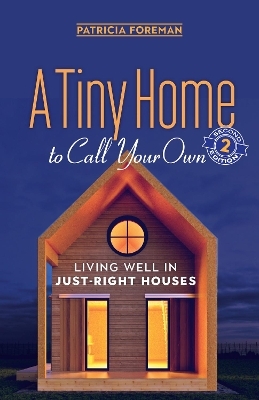
A Tiny Home to Call Your Own
New Society Publishers (Verlag)
978-0-86571-890-6 (ISBN)
- Titel ist leider vergriffen;
keine Neuauflage - Artikel merken
Unfetter and unclutter your life by learning how and why to transition to a tiny home
Do you feel as though you're living in an expensive and ill-fitting home filled with too much stuff? Do you have too much space filled with too many things, constantly dealing with house maintenance and financial upkeep? Living in a tiny home could be the solution. But how do you know?
Tiny house guru Pat Foreman examines the hows and whys of tiny-home living, to help you assess whether it's the right solution for you. A Tiny Home to Call Your Own examines:
The many uses of tiny homes for all age groups and different socio-economic levels
How smaller homes can buy you time, financial freedom, and an unfettered lifestyle
Stuff-ology: understanding what things do and do not serve you
Ecology and the Tiny House movement
Pre-existing tiny house communities.
From newlyweds to empty-nesters, downsizers to retirees, and everyone in between, A Tiny Home to Call Your Own will help you to find and create the living space and housing you love and that will serve you and your future.
Pat Foreman is a pharmacist, sustainable agricultural activist, local foods advocate, and popular speaker. She was a class A contractor in Virginia and co-owned the United States’ first tiny-house construction company. Pat has been widely published in major national magazines including Mother Earth News, Backyard Poultry, and BackHome Magazine, and is a popular guest on local and national radio and television talk shows. She has degrees in Pharmacy and Animal Sciences, and has her Masters of Public Affairs (MPA). Pat served as a Science Officer for the United Nations in Vienna and has worked in over 30 countries conducting workshops and providing consulting services. She currently lives in a very small home in Richmond, Indiana.
Introduction
Recipe for a Tiny Home
What to Add and What to Leave Out
Chapter 1: Is a Tiny Home Right for You?
People Who Might be Interested in Tiny Homes
Downsizers
Empty Nesters
Boomerangs and Nest Returners
Preretirement and Retirees
The Sandwich Generation
Semi-Assisted Living Individuals
Parents, Grandparents, and Extended Family
Single Professionals
Newlyweds
Separated or Divorced
Couples Who Make Better Neighbors than Housemates
Single Parents With (or Without) Kids
Nannies
Physically Challenged
Fixed-Incomers
In-Betweeners
Hermit-prone Individuals
Everyone Else
Uses for Tiny Homes
Extra Private Guest Rooms
Starter Homes
Student Housing
Bed and Breakfast Expansion
Rental Income
Home Office and Professional Space
Workshop for Hobbies, Pottery, Forge, Quilting, or Crafts
Home Gym
Extended Home Care
Pout House
Men's Caves
Away Space
Recreational and Vacation Getaways
Retreat Centers with Private Cottages
Chapter 2: Tiny Homes Can Help You Have More Time, More Freedom, and More Money
How a Tiny Home Can Promote an Improved Way of Life
Eight Ways You Can Save Money by Building a Tiny Home
Chapter 3: Real Life Examples of Tiny Homes and the People Who Love Them
Case Study 1: Terri Bsullak's Tiny Home
Case Study 2: The Lane's Shed Home
Case Study 3: Ray Pealer's Tiny House Trade Station
Case Study 4: The Campbells' Combined Workshop and Garden Shed — Call It Anything But a House
Case Study 5: Uncle Gene's Tiny Shed Home
Chapter 4: Tiny Houses We Have Built
Andy's Weekender
More Room for Guests
Sun Block House
Virginia Guest Cottage
Chapter 5: Tiny Homes to Go
Lessons From the RV and Boating Industries
Park Trailers
Copper Top Cabin
New England Style Tiny House
Small Log Cabin Homes
Tumbleweed Tiny Homes
Chapter 6: Expanding A Tiny Home with Do-It-Yourself Construction
The Transformation
Things to Consider
Advantages of Do-It-Yourself
Deciding On, Drawing, and Permitting Your Plans
Once Upon a Plan
Drawing and Redrawing Your Plans
Permitting Your Plans — Hopefully Only Once
Preparing a Budget and Schedule
Money
Time
Learning How to Do-It-Yourself
Living and Surviving in Construction
The Dangers of Construction
Common Sense Safety
Chapter 7: Clutter Control and Stuffology
Redundancy Causes Chaos
Destuffing Plans
Closets and Stuff in Tiny Houses
Garages, Stuff, and Clutter Control
Building a Garage Apartment to Live in Before Building Your Main House
Deciding What Stuff Serves You
Ways to Find New Homes For Stuff — Profitably
Organizing Stuff
Chapter 8: Tiny House Furniture
Beds
Dining and Work Tables
Underfloor Bath Tubs
Underfloor Storage
Pet Areas
Shelves
Doors for Storage Space
Ottoman Footstools
Coffee Tables with Storage
Chapter 9: Ecology and the Tiny House Movement
Ecological Areas of Concern
Ramifications of Large Houses
Alternatives to Building with Wood
Bamboo
Autoclaved Aerated Concrete Blocks (AAC)
Fiber Cement Siding
Engineered Siding
Roofing Choices
Floor Joists and Roof Trusses
Exterior Sheathing and Oriented Strand Board (OSB)
Insulation
Air Filtration
Paints
Exterior Decking and Trex
Chapter 10: Rainwater Harvesting From Your Tiny Home
Water Needs and Harvesting Ability
How Much Water Can You Harvest From Your Roof?
Locating Your Storage Tanks
Storing Harvested Water In Ponds
Chapter 11: Building Tiny House Communities and Conservation Subdivisions
Conservation Subdivision Design
Step 1. Aerial Photograph and Two-Foot Contour Topographical Map
Step 2. Identifying All Potential Conservation Areas
Step 3. Locating the House Sites
Step 4. Designing the Road Alignments
Step 5. Locating Septic Sites and Wells
Step 6. Drawing Lot Lines
Being a Community
The Dark Side of Community Living: Tragedy of the Commons
Subdivision Design to Connect People
Environmental Considerations and Home Characteristics
Increased Appreciation and Premium Resale Values
Chapter 12: Can Tiny Houses Help House the Unhoused and Inappropriately Housed?
Inappropriately Housed
Housing the Unhoused
Family and Friends in Short-Term Need
Affordable Rentals
Housing the Abused, Homeless, and Indigent
Frequently Asked Tiny House Questions
Notes
Tiny House Glossary & Evolving Definitions
Resource Guide
Bibliography and References
Acknowledgements
About the Author
A Note about the Publisher
| Erscheinungsdatum | 16.03.2019 |
|---|---|
| Zusatzinfo | 10 Halftones, black and white |
| Verlagsort | Gabriola Island |
| Sprache | englisch |
| Maße | 140 x 216 mm |
| Gewicht | 313 g |
| Themenwelt | Sachbuch/Ratgeber ► Freizeit / Hobby ► Heimwerken / Do it yourself |
| Sachbuch/Ratgeber ► Gesundheit / Leben / Psychologie | |
| Technik ► Architektur | |
| ISBN-10 | 0-86571-890-3 / 0865718903 |
| ISBN-13 | 978-0-86571-890-6 / 9780865718906 |
| Zustand | Neuware |
| Informationen gemäß Produktsicherheitsverordnung (GPSR) | |
| Haben Sie eine Frage zum Produkt? |
aus dem Bereich