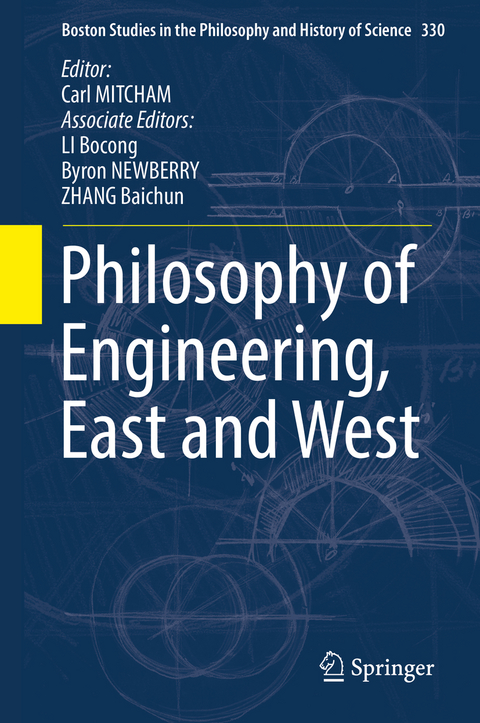
Philosophy of Engineering, East and West (eBook)
333 Seiten
Springer International Publishing (Verlag)
9783319624501 (ISBN)
This co-edited volume compares Chinese and Western experiences of engineering, technology, and development. In doing so, it builds a bridge between the East and West and advances a dialogue in the philosophy of engineering. Divided into three parts, the book starts with studies on epistemological and ontological issues, with a special focus on engineering design, creativity, management, feasibility, and sustainability. Part II considers relationships between the history and philosophy of engineering, and includes a general argument for the necessity of dialogue between history and philosophy. It continues with a general introduction to traditional Chinese attitudes toward engineering and technology, and philosophical case studies of the Chinese steel industry, railroads, and cybernetics in the Soviet Union. Part III focuses on engineering, ethics, and society, with chapters on engineering education and practice in China and the West. The book's analyses of the interactions of science, engineering, ethics, politics, and policy in different societal contexts are of special interest. The volume as a whole marks a new stage in the emergence of the philosophy of engineering as a new regionalization of philosophy. This carefully edited interdisciplinary volume grew out of an international conference on the philosophy of engineering hosted by the University of the Chinese Academy of Sciences in Beijing. It includes 30 contributions by leading philosophers, social scientists, and engineers from Australia, China, Europe, and the United States.
Preface 6
Apology 9
Formatting Note 10
Acknowledgments 11
Contents 12
Contributors 15
Introduction: Intensifying Encounters 22
Introduction 22
Joseph Needham: Science, Technology, and Philosophy 23
John Dewey: Complementing Needham 26
Philosophy of Engineering: Theoretical Issues 27
Philosophy of Engineering: Practical Issues 29
Philosophical Perspectives on Engineering History 31
Engineering, Ethics, and Society 32
Supplementary Interviews 33
Conclusion 34
References 34
Part I: Philosophy of Engineering: Theoretical Issues 36
Chapter 1: On Relationships between the History and Philosophy of Engineering 37
1.1 Introduction 37
1.2 Two Disciplines with a Common Fate 38
1.3 The Lakatos Thesis 39
1.4 Distinguishing Histories 41
1.5 Engineering Evolution 42
1.6 The Engineering Community 43
1.7 Tensions and Complementarities 44
References 45
Chapter 2: Critical Thinking and Heuristics: What Philosophy Can Learn from Engineering about the Back of the Envelope 47
2.1 Introduction 47
2.2 Heuristical Reasoning and Critical Thinking 49
2.3 The Heuristical Benefits of Critical Thinking Fallacies 51
2.4 Critical Thinking Revisited 53
References 55
Chapter 3: Ontology of Technical Artifacts: A Proposal 56
3.1 Introduction 56
3.2 Background 57
3.3 Problems and Reactions 59
3.4 Toward a New Proposal 62
3.5 Conclusion 67
References 68
Chapter 4: Toward an Experimental Philosophy of Engineering 70
4.1 Introduction 70
4.2 Two Paradoxes in Classical Philosophy of Technology 71
4.3 Insight from Experimental Metaphysics 73
4.4 Uncertainty and Experiment in Engineering 75
4.4.1 Learning from Experiment 76
4.4.2 Engineering Failure as Experiment 77
4.4.3 Foresight as Collective Projecting 78
4.5 The Co-evolution of Human Beings and Engineering Through Experiments 79
4.6 Conclusion 82
References 82
Chapter 5: Feasibility and Acceptability in Engineering 84
5.1 Introduction: Posing the Question 84
5.2 PX Project and Dimensions in Feasibility Studies 85
5.3 Acceptance and Acceptability 88
5.4 Feasibility Decision Making Based on Acceptability 90
5.5 Conclusion 91
References 92
Chapter 6: Ancient Chinese Attitudes toward Technics: Chinese Philosophy of Technology Prior to the 1800s 93
6.1 Introduction 93
6.2 ??Yijing: A Basic Source of Chinese Attitudes Toward Technics 94
6.3 ??? Kaogong ji: Earliest Chinese Text on Technics 96
6.4 Confucianism: Ethics over Technics 97
6.5 Daoism: Technics as Intuition and Distraction 99
6.6 ???? Tiangong kaiwu: A Seventeenth Century Chinese Encyclopedia of Technics 101
6.7 Conclusion 103
References 104
Chapter 7: From Engineering to the Philosophy of Engineering: Philosophical Reflections of an Engineer 106
7.1 Introduction 106
7.2 The Engineering-Philosophy Gap 107
7.3 The Nature of Engineering 108
7.4 The Role and Responsibilities of Engineers 109
7.5 The Evolution of Engineering 109
7.6 Engineering and the Philosophy of Engineering 111
7.7 Conclusion 111
References 112
Part II: Philosophy of Engineering: Practical Issues 113
Chapter 8: An Engineer’s Approach to the Philosophy of Engineering 114
8.1 Introduction 114
8.2 Purpose of Engineering 115
8.3 Design and the Process of Engineering 117
8.4 Philosophy and Functional Design 119
8.5 Conclusion 122
References 122
Chapter 9: A Biomimetic Approach to Complex Global Problems 123
9.1 Introduction 123
9.2 Biomimetics 124
9.3 Basic Principles of Nature 125
9.4 Problem Solving for Naturalistic Sustainability 125
9.5 Applications of Naturalistic Sustainable Solutions 128
9.6 Conclusion 129
References 129
Chapter 10: The Philosophy of Engineering and the Engineering Worldview 131
10.1 Introduction 131
10.2 The Spectator Representation of Inquiry 133
10.3 The Participant Representation of Inquiry 133
10.4 From Philosophy of Science Toward Philosophy of Engineering 133
10.5 From the Scientific Worldview Toward an Engineering Worldview 137
10.6 Three Examples of the Paradigm Shift to an Engineering Worldview 138
10.6.1 Royce’s Criterion of Self-Referential Coherence 139
10.6.2 The Place of Engineering in Biological and Socio-economic Evolution 140
10.6.3 George Bugliarello’s Engineering Biosoma 141
10.7 Conclusion 144
References 145
Chapter 11: Toward a Practical Philosophy of Engineering: Dealing with Complex Problems from the Sustainability Discourse 147
11.1 Introduction 147
11.2 Characterizing the Philosophy of Engineering 149
11.3 Science and Scientific Knowledge after Logical Positivism: The Post-Positivist Debate 150
11.4 Toward a Practical Philosophy of Engineering 153
11.4.1 Engineering Practice Based on a Realist Ontology 154
11.4.2 Indeterminacy and Systems 154
11.4.3 Thoughts on the Nature of Truth 156
11.4.4 The Importance of Truth in Dealing with Type 3 Problems 156
11.4.5 Criteria for Truth: The Correspondence Theory 157
11.4.6 Coherence Approaches to Truth 157
11.4.7 Using Both Correspondence and Coherence Criteria for Truth 157
11.5 Principles for a Practical Philosophy of Engineering 158
11.6 Practical Application of the Principles 159
References 160
Chapter 12: What Do Bridges and Software Tell Us about the Philosophy of Engineering? 164
12.1 Introduction 164
12.2 The Context: Engineering and Experiments 165
12.3 The Case of Software Engineering 167
12.4 An Experiment in Empirical Software Engineering 169
12.5 Clues on the Nature of Engineering Experiments 171
12.6 Conclusions 173
References 174
Chapter 13: Herbert Simon Meets Billy Vaughn Koen and Joan van Aken: From Sciences of the Artificial to Engineering Heuristics and Design Propositions 176
13.1 Introduction 176
13.2 Simon Revisited 177
13.3 Rupture and Continuity: Simon Meets Koen and van Aken 178
13.4 Final Remarks 180
References 182
Part III: Philosophical Perspectives on Engineering History 183
Chapter 14: Early Chinese Engineering Education: Influence and Disappearance of the Fuzhou Shipping School 184
14.1 Introduction 184
14.2 Brief History of the Fuzhou Shipping School (???? ??) 185
14.3 Further Historical and Cultural Context 186
14.4 Special Features of the Fuzhou Shipping Educational Program 187
14.5 Influence of the Fuzhou Shipping School on Engineering Education 188
14.6 Evaluation of Engineering Education in the Fuzhou Shipbuilding School 190
14.7 What Happened to the Fuzhou Shipping School 192
14.8 Apology 195
References 195
Chapter 15: The Earliest Western-Trained Engineers in China’s Iron and Steel Industry 197
15.1 Introduction 197
15.2 Foreign Engineers at Hanyang-Hanyehping in the Initial Stage 198
15.3 Training Chinese Engineers for Hanyehping: Beginning with Wu Jiane 200
15.4 Other Hanyehping Study Abroad Students 201
15.5 Chinese Engineers Replace Foreigners 203
15.6 The Role of the Chinese Engineers 205
15.7 Conclusion 207
Appendix 208
The Far Eastern Problem (Yefah CHEN ??? CHENG Yifa) 208
References 210
Chapter 16: Engineering and the Postcolonial: Historical Perspectives and Ethical Practices 211
16.1 Introduction 211
16.2 Postcoloniality and Technology 212
16.3 Postcolonial Engineers 216
16.4 Toward Postcolonial Engineering 218
16.5 Conclusion 222
References 223
Chapter 17: Conflicts and Adaptations in Technology Transfer to Modern China: The Jiaoji Railway Case 225
17.1 Introduction 225
17.2 Overview of the Construction and Operation of the Jiaoji Railway 227
17.3 Confrontations During Early Construction Period 228
17.4 Yuan Shikai and the Boxer Uprising 229
17.5 Sources of Conflict 231
17.6 Construction of Stations and Roads 233
17.7 Conclusion 234
References 236
Part IV: Engineering, Ethics, and Society 238
Chapter 18: Between Optimism and Despair: Engineering, Anthropology, and Development in the Twenty-First Century 239
18.1 Introduction 239
18.2 Engineering, Anthropology and Development 240
18.3 Poverty, Power, and Impoverishment 242
18.4 Addressing Impoverishment: Critical Insights from Appropriate Technology 244
18.5 In Place of a Conclusion: Sharing Insights 247
References 248
Chapter 19: “I Became an Engineer by Accident!”: Engineering, Vocation, and Professional Values 251
19.1 Introduction 251
19.2 Context of the Study 252
19.3 Methodology 253
19.4 Analysis 254
19.5 Conclusion 256
References 258
Chapter 20: Chinese Student Perceptions of Engineering Ethics 259
20.1 Introduction 259
20.2 Data Presentation 260
20.3 Analysis 262
20.4 Recommendations and Conclusions 263
Appendix 264
References 267
Chapter 21: Engineering Policy: Exploratory Reflections 268
21.1 Introduction 268
21.2 Conceptual Issue: What Is Policy? 269
21.3 Background: Classics in Science Policy 271
21.4 Science, Technology, and Engineering 272
21.5 Normative Arguments: Henry Petroski 274
21.6 Normative Arguments: Roger Pielke, Jr. 276
21.7 Conclusion 278
Appendix 278
A Note on “Politics” and “Policy” in China (with ZHANG Kang ??) 278
References 279
Chapter 22: The Dao of Chinese Water Management and Development: Challenges and Perspectives 281
22.1 Introduction 281
22.2 Contemporary Water Challenges and Transitions 282
22.3 Contemporary Water Management and Development Trends 284
22.4 Chinese Water Management and Development 285
22.5 Conclusions 287
References 288
Chapter 23: Decision Making in the 120MN Shanghai Hydraulic Forging Press Project: Walking a Tightrope Between Politics and Technology 290
23.1 Introduction 290
23.2 Seizing Opportunity: Shen’s Proposal and Mao’s Approval 292
23.3 Careful and Venturesome Decisions on Design and Construction 294
23.4 Reliable and Artful Decisions on Process Control 296
23.5 Conclusion 297
References 298
Part V: Supplement: Two Interviews with Influential Chinese Philosophers of Engineering and Technology 300
Chapter 24: Roots of the Philosophy of Technology in China 301
24.1 Introduction 301
24.2 Interview 303
Chapter 25: Humanities Perspectives on Science, Technology, and Engineering in China 318
25.1 Introduction 318
25.2 Interview 319
Afterword: Some Missing Elements 334
Index 336
| Erscheint lt. Verlag | 6.2.2018 |
|---|---|
| Reihe/Serie | Boston Studies in the Philosophy and History of Science | Boston Studies in the Philosophy and History of Science |
| Zusatzinfo | XL, 333 p. 4 illus. |
| Verlagsort | Cham |
| Sprache | englisch |
| Themenwelt | Geisteswissenschaften ► Philosophie ► Allgemeines / Lexika |
| Technik | |
| Schlagworte | Chinese philosophy • Eastern and Western Philosophy • Engineering design • epistemology of engineering • philosophy of engineering • Philosophy of Technology |
| ISBN-13 | 9783319624501 / 9783319624501 |
| Informationen gemäß Produktsicherheitsverordnung (GPSR) | |
| Haben Sie eine Frage zum Produkt? |
 PDF (Wasserzeichen)
DRM: Digitales Wasserzeichen
Dieses eBook enthält ein digitales Wasserzeichen und ist damit für Sie personalisiert. Bei einer missbräuchlichen Weitergabe des eBooks an Dritte ist eine Rückverfolgung an die Quelle möglich.
Dateiformat: PDF (Portable Document Format)
Mit einem festen Seitenlayout eignet sich die PDF besonders für Fachbücher mit Spalten, Tabellen und Abbildungen. Eine PDF kann auf fast allen Geräten angezeigt werden, ist aber für kleine Displays (Smartphone, eReader) nur eingeschränkt geeignet.
Systemvoraussetzungen:
PC/Mac: Mit einem PC oder Mac können Sie dieses eBook lesen. Sie benötigen dafür einen PDF-Viewer - z.B. den Adobe Reader oder Adobe Digital Editions.
eReader: Dieses eBook kann mit (fast) allen eBook-Readern gelesen werden. Mit dem amazon-Kindle ist es aber nicht kompatibel.
Smartphone/Tablet: Egal ob Apple oder Android, dieses eBook können Sie lesen. Sie benötigen dafür einen PDF-Viewer - z.B. die kostenlose Adobe Digital Editions-App.
Buying eBooks from abroad
For tax law reasons we can sell eBooks just within Germany and Switzerland. Regrettably we cannot fulfill eBook-orders from other countries.
aus dem Bereich