Introduction to Petroleum Biotechnology (eBook)
566 Seiten
Elsevier Science (Verlag)
978-0-12-805288-4 (ISBN)
Dr. Speight has more than fifty years of experience in areas associated with the properties and processing of conventional and synthetic fuels. He has participated in, as well as led, significant research in defining the use of chemistry of tar sand bitumen, heavy oil, conventional petroleum, natural gas, coal, oil shale, and biomass as well as work related to corrosion and corrosion prevention. He has founded and/or edited several international journals, most recently the Proceedings of the Oil Gas Scientific Research Project Institute, Azerbaijan, and Petroleum Science and Technology (Taylor & Francis, until 2020). Dr. Speight is an author/editor of several databases and encyclopedic works. He has also authored more than 95 books as well as more than 400 publications, reports, and presentations detailing these research activities, and has taught more than eighty related courses.
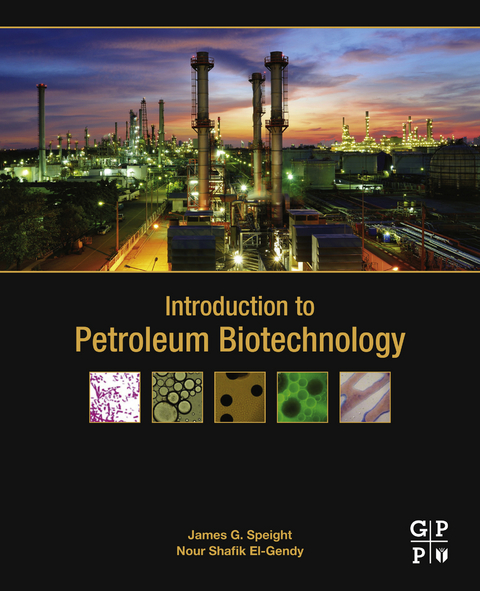
Introduction to Petroleum Biotechnology introduces the petroleum engineer to biotechnology, bringing together the various biotechnology methods that are applied to recovery, refining and remediation in the uses of petroleum and petroleum products. A significant amount of petroleum is undiscoverable in reservoirs today using conventional and secondary methods. This reference explains how microbial enhanced oil recovery is aiding to produce more economical and environmentally-friendly metabolic events that lead to improved oil recovery. Meanwhile, in the downstream side of the industry, petroleum refining operators are facing the highest levels of environmental regulations while struggling to process more of the heavier crude oils since conventional physical and chemical refining techniques may not be applicable to heavier crudes. This reference proposes to the engineer and refining manager the concepts of bio-refining applications to not only render heavier crudes as lighter crudes through microbial degradation, but also through biodenitrogenation, biodemetallization and biodesulfurization, making more petroleum derivatives purified and upgraded without the release of more pollutants. Equipped for both upstream and downstream to learn the basics, this book is a necessary primer for today's petroleum engineer. - Presents the fundamentals behind petroleum biotechnology for both upstream and downstream oil and gas operations- Provides the latest technology in reservoir recovery using microbial enhanced oil recovery methods- Helps readers gain insight into the current and future application of using biotechnology as a refining and fuel blending method for heavy oil and tar sands
| Erscheint lt. Verlag | 11.12.2017 |
|---|---|
| Sprache | englisch |
| Themenwelt | Technik ► Elektrotechnik / Energietechnik |
| ISBN-10 | 0-12-805288-0 / 0128052880 |
| ISBN-13 | 978-0-12-805288-4 / 9780128052884 |
| Informationen gemäß Produktsicherheitsverordnung (GPSR) | |
| Haben Sie eine Frage zum Produkt? |
 EPUB (Adobe DRM)
Kopierschutz: Adobe-DRM
Adobe-DRM ist ein Kopierschutz, der das eBook vor Mißbrauch schützen soll. Dabei wird das eBook bereits beim Download auf Ihre persönliche Adobe-ID autorisiert. Lesen können Sie das eBook dann nur auf den Geräten, welche ebenfalls auf Ihre Adobe-ID registriert sind.
Details zum Adobe-DRM
Dateiformat: EPUB (Electronic Publication)
EPUB ist ein offener Standard für eBooks und eignet sich besonders zur Darstellung von Belletristik und Sachbüchern. Der Fließtext wird dynamisch an die Display- und Schriftgröße angepasst. Auch für mobile Lesegeräte ist EPUB daher gut geeignet.
Systemvoraussetzungen:
PC/Mac: Mit einem PC oder Mac können Sie dieses eBook lesen. Sie benötigen eine
eReader: Dieses eBook kann mit (fast) allen eBook-Readern gelesen werden. Mit dem amazon-Kindle ist es aber nicht kompatibel.
Smartphone/Tablet: Egal ob Apple oder Android, dieses eBook können Sie lesen. Sie benötigen eine
Geräteliste und zusätzliche Hinweise
Buying eBooks from abroad
For tax law reasons we can sell eBooks just within Germany and Switzerland. Regrettably we cannot fulfill eBook-orders from other countries.
aus dem Bereich