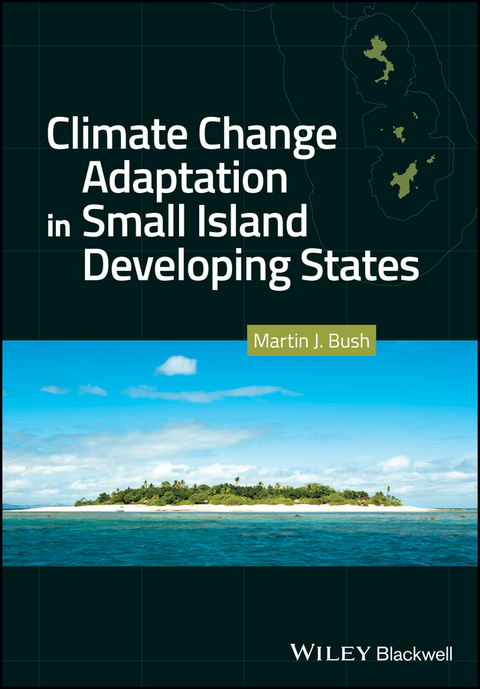
A groundbreaking synthesis of climate change adaptation strategies for small island states, globally
A wide ranging, comprehensive, and multi-disciplinary study, this is the first book that focuses on the challenges posed by climate change impacts on the Small Island Developing States (SIDS). While most of the current literature on the subject deals with specific regions, this book analyses the impacts of climate change across the Caribbean, the Pacific Ocean, and the African and Indian Ocean regions in order to identify and tackle the real issues faced by all the small island States.
As the global effects of climate change become increasingly evident and urgent, it is clear that the impact on small islands is going to be particularly severe. These island countries are especially vulnerable to rising sea levels, hurricanes and cyclones, frequent droughts, and the disruption of agriculture, fisheries and vital ecosystems. On many small islands, the migration of vulnerable communities to higher ground has already begun. Food security is an increasingly pressing issue. Hundreds of thousands of islanders are at risk. Marine ecosystems are threatened by acidification and higher seawater temperatures leading to increased pressure on fisheries-still an important source of food for many island communities.
The small island developing States emit only small amounts of carbon dioxide and other greenhouse gases. Yet many SIDS governments are allocating scarce financial and human resources in an effort to further reduce their emissions. This is a mistake.
Rather than focus on mitigation (i.e., the reduction of greenhouse gas emissions) Climate Change Adaptation in Small Island Developing States concentrates on adaptation. The author assesses the immediate and future impacts of climate change on small islands, and identifies a range of proven, cost-effective adaptation strategies. The book:
- Focuses on the challenges of climate change faced by all of the world's small island developing States;
- Provides comprehensive coverage of the latest research into the most likely environment impacts;
- Uses numerous case studies to describe proven, practical, and cost-effective policies, including disaster management strategies-which can be developed and implemented by the SIDS;
- Takes a unique, multidisciplinary approach, making it of particular interest to specialists in a variety of disciplines, including both earth sciences and life sciences.
This book is a valuable resource for all professionals and students studying climate change and its impacts. It is also essential reading for government officials and the ministries of the 51 small island developing States, as well as the signatories to the 2015 Paris climate agreement.
Martin J. Bush, PhD has over thirty years of senior project management experience in Africa, Asia and the Caribbean in the fields of renewable energy, natural resources management, watershed management, disaster preparedness, and climate change adaptation.
A groundbreaking synthesis of climate change adaptation strategies for small island states, globally A wide ranging, comprehensive, and multi-disciplinary study, this is the first book that focuses on the challenges posed by climate change impacts on the Small Island Developing States (SIDS). While most of the current literature on the subject deals with specific regions, this book analyses the impacts of climate change across the Caribbean, the Pacific Ocean, and the African and Indian Ocean regions in order to identify and tackle the real issues faced by all the small island States. As the global effects of climate change become increasingly evident and urgent, it is clear that the impact on small islands is going to be particularly severe. These island countries are especially vulnerable to rising sea levels, hurricanes and cyclones, frequent droughts, and the disruption of agriculture, fisheries and vital ecosystems. On many small islands, the migration of vulnerable communities to higher ground has already begun. Food security is an increasingly pressing issue. Hundreds of thousands of islanders are at risk. Marine ecosystems are threatened by acidification and higher seawater temperatures leading to increased pressure on fisheries still an important source of food for many island communities. The small island developing States emit only small amounts of carbon dioxide and other greenhouse gases. Yet many SIDS governments are allocating scarce financial and human resources in an effort to further reduce their emissions. This is a mistake. Rather than focus on mitigation (i.e., the reduction of greenhouse gas emissions) Climate Change Adaptation in Small Island Developing States concentrates on adaptation. The author assesses the immediate and future impacts of climate change on small islands, and identifies a range of proven, cost-effective adaptation strategies. The book: Focuses on the challenges of climate change faced by all of the world s small island developing States; Provides comprehensive coverage of the latest research into the most likely environment impacts; Uses numerous case studies to describe proven, practical, and cost-effective policies, including disaster management strategies which can be developed and implemented by the SIDS; Takes a unique, multidisciplinary approach, making it of particular interest to specialists in a variety of disciplines, including both earth sciences and life sciences. This book is a valuable resource for all professionals and students studying climate change and its impacts. It is also essential reading for government officials and the ministries of the 51 small island developing States, as well as the signatories to the 2015 Paris climate agreement.
Martin J. Bush, PhD has over thirty years of senior project management experience in Africa, Asia and the Caribbean in the fields of renewable energy, natural resources management, watershed management, disaster preparedness, and climate change adaptation.
Preface xi
Abbreviations and Symbols xiii
1 The Changing Climate 1
Introduction 1
Recent Impacts of Climate Change 6
Reports From the Front Line 8
Future Shock 10
Warming the Oceans 12
Multidimensional Threats 14
References 17
2 Small Island Developing States 19
Meet the SIDS 20
Demography 23
Social Development 24
Economic Vulnerability 24
Climate Change Impacts on Small Islands 27
Coastal Zones: A Clear and Present Danger 28
Coastal Zones: Terrestrial and Intertidal Impacts 30
Coastal Marine Ecosystems 32
Low Elevation Coastal Zones 40
Agriculture 48
Fisheries 49
Food Insecurity 52
Undernourishment in the SIDS 54
Poverty and Climate Change 54
Tourism 56
Freshwater Resources 58
Human Health 59
Climate?]driven Migration 60
References 61
3 Adapting to a Changing Climate 65
Ecosystem?]based Adaptation 66
Adaptation in Coastal and Marine Environments 67
Marine Protected Areas 72
Three Bays Protected Area in Haiti 75
Climate Change Adaptation in Agriculture 90
Conservation Agriculture 92
Rice Production 97
Irrigation 100
Adaptation Technologies for Agriculture 100
Water Resources Management 102
Integrated Water Resources Management (IWRM) 103
Agricultural Water Management (AWM) 105
Rainwater Harvesting and Management 106
Wastewater Treatment and Recycling 108
Reclaimed Water for Agricultural Use 110
Fisheries and Aquaculture 112
Disaster Risk Management 115
Adaptation and Mitigation Synergies 116
References 117
4 Adapting Energy Systems 121
Depending on Energy 122
Access to Electricity 123
Renewable Energy 124
Photovoltaic (PV) Electricity 127
Minigrid Systems 129
Distributed PV Systems 132
Wind Power 134
Solar Water Heaters 136
Hydropower 138
Geothermal Energy 139
Solar Thermal Power 139
Energy Efficiency 140
References 142
5 Managing Adaptation 145
The Key Climate Hazards 145
The Regulatory Framework 150
National Adaptation Programs of Action 151
Financing Adaptation 152
The Green Climate Fund 154
The Adaptation Fund 156
Programme Development 158
Geographical Information Systems 162
References 163
6 Country Profiles 165
American Samoa 165
Anguilla 167
Antigua and Barbuda 168
Aruba 170
Contents ix
The Bahamas 171
Bahrain 173
Barbados 174
Belize 175
British Virgin Islands 176
Cabo Verde 178
Comoros 179
Cook Islands 180
Cuba 181
Dominica 182
Dominican Republic 183
Fiji 184
French Polynesia 186
Grenada 187
Guam 188
Guinea?]Bissau 189
Guyana 189
Haiti 190
Jamaica 192
Kiribati 193
Maldives 194
Marshall Islands 195
Mauritius 196
Micronesia, Federated States 197
Montserrat 198
Nauru 199
New Caledonia 200
Niue 201
Northern Mariana Islands 202
Palau 202
Papua New Guinea 203
Puerto Rico 204
Saint Kitts and Nevis, Saint Lucia, Saint Vincent and the Grenadines 205
Samoa 206
Sao Tome and Principe 206
Seychelles 207
Singapore 209
Solomon Islands 210
Suriname 211
Timor?]Leste 212
Tonga 213
Trinidad and Tobago 214
Tuvalu 214
US Virgin Islands 215
Vanuatu 216
References 216
Index 219
1
The Changing Climate
Introduction
This introductory chapter outlines and summarizes the latest information and data about the Earth’s changing climate. It relies to a large extent on the fifth Assessment Report of the Intergovernmental Panel on Climate Change – the IPCC, the international scientific agency that reports every four or five years on climate change. But the chapter also integrates much of the most recent information on the impact of climate change, some of which suggests that the IPCC underestimates the threat to human welfare across the globe. The aim of the chapter is to look at the big picture in terms of the global impact of climate change. In subsequent chapters we will look at the impact of climate change on the different sectors of a country’s economy, and then specifically how climate change is an increasingly dangerous threat for Small Island Developing States (SIDS), and what measures can be taken to reduce the level of that threat.
The scientific evidence that human activity has influenced the climate system is overwhelming. The climate is changing and in ways that have never before been experienced in human history. The atmosphere and the oceans are warmer, continental areas of snow and ice have diminished, and sea‐levels have risen. These are well‐established scientific facts. Reliable climate data show that each of the last three decades has been successively warmer at the surface of the Earth than any preceding decade since measurements began over 150 years ago.
The evidence shows that the three decades before 2012 were the warmest period over several centuries in the northern hemisphere, and quite possibly the warmest period in more than a thousand years. Data measured by NASA and NOAA confirmed that 2014, and then 2015, were the hottest years on record. Then 2016 broke those records again. The year 2016 was the warmest on record in all the major global surface temperature datasets (NASA, 2015a; WMO, 2017).
The cryosphere is undergoing a huge transition: snow cover, sea ice, lake and river ice, glaciers, ice caps and ice sheets, permafrost and seasonally frozen ground, are all thawing and melting. Glaciers are melting almost everywhere and have contributed to sea‐level rise throughout the twentieth century. The rate of ice loss from the Greenland ice sheet has substantially increased over the last 20 years. Melting from the Antarctic ice sheet, mainly from the northern Antarctic peninsula and the Amundsen Sea sector of West Antarctica, has also increased. The extent of Arctic sea ice has decreased in every season, with the most rapid decrease taking place every summer. The trend continued in 2017 with the extent of the sea ice at both poles dropping to record levels. Never before in the satellite records has the area of sea ice at the north and south poles simultaneously fallen so dramatically. The summer Arctic sea ice minimum is decreasing by about 10–13% per decade – a figure that translates to around one million km2 each decade.
Snow cover has decreased in the northern hemisphere since the middle of the last century. In addition, because of the higher surface temperatures and changing snow cover, permafrost temperatures have increased in the northern hemisphere with commensurate reductions in thickness and area.
Figure 1.1 shows the trend in global mean temperatures since 1880 (NASA, 2015b).
Figure 1.1 Global mean temperature changes based on land and ocean data since 1880.
Source: Courtesy of NASA (2015b), http://data.giss.nasa.gov/gistemp/graphs/.
More than 90% of the thermal energy accumulated in the climate system over the last couple of decades has been absorbed and stored in the oceans. Only about 1% of this heat is held in the atmosphere.
Tracking ocean temperatures and the associated changes in ocean heat content allows scientists to monitor variations in the Earth’s energy imbalance. Ocean waters are getting warmer: the effect is greatest near the surface, and the upper 75 metres have been warming by over 0.1 °C per decade (IPCC, 2014a). But not only warmer: many large geographical areas of ocean water are becoming more saline as evaporation increases due to the higher surface temperatures. In contrast, other ocean areas, where precipitation is the dominant water cycle mechanism, may have become less saline.
These regional and differing trends in ocean salinity provide indirect evidence for widespread changes in evaporation and precipitation over the oceans, and by extension in the global hydrological cycle. These changes have major implications for rainfall patterns and intensities worldwide, and also for global patterns of ocean water circulation. As the lower atmosphere becomes warmer, evaporation rates increase, resulting in an increase in the amount of water vapour circulating throughout the troposphere. A consequence of this phenomenon is an increased frequency of intense rainfall events, mainly over land areas. In addition, because of warmer temperatures, more precipitation is falling as rain rather than snow – which has consequences for regional patterns of spring runoff.
As the oceans warm they expand, resulting in both global and regional sea‐level rise. The increased heat content of the oceans accounts for as much as 40% of the observed global sea‐level rise over the past 60 years.
The slow but steady change in the global water cycle has also had an impact on sea‐levels worldwide. Over the last century, global mean sea‐level rose by about 0.2 metres. The rate of sea‐level rise is also increasing: the rate now is greater than at any time during the last two millennia. NASA satellites have shown that sea‐levels are now rising at about 3 mm a year: a total of more than 50 mm between 1993 and 2010 (NASA, 2015c).
Some regions experience greater sea‐level rise than others. The tropical western Pacific saw some of the highest rising sea‐level rates over the period 1993–2015 – which became a significant factor in the extensive devastation of areas of the Philippines when typhoon Haiyan generated a massive storm surge in November 2013 (WMO, 2017).
The absorption of carbon dioxide (CO2) by ocean seawater, driven by higher atmospheric concentrations of the gas, has resulted in an increase in the acidity of the oceans. The acidity (pH) of ocean surface water has decreased by 0.1, which corresponds to a 26% increase in acidity, a change that many marine species cannot endure. In addition, as a result of the warming trend, oxygen concentrations have decreased in coastal waters and in many ocean regions.
Any changes in the Earth’s climate system that affect how much energy enters or leaves the Earth and its atmosphere alters the Earth’s energy equilibrium and will cause global mean temperatures to rise or fall. These changes, called radiative forcings (RF), quantify the variations in the amount of energy in the Earth’s climate system. Natural climate forcings include changes in the sun’s brightness, Milankovitch cycles (small variations in the Earth’s orbit and its axis of rotation), and large volcanic eruptions that inject dust and particulates high into the atmosphere and reduce incoming solar radiation.
However, the largest contributor to radiative forcing by far is the concentration of greenhouse gases (GHGs) in the atmosphere. Greenhouse gas emissions caused by human activities have increased markedly since the pre‐industrial era, driven largely by economic and population growth. From 2000 to 2010, GHG emissions were the highest in history, and have driven atmospheric concentrations of carbon dioxide, methane, and nitrous oxide to levels unprecedented in at least the last 800,000 years. Concentrations of carbon dioxide, methane, and nitrous oxide have all seen particularly large increases over the period from 1750 to the present day (IPCC, 2014a).
- Carbon dioxide (CO2) levels have risen from about 280 parts per million (ppm) to 400 ppm in 2015.
- Methane has more than doubled, rising from 700 per billion (ppb) to more than 1800 ppb.
- Nitrous oxide has risen from about 270 ppb to more than 320 ppb.
At the beginning of this century, carbon dioxide concentrations increased at the fastest observed decadal rate of change. For methane, after almost a decade of stable concentrations since the late 1990s, atmospheric measurements have shown renewed increases since 2007. Nitrous oxide concentrations have also increased steadily over the last three decades.
Since 1970, cumulative CO2 emissions from fossil fuel combustion, cement production and flaring have tripled, while emissions from forestry and land use changes have increased by about 40%. Figure 1.2 tracks how emissions of CO2 have been constantly climbing for the last 60 years.
Figure 1.2 Atmospheric CO2 concentrations measured by the NOAA since before 1960.
Source: NOAA (2015). Courtesy of NOAA ESRL Global Monitoring Division.
Carbon dioxide is the predominant greenhouse gas, accounting for about three‐quarters of total GHG emissions. According to the IPCC, since the beginning of the industrial era about 2000 billion tonnes (Gt) of CO2 have been released into the Earth’s atmosphere (IPCC, 2014a). Of this total, approximately 40% of CO2 emissions remain in the atmosphere; the remainder is removed from the atmosphere by sinks or stored in natural carbon cycle reservoirs. Ocean absorption and...
| Erscheint lt. Verlag | 30.11.2017 |
|---|---|
| Sprache | englisch |
| Themenwelt | Naturwissenschaften ► Biologie ► Ökologie / Naturschutz |
| Naturwissenschaften ► Geowissenschaften | |
| Technik ► Umwelttechnik / Biotechnologie | |
| Schlagworte | climate change • Climate Change Adaptation Strategies • climate change and food insecurity • climate change and increased storm frequency • climate change impacts on agriculture • climate change impacts on aquaculture systems • Climatology & Palaeoclimatology • dealing with rising sea levels • earth sciences • Environmental Economics & Politics • Environmental Management, Policy & Planning • Environmental Studies • Geowissenschaften • impact of climate change on coastal marine ecosystems • Impacts of Climate Change • impacts of climate change on developing countries • impacts of climate change on islands • impacts of climate change on small island developing states • impacts of rising sea levels • Klimatologie u. Paläoklimatologie • poverty and climate change • Rising sea levels • rising sea levels in small island states • SIDS • SIDS economic vulnerability • small island developing states • small island state climate change adaptation strategies • Umweltforschung • Umweltmanagement, Politik u. -Planung • Umweltökonomie u. -politik |
| ISBN-13 | 9781119132868 / 9781119132868 |
| Informationen gemäß Produktsicherheitsverordnung (GPSR) | |
| Haben Sie eine Frage zum Produkt? |
 EPUB (Adobe DRM)
Kopierschutz: Adobe-DRM
Adobe-DRM ist ein Kopierschutz, der das eBook vor Mißbrauch schützen soll. Dabei wird das eBook bereits beim Download auf Ihre persönliche Adobe-ID autorisiert. Lesen können Sie das eBook dann nur auf den Geräten, welche ebenfalls auf Ihre Adobe-ID registriert sind.
Details zum Adobe-DRM
Dateiformat: EPUB (Electronic Publication)
EPUB ist ein offener Standard für eBooks und eignet sich besonders zur Darstellung von Belletristik und Sachbüchern. Der Fließtext wird dynamisch an die Display- und Schriftgröße angepasst. Auch für mobile Lesegeräte ist EPUB daher gut geeignet.
Systemvoraussetzungen:
PC/Mac: Mit einem PC oder Mac können Sie dieses eBook lesen. Sie benötigen eine
eReader: Dieses eBook kann mit (fast) allen eBook-Readern gelesen werden. Mit dem amazon-Kindle ist es aber nicht kompatibel.
Smartphone/Tablet: Egal ob Apple oder Android, dieses eBook können Sie lesen. Sie benötigen eine
Geräteliste und zusätzliche Hinweise
Buying eBooks from abroad
For tax law reasons we can sell eBooks just within Germany and Switzerland. Regrettably we cannot fulfill eBook-orders from other countries.
aus dem Bereich