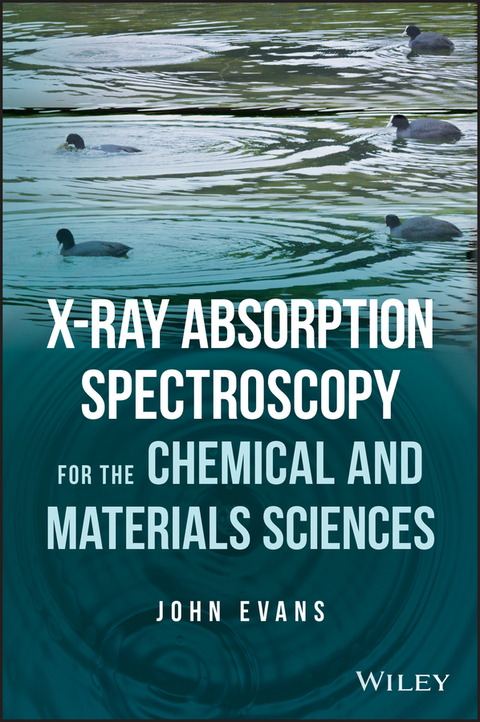
X-ray Absorption Spectroscopy for the Chemical and Materials Sciences (eBook)
John Wiley & Sons (Verlag)
978-1-118-67618-9 (ISBN)
A clear-cut introduction to the technique and applications of x-ray absorption spectroscopy
X-ray Absorption Spectroscopy is being applied to a widening set of disciplines. Applications started with solid state physics and grew to materials science, chemistry, biochemistry and geology. Now, they cut across engineering materials, environmental science and national heritage - providing very detailed and useful information facilitating understanding and development of materials. This practical guide helps investigators choose the right experiment, carry it out properly and analyze the data to give the best reliable result. It gives readers insights to extract what they need from the world of large-scale experimental facilities like synchrotrons, which seem distant to many laboratory scientists.
X-ray Absorption Spectroscopy for the Chemical and Materials Sciences seeks to educate readers about the strengths and limitations of the techniques, including their accessibility. Presented in six sections, it offers chapters that cover: an introduction to X-ray absorption fine structure XAFS; the basis of XAFS; X-ray sources; experimental methods; data analysis and simulation methods; and case studies.
- A no-nonsense introduction to the technique and applications of x-ray absorption spectroscopy
- Features Questions to support learning through the book
- Relevant to all working on synchrotron sources and applications in physics, materials, environment/geology and biomedical materials
- Four-color representation allows easy interpretation of images and data for the reader
X-ray Absorption Spectroscopy for the Chemical and Materials Sciences is aimed at Masters-level and PhD students embarking on X-ray spectroscopy projects as well as scientists in areas of materials characterization.
JOHN EVANS, PHD, is currently Emeritus Professor in Inorganic Chemistry at the University of Southampton and a visiting scientist at the Diamond Light Source. Previously, he was Science Program Advisor at Diamond. He was awarded the Royal Society of Chemistry Tilden Medal in 1994 and the Royal Society of Chemistry Meldola Medal in 1978.
A clear-cut introduction to the technique and applications of x-ray absorption spectroscopy X-ray Absorption Spectroscopy is being applied to a widening set of disciplines. Applications started with solid state physics and grew to materials science, chemistry, biochemistry and geology. Now, they cut across engineering materials, environmental science and national heritage providing very detailed and useful information facilitating understanding and development of materials. This practical guide helps investigators choose the right experiment, carry it out properly and analyze the data to give the best reliable result. It gives readers insights to extract what they need from the world of large-scale experimental facilities like synchrotrons, which seem distant to many laboratory scientists. X-ray Absorption Spectroscopy for the Chemical and Materials Sciences seeks to educate readers about the strengths and limitations of the techniques, including their accessibility. Presented in six sections, it offers chapters that cover: an introduction to X-ray absorption fine structure XAFS; the basis of XAFS; X-ray sources; experimental methods; data analysis and simulation methods; and case studies. A no-nonsense introduction to the technique and applications of x-ray absorption spectroscopy Features Questions to support learning through the book Relevant to all working on synchrotron sources and applications in physics, materials, environment/geology and biomedical materials Four-color representation allows easy interpretation of images and data for the reader X-ray Absorption Spectroscopy for the Chemical and Materials Sciences is aimed at Masters-level and PhD students embarking on X-ray spectroscopy projects as well as scientists in areas of materials characterization.
JOHN EVANS, PHD, is currently Emeritus Professor in Inorganic Chemistry at the University of Southampton and a visiting scientist at the Diamond Light Source. Previously, he was Science Program Advisor at Diamond. He was awarded the Royal Society of Chemistry Tilden Medal in 1994 and the Royal Society of Chemistry Meldola Medal in 1978.
1
Introduction to X‐Ray Absorption Fine Structure (XAFS)
1.1 Materials: Texture and Order
Today, research laboratories have powerful techniques for establishing the chemical nature and structure of pure materials. Our view of chemical structure is formed around the results of x‐ray diffraction, recorded from single crystals or from polycrystalline powders. Structures in the liquid phase can be inferred from expectations for bond lengths and angles derived from crystallography; to do so, information is gathered about the local symmetry, atomic connectivity, and proximity in the material derived from structurally sensitive spectroscopies, particularly nuclear magnetic resonance (NMR) and infrared (IR) and Raman vibrational spectroscopies.
But many materials with a function are textured, such as pigments in paintings in the Louvre, a stained glass window in Westminster Abbey, an automotive exhaust catalyst, a dental filling, and others in nature, such as mineral inclusions or the shells of mollusks. They possess identifiable local structures on the Å scale that form the basis of their capabilities. However, these may be randomly spread through their three‐dimensional shape or, alternatively, be located in a particular region, such as at a surface. Correlating the structure and the function of materials is a key to the design of further development, as well as providing its own intrinsic scientific elegance.
X‐ray absorption fine structure (XAFS) spectroscopy has developed to the point when it can be applied to probe complex and faceted materials, for example, to reveal chromophores in glass and to probe the organic‐inorganic composites in shells. In this book, the aim is to guide the readers to identify whether and how the technique might be used to advantage to study the materials that interests them within this wide spectrum of samples.
1.2 Absorption and Emission of X‐Rays
About 100 years ago, with the discovery of x‐ray absorption (XAS) and emission (XES) spectroscopies, observation of the absorption and emission of x‐rays were at the forefront of atomic physics, rather than the basis of materials characterization. The observations of the x‐ray absorption edge of elements were first made by Maurice de Broglie in 1913 and published in 1916;[1] the elements were the silver and bromine in a photographic plate. Moseley[2] measured the energies of the emissions of over 40 elements and showed that there was a square root relationship with the atomic number of the element; tragically, his further contributions were cut short by a sniper at the Battle of Gallipoli in 1915. W.H. and W.L. Bragg had also noted that x‐ray emission lines were also characteristic of an element.[3] Hence, both the absorption edge and the emission lines had been shown to provide a means of elemental speciation of sites.
Shortly thereafter the group of Manne Siegbahn at Lund improved the resolution of the crystal spectrometers to 1/10,000 allowing them to establish that the absorption edge position was chemically as well as elementally dependent; this was initially observed for allotropes of phosphorus, reported by Bergengren in 1920. In the next year, Lindh reported a chemical shift of 5.4 eV between Cl2 and HCl. The use of edge positions for chemical speciation was thus established and by the mid‐1920s the energies of emission lines were also shown to display a chemical shift.
1.3 XANES and EXAFS
In 1920, Fricke published photographic measurements of K absorption edges of elements between magnesium and chromium,[4] and Lindh reported structures around the Cl K edges. These reports showed fine structure both before and after the absorption edge energy, and XAFS (x‐ray absorption fine structure) had been identified. Most photographic plates with the x‐ray spectrum dispersed across them showed a bright line, marking the maximum in the x‐ray absorption and thus little darkening of the photographic plate. For some samples, for example, the Ca K edge in calcite and gypsum, this feature was especially intense and by 1926, it was known as the white line.[5] Lindsay and van Dyke also reported features up to nearly 50 volts above the first main feature of the edge. Two years later, Nuttall[6] reported that the potassium K edges post‐edge features could be used to distinguish between different minerals, and that the “fine structure…extended over a range of about 67 volts.” And in 1930 Kievert and Lindsay[7] observed fine structures in metals extending to about 400 eV to higher energy of the absorption edge. Hence, by 1930 most of the core characteristics of XAFS spectroscopy had been identified, apart from polarization effects.
An example of an XAFS spectrum is shown in Figure 1.1 for the tungsten L3 edge of an acetonitrile solution of (NBu4)2[WO4]; the L3 edge is a transition of a 2p electron of the absorbing atom, tungsten in this example. The technique pinpoints the anion containing the absorbing atom and the solvent and counter ion do not interfere. This spectrum shows some of the characteristic components that might be observed associated with an absorption edge. The x‐ray absorption near‐edge structure (XANES) is dominated in this case by an example of a white line, due to an intense (Laporte‐allowed) transition to vacant 5d states. The extended x‐ray absorption fine structure (EXAFS) has been expanded vertically to become visible at higher energies. Each of these types of features contributes to the information than can be derived from the entire spectrum.
Figure 1.1 The normalized W L3 edge x‐ray absorption spectrum of a solution of (NBu4)2[WO4] (10 mM) in acetonitrile.
(Source: Diamond Light Source, B18; data from Richard Ilsley)
1.4 Information Content
It was quickly recognized that x‐ray spectra provided information about atomic energy levels, as commented by W.H. Bragg.[3] It was also noted that the position and shape of the XANES features at the absorption edge were dependent upon the local environment and on the effective charge on the absorbing atom. More problematical was a working explanation of the extended structure, EXAFS. There were three possibilities proposed:
- The peaks above the edge were due to additional atomic transitions. However, Coster and van der Tuuk[8] showed that this was a minor contribution in their study on argon gas.
- The oscillations were due to long‐range periodicity through the sample, as described by Kronig in 1931.[9]
- Instead the oscillations were due to short‐range electron scattering, as Hartree, Kronig, and Petersen reported in 1934, thus accounting for EXAFS features up to 200 eV above the Ge K edge in molecular GeCl4.[10]
The dichotomy between local‐ and long‐range order explanations for solid‐state arrays and molecular materials remained for about 40 years. The basis of the current understanding emanates from analyses by Stern and his co‐workers, Sayers and Lytle, in 1970 and published in 1974–1975.[11–13] The key aspects of this development were the demonstration of the short‐range order theory for all materials and the efficacy of Fourier transform methods for displaying the differing oscillations in an EXAFS patterns as distinguishable interatomic distances. In Figure 1.1, the EXAFS features are dominated by a single damped oscillation, which is due to the scattering between the tungsten and oxygen atoms in the anion. Hence the method provides measurement of that bond‐length in solution and other disordered media.
1.5 Using X‐Ray Sources as They Were
Viewing that oscillation in Figure 1.1, it is evident that EXAFS features are weak and thus a high signal/noise ratio is required to reliably extract the potential information in a XAS spectrum. Until 1970, all XAS measurements utilized laboratory x‐ray tubes. For x‐ray spectroscopy it is the brehmsstrahlung background that provides the necessary range of x‐ray energies, rather than the more intense emission lines used for x‐ray diffraction. The combined characteristics of weak sources and weak signals severely limited the application of XAFS. But the breakthrough in understanding provided by Stern added to the impetus for finding an experimental solution.
Much higher intensity sources were in prospect from synchrotron accelerators, an effect first demonstrated in 1947.[14] This report, from the General Electric Company, described a brilliant white spot emanating from the tangent point of the orbit in a 70 MeV device of radius 29.2 cm. When synchrotrons first became available as x‐ray sources in the 1970s, the effect was dramatic. For example, the experimental backdrop to the theoretical developments was a suite of three x‐ray spectrometers at the Boeing Scientific Research Laboratories. Lytle later offered the following observation[15] about an experimental trip to the then new x‐ray spectrometer at Stanford Synchrotron Radiation Laboratory (SSRL) in the early 1970s: “In one trip to the synchrotron we collected more and better data in three days than in the previous ten years. I shut down all three X‐ray spectrometers in the Boeing laboratory. A new era had...
| Erscheint lt. Verlag | 23.11.2017 |
|---|---|
| Sprache | englisch |
| Themenwelt | Naturwissenschaften ► Chemie ► Analytische Chemie |
| Technik ► Maschinenbau | |
| Schlagworte | chemical science • Chemie • Chemistry • Festkörperphysik • fine structure XAFS • materials characterization • Material Science • Materials Science • Materialwissenschaften • Physics • Physik • Royal Society of Chemistry Meldola Medal winners • Royal Society of Chemistry Tilden Medal winners • Solid state physics • spectroscopy • Spektroskopie • Structural Analysis • structural analysis of biology • structural analysis of catalysts • structural analysis of material science • Synchrotron radiation • the basis of XAFS • Werkstoffprüfung • XAFS • XAFS case studies • XAFS data analysis and simulation methods • XAFS experimental methods • X-ray absorption • x-ray absorption spectroscopy and biochemistry • x-ray absorption spectroscopy and chemistry • x-ray absorption spectroscopy and engineering materials • x-ray absorption spectroscopy and environmental science • x-ray absorption spectroscopy and geology • x-ray absorption spectroscopy and materials science • x-ray absorption spectroscopy and solid state physics • x-ray absorption spectroscopy applications • X-ray Absorption Spectroscopy for the Chemical and Materials Sciences • X-ray sources |
| ISBN-10 | 1-118-67618-1 / 1118676181 |
| ISBN-13 | 978-1-118-67618-9 / 9781118676189 |
| Informationen gemäß Produktsicherheitsverordnung (GPSR) | |
| Haben Sie eine Frage zum Produkt? |
 EPUB (Adobe DRM)
Kopierschutz: Adobe-DRM
Adobe-DRM ist ein Kopierschutz, der das eBook vor Mißbrauch schützen soll. Dabei wird das eBook bereits beim Download auf Ihre persönliche Adobe-ID autorisiert. Lesen können Sie das eBook dann nur auf den Geräten, welche ebenfalls auf Ihre Adobe-ID registriert sind.
Details zum Adobe-DRM
Dateiformat: EPUB (Electronic Publication)
EPUB ist ein offener Standard für eBooks und eignet sich besonders zur Darstellung von Belletristik und Sachbüchern. Der Fließtext wird dynamisch an die Display- und Schriftgröße angepasst. Auch für mobile Lesegeräte ist EPUB daher gut geeignet.
Systemvoraussetzungen:
PC/Mac: Mit einem PC oder Mac können Sie dieses eBook lesen. Sie benötigen eine
eReader: Dieses eBook kann mit (fast) allen eBook-Readern gelesen werden. Mit dem amazon-Kindle ist es aber nicht kompatibel.
Smartphone/Tablet: Egal ob Apple oder Android, dieses eBook können Sie lesen. Sie benötigen eine
Geräteliste und zusätzliche Hinweise
Buying eBooks from abroad
For tax law reasons we can sell eBooks just within Germany and Switzerland. Regrettably we cannot fulfill eBook-orders from other countries.
aus dem Bereich