


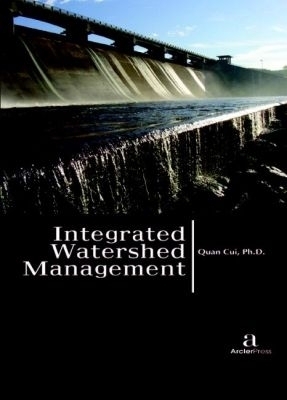
Integrated Watershed Management
Seiten
2016
Arcler Education Inc (Verlag)
978-1-68094-474-7 (ISBN)
Arcler Education Inc (Verlag)
978-1-68094-474-7 (ISBN)
- Titel z.Zt. nicht lieferbar
- Versandkostenfrei
- Auch auf Rechnung
- Artikel merken
Integrated Watershed Management (IWM) has been developed to manage human activities and natural resources on a watershed basis. Features of this book include reviews about watershed management strategies, problems and discussions raised up in the cooperation of IWM programs, IWM and climate changes, models for IWM, industrial experiences of dealing with IWM.
Water is needed in all aspects of our lives. To ensure ongoing sustainability of this essential resource, a more holistic, integrated strategy needs to be adopted. The ideal strategy interconnects environment, economy, and society. Taking an integrated approach is the best way to ensure that adequate supplies of good quality water are maintained for the entire population, while preserving the ecosystems and adapting human activities within the capacity limits of nature – all for the best value.
Human being is facing significant challenges in maintaining water quantity and quality nowadays. In order to overcome these challenges, a process called Integrated Watershed Management (IWM) has been developed to manage human activities and natural resources on a watershed basis. IWM is an evolving and continuous process through which decisions are made for the sustainable use, development, restoration and protection of ecosystem features, functions and linkages. A government may initiate an IWM act to require co-operative agreements for the consultation and collaboration among the federal, provincial, and territorial governments in matters relating to water resources. Also, local government, communities, alliances and companies can make integrated watershed management plans or programs to advocate all stakeholders to participate in the protection of certain watershed. Features of this book include reviews about watershed management strategies, problems and discussions raised up in the cooperation of IWM programs, IWM and climate changes, models for IWM, industrial experiences of dealing with IWM. This book also covers topics about marine area management, because IWM can learn from it. A healthy watershed provides safe drinking water, provides food, enables us to adapt to the impacts of climate change more easily by cooling the air and absorbing greenhouse gas emissions, and provides natural areas for people to keep active and recharge our batteries. A healthy watershed produces energy and supplies water for agriculture, industry and households. Forests and wetlands help to prevent or reduce costly climate change and flooding impacts, manages drought, contributes to tourism, fisheries, forestry, agriculture and mining industries. An abundant supply of clean water is essential for a vibrant economy. Homes, farms, municipalities and businesses all need an ample supply of clean water to operate effectively. Clean water allows municipalities, businesses, agricultural producers, and industries to operate more cost effectively, saving money for taxpayers and consumers. Healthy rivers, lakes, wetlands and natural spaces are foundations for recreation and tourism. Life requires a safe daily supply of water. Consequently, clean surface and ground water is essential to support our high quality of life and the social aspects of our communities.
Water is needed in all aspects of our lives. To ensure ongoing sustainability of this essential resource, a more holistic, integrated strategy needs to be adopted. The ideal strategy interconnects environment, economy, and society. Taking an integrated approach is the best way to ensure that adequate supplies of good quality water are maintained for the entire population, while preserving the ecosystems and adapting human activities within the capacity limits of nature – all for the best value.
Human being is facing significant challenges in maintaining water quantity and quality nowadays. In order to overcome these challenges, a process called Integrated Watershed Management (IWM) has been developed to manage human activities and natural resources on a watershed basis. IWM is an evolving and continuous process through which decisions are made for the sustainable use, development, restoration and protection of ecosystem features, functions and linkages. A government may initiate an IWM act to require co-operative agreements for the consultation and collaboration among the federal, provincial, and territorial governments in matters relating to water resources. Also, local government, communities, alliances and companies can make integrated watershed management plans or programs to advocate all stakeholders to participate in the protection of certain watershed. Features of this book include reviews about watershed management strategies, problems and discussions raised up in the cooperation of IWM programs, IWM and climate changes, models for IWM, industrial experiences of dealing with IWM. This book also covers topics about marine area management, because IWM can learn from it. A healthy watershed provides safe drinking water, provides food, enables us to adapt to the impacts of climate change more easily by cooling the air and absorbing greenhouse gas emissions, and provides natural areas for people to keep active and recharge our batteries. A healthy watershed produces energy and supplies water for agriculture, industry and households. Forests and wetlands help to prevent or reduce costly climate change and flooding impacts, manages drought, contributes to tourism, fisheries, forestry, agriculture and mining industries. An abundant supply of clean water is essential for a vibrant economy. Homes, farms, municipalities and businesses all need an ample supply of clean water to operate effectively. Clean water allows municipalities, businesses, agricultural producers, and industries to operate more cost effectively, saving money for taxpayers and consumers. Healthy rivers, lakes, wetlands and natural spaces are foundations for recreation and tourism. Life requires a safe daily supply of water. Consequently, clean surface and ground water is essential to support our high quality of life and the social aspects of our communities.
Quan Cui obtained her PhD from Beijing Normal University in 2015. She worked as environmental impact assessment engineer for years. Aiming at linking science to policy, her study interest spans from ecosystem modelling to water resources management. She published peer-reviewed articles about using machine learning models in inflow forecasting, CO2 management and watershed ecosystem health assessment.
| Erscheinungsdatum | 20.03.2018 |
|---|---|
| Sprache | englisch |
| Maße | 152 x 229 mm |
| Gewicht | 1260 g |
| Themenwelt | Technik ► Elektrotechnik / Energietechnik |
| Technik ► Umwelttechnik / Biotechnologie | |
| ISBN-10 | 1-68094-474-6 / 1680944746 |
| ISBN-13 | 978-1-68094-474-7 / 9781680944747 |
| Zustand | Neuware |
| Informationen gemäß Produktsicherheitsverordnung (GPSR) | |
| Haben Sie eine Frage zum Produkt? |
Mehr entdecken
aus dem Bereich



aus dem Bereich
Grundlagen, Systemtechnik und Analysen ausgeführter Beispiele …
Buch | Softcover (2025)
Springer Vieweg (Verlag)
CHF 55,95
Wegweiser für Elektrofachkräfte
Buch | Hardcover (2024)
VDE VERLAG
CHF 67,20


