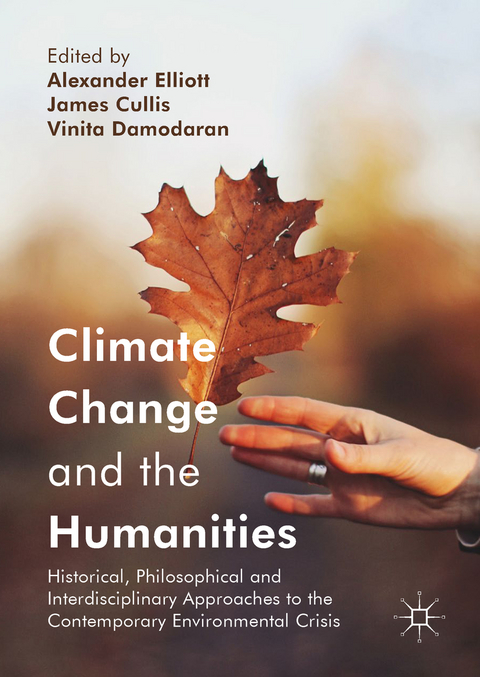
Climate Change and the Humanities (eBook)
XII, 271 Seiten
Palgrave Macmillan UK (Verlag)
978-1-137-55124-5 (ISBN)
Alexander Elliott is a DPhil candidate and Associate Tutor at the University of Sussex, UK, in the department of Social and Political Thought. He is also a graduate associate of the Centre for World Environmental History. His research interests include climate change, epistemology and the history of philosophy.
James Cullis is an MPhil student at the University of Sussex, UK, associated with the Centre for World Environmental History and the Centre for Intellectual History. His research deals with the way environmental and geographic concerns arose within Scottish Enlightenment accounts of societal progress.
Vinita Damodaran is Professor in South Asian History and Director of the Centre for World Environmental History at the University of Sussex, UK. Her publications include Nature and the Orient, Essays on the Environmental History of South and South-East Asia (1998), British Empire and the Natural World: Environmental Encounters in South Asia, (2010) and The East India Company and the Natural World (2014).
This volume of essays fills a lacunae in the current climate change debate by bringing new perspectives on the role of humanities scholars within this debate. The humanities have historically played an important role in the various debates on environment, climate and society. The past two decades especially have seen a resurfacing of these environmental concerns across humanities disciplines in the wake of what has been termed climate change. This book argues that these disciplines should be more confident and vocal in responding to climate change while questioning the way in which the climate change debate is currently being conducted in academic, political and social arenas. Addressing climate change through the varied approaches of the humanities means re-thinking and re-evaluating its fundamental assumptions and responses to perceived crisis through the lens of history, philosophy and literature. The volume aims thus to be a catalyst for emerging scholarship in this field and to appeal to an academic and popular readership.
Alexander Elliott is a DPhil candidate and Associate Tutor at the University of Sussex, UK, in the department of Social and Political Thought. He is also a graduate associate of the Centre for World Environmental History. His research interests include climate change, epistemology and the history of philosophy.James Cullis is an MPhil student at the University of Sussex, UK, associated with the Centre for World Environmental History and the Centre for Intellectual History. His research deals with the way environmental and geographic concerns arose within Scottish Enlightenment accounts of societal progress.Vinita Damodaran is Professor in South Asian History and Director of the Centre for World Environmental History at the University of Sussex, UK. Her publications include Nature and the Orient, Essays on the Environmental History of South and South-East Asia (1998), British Empire and the Natural World: Environmental Encounters in South Asia, (2010) and The East India Company and the Natural World (2014).
Chapter 1: Introduction – Alexander Elliott.- Historical.- Chapter 2: The Importance of the Humanities to the Climate Change Debate; Alexander Elliott and James Cullis.- Chapter 3: Understanding climate change historically; Richard Staley.- Chapter 4: The Culture of Islands and the History of Environmental Concern; Richard Grove.- Chapter 5: The Locality in the Anthropocene: perspectives on the Environmental History of Eastern India: Vinita Damodaran.- Chapter 6. Plastic Daffodils: The Pastoral, the Picturesque, and Cultural Environmentalism; Nick Groom.- Contemporary.- Chapter 7: Cli-fi? Literature, ecocriticism, history; Martin Ryle.- Chapter 8: Climate Change as a Challenge to Philosophy; Gideon Calder.- Chapter 9: Belief in change: the role of media and communications in driving action on climate change; Catherine Happer.- Future.- Chapter 10: Climate Change and Future Aesthetics; Emily Brady.- Chapter 11: Investment without return: On futures that will never be ours; Paul Davies.- Chapter 12: Climate Change and Moral Philosophy; Tim Mulgan.
| Erscheint lt. Verlag | 1.11.2017 |
|---|---|
| Zusatzinfo | XII, 271 p. |
| Verlagsort | London |
| Sprache | englisch |
| Themenwelt | Geisteswissenschaften ► Geschichte ► Allgemeine Geschichte |
| Naturwissenschaften ► Biologie ► Ökologie / Naturschutz | |
| Naturwissenschaften ► Geowissenschaften | |
| Technik | |
| Schlagworte | Aesthetics • Climate • climate change • Climate change impacts • Environment • ethics |
| ISBN-10 | 1-137-55124-0 / 1137551240 |
| ISBN-13 | 978-1-137-55124-5 / 9781137551245 |
| Informationen gemäß Produktsicherheitsverordnung (GPSR) | |
| Haben Sie eine Frage zum Produkt? |
 PDF (Wasserzeichen)
DRM: Digitales Wasserzeichen
Dieses eBook enthält ein digitales Wasserzeichen und ist damit für Sie personalisiert. Bei einer missbräuchlichen Weitergabe des eBooks an Dritte ist eine Rückverfolgung an die Quelle möglich.
Dateiformat: PDF (Portable Document Format)
Mit einem festen Seitenlayout eignet sich die PDF besonders für Fachbücher mit Spalten, Tabellen und Abbildungen. Eine PDF kann auf fast allen Geräten angezeigt werden, ist aber für kleine Displays (Smartphone, eReader) nur eingeschränkt geeignet.
Systemvoraussetzungen:
PC/Mac: Mit einem PC oder Mac können Sie dieses eBook lesen. Sie benötigen dafür einen PDF-Viewer - z.B. den Adobe Reader oder Adobe Digital Editions.
eReader: Dieses eBook kann mit (fast) allen eBook-Readern gelesen werden. Mit dem amazon-Kindle ist es aber nicht kompatibel.
Smartphone/Tablet: Egal ob Apple oder Android, dieses eBook können Sie lesen. Sie benötigen dafür einen PDF-Viewer - z.B. die kostenlose Adobe Digital Editions-App.
Buying eBooks from abroad
For tax law reasons we can sell eBooks just within Germany and Switzerland. Regrettably we cannot fulfill eBook-orders from other countries.
aus dem Bereich