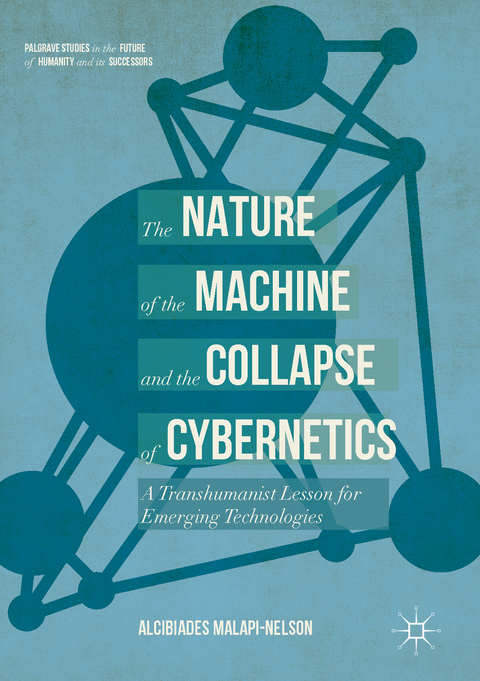
The Nature of the Machine and the Collapse of Cybernetics (eBook)
299 Seiten
Springer International Publishing (Verlag)
978-3-319-54517-2 (ISBN)
This book is a philosophical exploration of the theoretical causes behind the collapse of classical cybernetics, as well as the lesson that this episode can provide to current emergent technologies. Alcibiades Malapi-Nelson advances the idea that the cybernetic understanding of the nature of a machine entails ontological and epistemological consequences that created both material and theoretical conundrums. However, he proposes that given our current state of materials research, scientific practices, and research tools, there might be a way for cybernetics to flourish this time.
The book starts with a historical and theoretical articulation of cybernetics in order to proceed with a philosophical explanation of its collapse—emphasizing the work of Alan Turing, Ross Ashby and John von Neumann. Subsequently, Malapi-Nelson unveils the common metaphysical signature shared between cybernetics and emergent technologies, identifying this signature as transhumanist in nature. Finally, avenues of research that may allow these disruptive technologies to circumvent the cybernetic fate are indicated. It is proposed that emerging technologies ultimately entail an affirmation of humanity.
Alcibiades Malapi-Nelson pursued studies in philosophy in Latin America, French Canada and Toronto, where he obtained a doctorate from York University. He is currently working on the implications of emergent technologies for the future of humanity, particularly in what regards human identity, ethics and policy. He currently teaches at Seneca and Humber colleges, in Toronto.
I. Cybernetics: The beginnings, the founding articles and the first meetings.II. Cybernetics: The book, the club and the decline.III. Pre-cybernetic context. IV. Cybernetic tenets: Philosophical considerations. V. Extending the scope of a machine ontology.VI. Emphasizing the limits of a machine epistemology.VII. Cybernetic tensions: Further philosophical considerations.VIII. The rise of Emerging Technologies.IX. Transhumanist technologies: New possibilities for a cybernetic worldview.
| Erscheint lt. Verlag | 3.7.2017 |
|---|---|
| Reihe/Serie | Palgrave Studies in the Future of Humanity and its Successors | Palgrave Studies in the Future of Humanity and its Successors |
| Zusatzinfo | VII, 299 p. 3 illus. |
| Verlagsort | Cham |
| Sprache | englisch |
| Themenwelt | Geisteswissenschaften ► Philosophie ► Erkenntnistheorie / Wissenschaftstheorie |
| Geisteswissenschaften ► Sprach- / Literaturwissenschaft ► Literaturwissenschaft | |
| Technik | |
| Schlagworte | Artificial Intelligence • Emergent • machine • Synthetic biology • Technology |
| ISBN-10 | 3-319-54517-5 / 3319545175 |
| ISBN-13 | 978-3-319-54517-2 / 9783319545172 |
| Informationen gemäß Produktsicherheitsverordnung (GPSR) | |
| Haben Sie eine Frage zum Produkt? |
 PDF (Wasserzeichen)
DRM: Digitales Wasserzeichen
Dieses eBook enthält ein digitales Wasserzeichen und ist damit für Sie personalisiert. Bei einer missbräuchlichen Weitergabe des eBooks an Dritte ist eine Rückverfolgung an die Quelle möglich.
Dateiformat: PDF (Portable Document Format)
Mit einem festen Seitenlayout eignet sich die PDF besonders für Fachbücher mit Spalten, Tabellen und Abbildungen. Eine PDF kann auf fast allen Geräten angezeigt werden, ist aber für kleine Displays (Smartphone, eReader) nur eingeschränkt geeignet.
Systemvoraussetzungen:
PC/Mac: Mit einem PC oder Mac können Sie dieses eBook lesen. Sie benötigen dafür einen PDF-Viewer - z.B. den Adobe Reader oder Adobe Digital Editions.
eReader: Dieses eBook kann mit (fast) allen eBook-Readern gelesen werden. Mit dem amazon-Kindle ist es aber nicht kompatibel.
Smartphone/Tablet: Egal ob Apple oder Android, dieses eBook können Sie lesen. Sie benötigen dafür einen PDF-Viewer - z.B. die kostenlose Adobe Digital Editions-App.
Buying eBooks from abroad
For tax law reasons we can sell eBooks just within Germany and Switzerland. Regrettably we cannot fulfill eBook-orders from other countries.
aus dem Bereich