


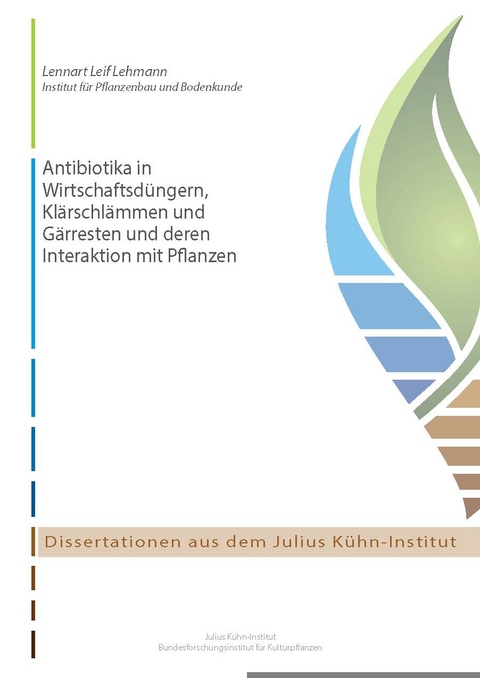
Antibiotika in Wirtschaftsdüngern, Klärschlämmen und Gärresten und deren Interaktion mit Pflanzen
Seiten
2017
Bundesforschungsinstitut für Kulturpflanzen (JKI) (Verlag)
978-3-95547-047-0 (ISBN)
Bundesforschungsinstitut für Kulturpflanzen (JKI) (Verlag)
978-3-95547-047-0 (ISBN)
Manure, digestates and sewage sludge are produced in large amounts and are used in agriculture because of their nutrient concentration. Through application they can carry pollutants like heavy metals and antibiotics into agricultural soils.
The aim of this work was to evaluate the methodological basics of analysis for the phosphorus (P) content in manure, digestates and sewage sludge and the development of a suitable analytical method especially for antibiotics in these
complex matrices. Acute and combinatory toxic effects of heavy metals and antibiotics were investigated in a pot trial and in model experiments to estimate their ecological relevance.
This work provided the following results:
The extraction of P by CAL delivered more reasonable results than a water extraction because CAL extraction was less affected by the matrix. CAL and NAC extraction delivered comparable results so both can be used to determine the P content in digestates. It was shown that the P determination by ICP-OES was more suitable to determine the P content in comparison to the colorimetric measurement by a spectral photometer as P contents were partly overestimated.
The median and maximum concentrations of antibiotics tend to be lower in digestates than in the substrates of the anaerobic fermentation. However, the contaminations were in the same order of magnitude. Median antibiotic concentrations in manure, digestate and sewage sludge samples were in the range of 100 μg to a few mg kg-1 on a dry matter basis. The maximum concentration determined in a digestate was 29.8 mg tetracycline kg-1 DW.
In small-scale tests (toxkits) it was proven that antibiotics in high concentrations are toxic to Daphnia magna and Sinapis alba. Daphnia magna was immobilised by high antibiotic concentrations and in case of Sinapis alba the root length was reduced by high concentrations of antibiotics. In the toxkits experiments the antibiotics enrofloxacine, sulfadiazine and tetracycline revealed synergistic toxic effects incombination. In a pot experiment, where the combinatory effect of enrofloxacin and copper on growth of Sinapis alba was investigated, it was shown that no enrofloxacin could be detected in the soil solution. This indicates a high adsorption of enrofloxacin to the soil-matrix. In concentrations of 3.6 mg kg-1 soil enrofloxacin caused a reduction in biomass development of Sinapis alba and could be detected in the plant material.
In a worst-case scenario it was calculated that up to 22 μg tetracycline kg-1 soil could be transferred to the field as a result of fertilization. This concentration is significantly lower than the toxic effect concentration which was determined for Sinapis alba. Based on the data obtained in the present work, it can be concluded, that currently no acute toxic effects on plant growth should be expected due to fertilization with manure, digestates and sewage sludge. Nevertheless, other toxic effects which were not evaluated in this work, could pose a risk for the environment. Wirtschaftsdünger, Gärreste und Klärschlämme fallen in großen Mengen an und werden wegen ihres Nährstoffgehaltes für die Düngung in der Landwirtschaft genutzt, wodurch sie Schadstoffe wie Schwermetalle und Antibiotika in landwirtschaftliche Böden transportieren.
Ziel der vorliegenden Arbeit war es, die methodischen Grundlagen der chemischen Analyse dieser Stoffe in Wirtschaftsdüngern, Gärresten und Klärschlämmen zu evaluieren und insbesondere für Antibiotika ein geeignetes Analyseverfahren zu entwickeln. In Gefäß- und Modellversuchen wurden zudem direkte toxische und
kombinatorische Effekte von Antibiotika und Schwermetallen auf Modellorganismen geprüft und deren ökologische Relevanz abgeschätzt.
Die Arbeit erbrachte folgende Ergebnisse:
Die CAL-Extraktion von P erwies sich im Vergleich zur Wasser-Extraktion als weniger matrixabhängig und genauer bei der Konzentrationsbestimmung. Die Ergebnisse der CAL-Extraktion entsprachen denen der NAC-Extraktion. Für die eigentliche P-Bestimmung erwies sich die ICP-OES-Messung als genauer im Vergleich zur Kolorimetrie.
Tendenziell fanden sich in den Endprodukten der anaeroben Fermentation niedrigere Median- und Maximalkonzentrationen von Antibiotika als in den Eingangssubstraten, die Größenordnung war jedoch vergleichbar. Die Mediankonzentrationen von Wirtschaftsdüngern und Klärschlämmen lagen häufig im Bereich von 100 μg bis wenige mg kg-1 Trockenmasse, der Maximalwert eines Gärrests bei 29,8 mg kg-1 Tetracyclin. Bei vielen Proben wurde eine Kontamination mit mehreren
Antibiotika beobachtet.
In Modellversuchen (Toxkits) wurde festgestellt, dass Antibiotika in hohen Konzentrationen toxisch auf Daphnia magna und Sinapis alba wirken, und zwar in Form einer Immobilisierung von Daphnia magna und einer Reduzierung der
Wurzellänge von Sinapis alba. Die Antibiotika Enrofloxacin, Sulfadiazin und Tetracyclin wiesen in ihrer binären Kombination in Toxkits synergistische toxische Effekte auf. Enrofloxacin konnte im Gefäßversuch nicht in der Bodenlösung detektiert
werden, was als Hinweis auf eine Adsorption an die Bodenmatrix gewertet werden kann. Ab einer Enrofloxacin-Konzentration von 3,6 mg kg-1 Sandboden trat eine Reduktion der Biomasseentwicklung von Sinapis alba auf und Enrofloxacin konnte in geringen Konzentrationen im Pflanzenmaterial nachgewiesen werden.
Die berechnete Antibiotika-Fracht durch Düngung mit der am stärksten kontaminierten Gärrestprobe betrug 22 μg Tetracyclin kg-1 Boden, was deutlich unter den schädlichen Effektkonzentrationen für Sinapis alba liegt. Auf Grundlage dieser Daten ist derzeit nicht mit einer direkten toxischen Wirkung auf Pflanzen zu rechnen, wenn Wirtschaftsdünger oder Klärschlämme zur Düngung eingesetzt werden.Andere schädliche Effekte in der Umwelt, welche in dieser Studie nicht betrachtet wurden, können jedoch nicht ausgeschlossen werden.
The aim of this work was to evaluate the methodological basics of analysis for the phosphorus (P) content in manure, digestates and sewage sludge and the development of a suitable analytical method especially for antibiotics in these
complex matrices. Acute and combinatory toxic effects of heavy metals and antibiotics were investigated in a pot trial and in model experiments to estimate their ecological relevance.
This work provided the following results:
The extraction of P by CAL delivered more reasonable results than a water extraction because CAL extraction was less affected by the matrix. CAL and NAC extraction delivered comparable results so both can be used to determine the P content in digestates. It was shown that the P determination by ICP-OES was more suitable to determine the P content in comparison to the colorimetric measurement by a spectral photometer as P contents were partly overestimated.
The median and maximum concentrations of antibiotics tend to be lower in digestates than in the substrates of the anaerobic fermentation. However, the contaminations were in the same order of magnitude. Median antibiotic concentrations in manure, digestate and sewage sludge samples were in the range of 100 μg to a few mg kg-1 on a dry matter basis. The maximum concentration determined in a digestate was 29.8 mg tetracycline kg-1 DW.
In small-scale tests (toxkits) it was proven that antibiotics in high concentrations are toxic to Daphnia magna and Sinapis alba. Daphnia magna was immobilised by high antibiotic concentrations and in case of Sinapis alba the root length was reduced by high concentrations of antibiotics. In the toxkits experiments the antibiotics enrofloxacine, sulfadiazine and tetracycline revealed synergistic toxic effects incombination. In a pot experiment, where the combinatory effect of enrofloxacin and copper on growth of Sinapis alba was investigated, it was shown that no enrofloxacin could be detected in the soil solution. This indicates a high adsorption of enrofloxacin to the soil-matrix. In concentrations of 3.6 mg kg-1 soil enrofloxacin caused a reduction in biomass development of Sinapis alba and could be detected in the plant material.
In a worst-case scenario it was calculated that up to 22 μg tetracycline kg-1 soil could be transferred to the field as a result of fertilization. This concentration is significantly lower than the toxic effect concentration which was determined for Sinapis alba. Based on the data obtained in the present work, it can be concluded, that currently no acute toxic effects on plant growth should be expected due to fertilization with manure, digestates and sewage sludge. Nevertheless, other toxic effects which were not evaluated in this work, could pose a risk for the environment. Wirtschaftsdünger, Gärreste und Klärschlämme fallen in großen Mengen an und werden wegen ihres Nährstoffgehaltes für die Düngung in der Landwirtschaft genutzt, wodurch sie Schadstoffe wie Schwermetalle und Antibiotika in landwirtschaftliche Böden transportieren.
Ziel der vorliegenden Arbeit war es, die methodischen Grundlagen der chemischen Analyse dieser Stoffe in Wirtschaftsdüngern, Gärresten und Klärschlämmen zu evaluieren und insbesondere für Antibiotika ein geeignetes Analyseverfahren zu entwickeln. In Gefäß- und Modellversuchen wurden zudem direkte toxische und
kombinatorische Effekte von Antibiotika und Schwermetallen auf Modellorganismen geprüft und deren ökologische Relevanz abgeschätzt.
Die Arbeit erbrachte folgende Ergebnisse:
Die CAL-Extraktion von P erwies sich im Vergleich zur Wasser-Extraktion als weniger matrixabhängig und genauer bei der Konzentrationsbestimmung. Die Ergebnisse der CAL-Extraktion entsprachen denen der NAC-Extraktion. Für die eigentliche P-Bestimmung erwies sich die ICP-OES-Messung als genauer im Vergleich zur Kolorimetrie.
Tendenziell fanden sich in den Endprodukten der anaeroben Fermentation niedrigere Median- und Maximalkonzentrationen von Antibiotika als in den Eingangssubstraten, die Größenordnung war jedoch vergleichbar. Die Mediankonzentrationen von Wirtschaftsdüngern und Klärschlämmen lagen häufig im Bereich von 100 μg bis wenige mg kg-1 Trockenmasse, der Maximalwert eines Gärrests bei 29,8 mg kg-1 Tetracyclin. Bei vielen Proben wurde eine Kontamination mit mehreren
Antibiotika beobachtet.
In Modellversuchen (Toxkits) wurde festgestellt, dass Antibiotika in hohen Konzentrationen toxisch auf Daphnia magna und Sinapis alba wirken, und zwar in Form einer Immobilisierung von Daphnia magna und einer Reduzierung der
Wurzellänge von Sinapis alba. Die Antibiotika Enrofloxacin, Sulfadiazin und Tetracyclin wiesen in ihrer binären Kombination in Toxkits synergistische toxische Effekte auf. Enrofloxacin konnte im Gefäßversuch nicht in der Bodenlösung detektiert
werden, was als Hinweis auf eine Adsorption an die Bodenmatrix gewertet werden kann. Ab einer Enrofloxacin-Konzentration von 3,6 mg kg-1 Sandboden trat eine Reduktion der Biomasseentwicklung von Sinapis alba auf und Enrofloxacin konnte in geringen Konzentrationen im Pflanzenmaterial nachgewiesen werden.
Die berechnete Antibiotika-Fracht durch Düngung mit der am stärksten kontaminierten Gärrestprobe betrug 22 μg Tetracyclin kg-1 Boden, was deutlich unter den schädlichen Effektkonzentrationen für Sinapis alba liegt. Auf Grundlage dieser Daten ist derzeit nicht mit einer direkten toxischen Wirkung auf Pflanzen zu rechnen, wenn Wirtschaftsdünger oder Klärschlämme zur Düngung eingesetzt werden.Andere schädliche Effekte in der Umwelt, welche in dieser Studie nicht betrachtet wurden, können jedoch nicht ausgeschlossen werden.
| Erscheinungsdatum | 16.05.2017 |
|---|---|
| Reihe/Serie | Dissertationen aus dem Julius Kühn-Institut |
| Zusatzinfo | Illustrationen, Diagramme |
| Sprache | deutsch |
| Maße | 140 x 210 mm |
| Gewicht | 200 g |
| Einbandart | geklebt |
| Themenwelt | Naturwissenschaften |
| Technik | |
| Weitere Fachgebiete ► Land- / Forstwirtschaft / Fischerei | |
| Schlagworte | Antibiotika • Düngung • Klärschlamm |
| ISBN-10 | 3-95547-047-4 / 3955470474 |
| ISBN-13 | 978-3-95547-047-0 / 9783955470470 |
| Zustand | Neuware |
| Informationen gemäß Produktsicherheitsverordnung (GPSR) | |
| Haben Sie eine Frage zum Produkt? |
Mehr entdecken
aus dem Bereich

aus dem Bereich
Buch | Hardcover (2023)
Haymarket Media (Verlag)
CHF 44,50
erfolgreich produzieren & selbst vermarkten
Buch | Hardcover (2023)
Stocker Verlag
CHF 34,95


