Brazil (eBook)
John Wiley & Sons (Verlag)
978-1-118-97248-9 (ISBN)
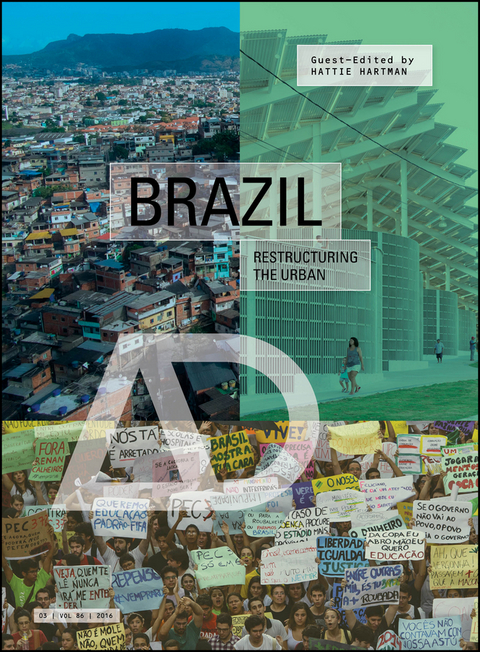
Brazil is a country of city dwellers undergoing radical transformation: over 85 per cent of the country's citizens live in cities and over 40 per cent of the population live in metropolises of more than a million people. Whereas previously urban growth had been ad hoc, preparation for the FIFA World Cup in 12 cities across the country in 2014, and for the upcoming Olympic and Paralympic Games in Rio, changed all that. Several Brazilian cities have proactively invested in infrastructure and the public realm. And a number of projects by international 'starchitects' have heightened interest in Brazil from architects and urban practitioners abroad. The failure of public authorities to meet their ambitious aspirations for the sporting mega-events sparked a series of street protests across the country under the banner of 'the right to the city', beginning in 2013. For Brazil, this was an entirely new phenomenon, one which has unveiled the potential for bottom-up influences to effect urban change. The focus of this issue, though, is on design projects that contribute a strong sense of place to their respective cities, highlighting also the integration of landscape design in urban planning and community interventions that seek to address the enormous disparity between the lives of the country's rich and poor.
Contributors: Ricky Burdett, Thomas Deckker, Gabriel Duarte, Sergio Ekerman, Nanda Eskes and André Vieira, Alexandre Hepner and Silvio Soares Macedo, Circe Monteiro and Luiz Carvalho, Joana Carla Soares Gonçalves, Jaime Lerner, Ana Luiza Nobre, Justin McGuirk, Francesco Perrotta-Bosch, Maria do Rocio Rosário, Fernando Serapião, Guilherme Wisnik
Featured architects: AECOM, Biselli Katchborian, Brasil Arquitetura, Santiago Calatrava, Studio Arthur Casas, Diller Scofdio + Renfro, Herzog & de Meuron, Vigliecca & Associados
Hattie Hartman is sustainability editor at The Architects' Journal in London. An American architect and urban planner, she has been based in London for more than 20 years. Hattie worked as an architect in Brasilia, Washington, D.C. and London before turning to freelance journalism in 1998 and joining The Architects' Journal in 2006. In 2008, she founded AJ Footprint, the AJ's dedicated coverage of sustainable design in the built environment, (www.ajfootprint.com). She lectures widely on mainstreaming green design and various technical aspects of sustainability. She is also the author of London 2012: Sustainable Design (John Wiley & Sons, 2012), a review of the sustainable design platform which underpinned the London Games.
Brazil is a country of city dwellers undergoing radical transformation: over 85 per cent of the country s citizens live in cities and over 40 per cent of the population live in metropolises of more than a million people. Whereas previously urban growth had been ad hoc, preparation for the FIFA World Cup in 12 cities across the country in 2014, and for the upcoming Olympic and Paralympic Games in Rio, changed all that. Several Brazilian cities have proactively invested in infrastructure and the public realm. And a number of projects by international starchitects have heightened interest in Brazil from architects and urban practitioners abroad. The failure of public authorities to meet their ambitious aspirations for the sporting mega-events sparked a series of street protests across the country under the banner of the right to the city , beginning in 2013. For Brazil, this was an entirely new phenomenon, one which has unveiled the potential for bottom-up influences to effect urban change. The focus of this issue, though, is on design projects that contribute a strong sense of place to their respective cities, highlighting also the integration of landscape design in urban planning and community interventions that seek to address the enormous disparity between the lives of the country s rich and poor. Contributors: Ricky Burdett, Thomas Deckker, Gabriel Duarte, Sergio Ekerman, Nanda Eskes and Andr Vieira, Alexandre Hepner and Silvio Soares Macedo, Circe Monteiro and Luiz Carvalho, Joana Carla Soares Gon alves, Jaime Lerner, Ana Luiza Nobre, Justin McGuirk, Francesco Perrotta-Bosch, Maria do Rocio Ros rio, Fernando Serapi o, Guilherme Wisnik Featured architects: AECOM, Biselli Katchborian, Brasil Arquitetura, Santiago Calatrava, Studio Arthur Casas, Diller Scofdio + Renfro, Herzog & de Meuron, Vigliecca & Associados
Hattie Hartman is sustainability editor at The Architects' Journal in London. An American architect and urban planner, she has been based in London for more than 20 years. Hattie worked as an architect in Brasilia, Washington, D.C. and London before turning to freelance journalism in 1998 and joining The Architects' Journal in 2006. In 2008, she founded AJ Footprint, the AJ's dedicated coverage of sustainable design in the built environment, (www.ajfootprint.com). She lectures widely on mainstreaming green design and various technical aspects of sustainability. She is also the author of London 2012: Sustainable Design (John Wiley & Sons, 2012), a review of the sustainable design platform which underpinned the London Games.
Cover 1
Title Page 3
Contents 4
Copyright Page 6
Editorial 7
About the Guest-Editor 9
Fore-thoughts: Learning from Lerner 10
Introduction Seeds of Change: Urban Transformation in Brazil 12
Why Brazilian Urbanism Now? 14
A Country of City Dwellers 15
Economic Vicissitudes 16
Right to the City 16
Key Themes 18
Notes 21
Where to for Brazil’s Cities?: Citizen Empowerment or Global Marketing? 22
A Poetic Reduction of Nature 23
Brasilia: Apogee and Crisis in Urban Modernisation 24
Neglected Cities 25
Explosive Urban Growth 26
Between Media Spectacle and Citizen Activism 28
Notes 29
A City at Play: Rio de Janeiro on the Eve of the 2016 Olympic and Paralympic Games 30
Calendar of Mega-Events 34
Change of Scenario 34
‘Sanitation Yes, Cable Cars No!’ 35
Mobility and Displacement 35
Port Area Regeneration 36
New Museums 39
Olympic Park 40
Athletes Village: Ilha Pura (Pure Island) 41
Notes 41
Failing the Informal City: How Rio de Janeiro’s Mega Sporting Events Derailed the Legacy of Favela-Bairro 42
Favela-Bairro: Integrating the Favela 45
The Legacy of Favela-Bairro 47
Morar Carioca: High Hopes for an Olympic Legacy 49
Minha Casa Minha Vida: Non-urbanism 49
Notes 49
Maps to Hack, Synchronise and Decipher: Unseen Cartographies of Rio 50
A Deficiency in Rio’s Mapping 52
Maps as Political (or Socio-Cultural?) Constructs 53
Collaborative Digital Mapping 55
Notes 55
Rethinking Minha Casa Minha Vida: The Resurgence of Public Space 56
A Neoliberal Approach to Housing Delivery 58
An Urban Quality Label for Minha Casa Minha Vida 59
Parauapebas: An Urban Quality Label Prototype 60
The Future of MCMV 61
Notes 61
Dissatisfied São Paulo 62
COME TO THE STREET 65
Top-Down and Bottom-Up 67
Dry Metropolis 71
Linking the Formal and Informal: Favela Urbanisation and Social Housing in São Paulo 72
São Paulo – a Disenfranchised Urban Periphery 74
A Multi-Pronged Approach in São Paulo 75
Bete’s Management Style 76
More than Housing 76
Green Infrastructure 81
The Market Prevails 81
Notes 81
Alternative Visions of the Brazilian City: In conversation with Herzog & de Meuron Senior Partner Ascan Mergenthaler
The Essence of Lina Bo Bardi’s SESC Pompeia in Cracolândia 84
Urban Acupuncture in Mãe Luíza 87
Brasília: Life Beyond Utopia 90
The Founding of Brasília: the Kubitschek Years 92
Brasília After Kubitschek: The Ditadura and Abertura 96
Brasília Today 97
Life Beyond Utopia 97
Notes 97
Recife: The Popular Struggle for a Better City 98
CITY VERSUS NATURE 100
HISTORICAL VERSUS MODERN 102
THE STRUGGLE OF THE CITY, FOR THE CITY, BY THE CITY 102
CAPIBARIBE PARK AND THE REINVENTION OF RECIFE 104
Notes 107
Salvador: The Struggle for Dialogue Within a Heritage City 108
Lelé and Lina 108
Pelourinho: An Empty Tourist Neighbourhood 110
Mobility 111
Favela Upgrade 111
Regaining the Waterfront 112
Consensus and Political Will 112
Notes 113
Curitiba Revisited: Five Decades of Transformation 114
A Thriving City Centre: ‘A Setting for Encounters’ 116
Integrated Transport as a Cornerstone 117
The Challenge of Metropolitan Integration 117
The Critical Role of Stable Municipal Governance 118
The Verdict: Has Curitiba Delivered on its Ideals? 119
Notes 119
Landscaping Brazil: The Legacy of Roberto Burle Marx 120
The Modern Movement: Roberto Burle Marx 122
The Military Years: São Paulo’s Praça da Sé 123
Resurgence of Civic Landscape: Rosa Kliass 124
Ecological Landscapes 124
Private Spaces for the Public Good 125
Public Greening: From State Wetlands to Municipal Parks 126
São Paulo: Rediscovery of the Public Realm 126
Sustainability: A Clarion Call for a New Approach 128
The Dominance of Green Certification 130
A Lost Legacy of Bioclimatic Modernism 133
Looking to the Future: a National Energy Plan 134
The Minhocão: Reinvention of an Existing Asset 136
A New Approach to Sustainable Urbanism 137
Counterpoint Designing Inequality? 138
Porto Maravilha: An Exemplary Redevelopment? 141
Balancing the Imbalance 142
Towards Porous Urbanism 143
Notes 143
Contributors 144
What is Architectural Design? 146
Forthcoming Titles 147
Back Cover 148
EULA 149
| Erscheint lt. Verlag | 1.3.2017 |
|---|---|
| Reihe/Serie | Architectural Design |
| Architectural Design | Architectural Design |
| Mitarbeit |
Gast Herausgeber: Hattie Hartman |
| Sprache | englisch |
| Themenwelt | Technik ► Architektur |
| Schlagworte | across • AD • Architecture • Architektur • Bauentwurf • brazilian • Cent • Cities • Citizens • City • Country • countrys • Cup • dwellers • FIFA • Games • growth • hoc • Infrastructure • Live • Paralympic • Planning • Planung • Preparation • proactively • radical • Rio • Several • Stadtentwicklung • Transformation • upcoming • Urban • Urban Development • World |
| ISBN-10 | 1-118-97248-1 / 1118972481 |
| ISBN-13 | 978-1-118-97248-9 / 9781118972489 |
| Informationen gemäß Produktsicherheitsverordnung (GPSR) | |
| Haben Sie eine Frage zum Produkt? |
 PDF (Adobe DRM)
Kopierschutz: Adobe-DRM
Adobe-DRM ist ein Kopierschutz, der das eBook vor Mißbrauch schützen soll. Dabei wird das eBook bereits beim Download auf Ihre persönliche Adobe-ID autorisiert. Lesen können Sie das eBook dann nur auf den Geräten, welche ebenfalls auf Ihre Adobe-ID registriert sind.
Details zum Adobe-DRM
Dateiformat: PDF (Portable Document Format)
Mit einem festen Seitenlayout eignet sich die PDF besonders für Fachbücher mit Spalten, Tabellen und Abbildungen. Eine PDF kann auf fast allen Geräten angezeigt werden, ist aber für kleine Displays (Smartphone, eReader) nur eingeschränkt geeignet.
Systemvoraussetzungen:
PC/Mac: Mit einem PC oder Mac können Sie dieses eBook lesen. Sie benötigen eine
eReader: Dieses eBook kann mit (fast) allen eBook-Readern gelesen werden. Mit dem amazon-Kindle ist es aber nicht kompatibel.
Smartphone/Tablet: Egal ob Apple oder Android, dieses eBook können Sie lesen. Sie benötigen eine
Geräteliste und zusätzliche Hinweise
Buying eBooks from abroad
For tax law reasons we can sell eBooks just within Germany and Switzerland. Regrettably we cannot fulfill eBook-orders from other countries.
aus dem Bereich