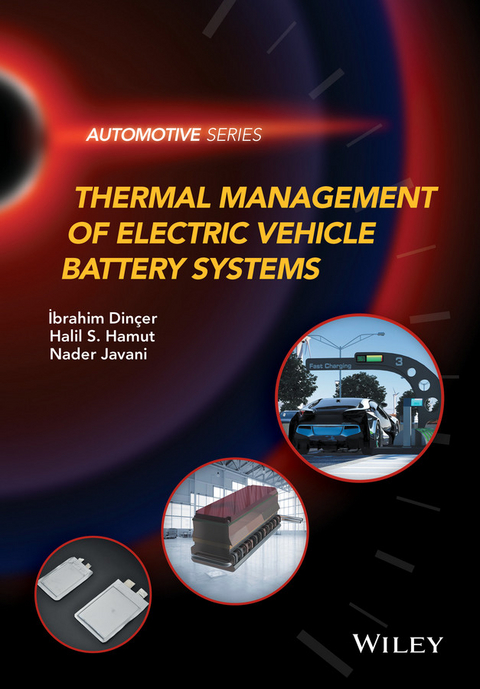
Thermal Management of Electric Vehicle Battery Systems (eBook)
John Wiley & Sons (Verlag)
978-1-118-90021-5 (ISBN)
Thermal Management of Electric Vehicle Battery Systems provides a thorough examination of various conventional and cutting edge electric vehicle (EV) battery thermal management systems (including phase change material) that are currently used in the industry as well as being proposed for future EV batteries. It covers how to select the right thermal management design, configuration and parameters for the users' battery chemistry, applications and operating conditions, and provides guidance on the setup, instrumentation and operation of their thermal management systems (TMS) in the most efficient and effective manner.
This book provides the reader with the necessary information to develop a capable battery TMS that can keep the cells operating within the ideal operating temperature ranges and uniformities, while minimizing the associated energy consumption, cost and environmental impact. The procedures used are explained step-by-step, and generic and widely used parameters are utilized as much as possible to enable the reader to incorporate the conducted analyses to the systems they are working on. Also included are comprehensive thermodynamic modelling and analyses of TMSs as well as databanks of component costs and environmental impacts, which can be useful for providing new ideas on improving vehicle designs.
Key features:
- Discusses traditional and cutting edge technologies as well as research directions
- Covers thermal management systems and their selection for different vehicles and applications
- Includes case studies and practical examples from the industry
- Covers thermodynamic analyses and assessment methods, including those based on energy and exergy, as well as exergoeconomic, exergoenvironmental and enviroeconomic techniques
- Accompanied by a website hosting codes, models, and economic and environmental databases as well as various related information
Thermal Management of Electric Vehicle Battery Systems is a unique book on electric vehicle thermal management systems for researchers and practitioners in industry, and is also a suitable textbook for senior-level undergraduate and graduate courses.
Ibrahim Dincer is a full professor of Mechanical Engineering and director of Clean Energy Research Laboratory at UOIT. Renowned for his pioneering works in the area of sustainable energy technologies, including clean transportation options, he has authored/co-authored many books, book chapters, and refereed journal and conference papers. He has chaired national and international conferences, symposia, workshops and technical meetings and delivered many keynote and invited lectures. He is an active member of various international scientific organizations and societies, and serves as editor-in-chief, associate editor, regional editor, and editorial board member on various prestigious international journals. He is a recipient of several research, teaching and service awards, including the Premier's research excellence award in Ontario, Canada. He has recently been recognized by Thomson Reuters as one of The Most Influential Scientific Minds in Engineering.
Halil S. Hamut is a Chief Senior Researcher at The Scientific and Research Council of Turkey (TÜBITAK) and the project manager for developing Turkey's first brand of national electric vehicles. He received his PhD from the Faculty of Engineering and Applied Science, University of Ontario Institute of Technology in Canada, in 2013. He has previously collaborated with General Motors Company in Oshawa, Canada and worked for Ford Motor Company in Michigan, U.S.A He has published many journals and conference papers and has been a reviewer for several journals. His research interests are primarily concerned with exergy, exergoeconomic and exergoenvironmental analyses of electric and hybrid electric vehicle thermal management systems.
Thermal Management of Electric Vehicle Battery Systems provides a thorough examination of various conventional and cutting edge electric vehicle (EV) battery thermal management systems (including phase change material) that are currently used in the industry as well as being proposed for future EV batteries. It covers how to select the right thermal management design, configuration and parameters for the users battery chemistry, applications and operating conditions, and provides guidance on the setup, instrumentation and operation of their thermal management systems (TMS) in the most efficient and effective manner. This book provides the reader with the necessary information to develop a capable battery TMS that can keep the cells operating within the ideal operating temperature ranges and uniformities, while minimizing the associated energy consumption, cost and environmental impact. The procedures used are explained step-by-step, and generic and widely used parameters are utilized as much as possible to enable the reader to incorporate the conducted analyses to the systems they are working on. Also included are comprehensive thermodynamic modelling and analyses of TMSs as well as databanks of component costs and environmental impacts, which can be useful for providing new ideas on improving vehicle designs. Key features: Discusses traditional and cutting edge technologies as well as research directions Covers thermal management systems and their selection for different vehicles and applications Includes case studies and practical examples from the industry Covers thermodynamic analyses and assessment methods, including those based on energy and exergy, as well as exergoeconomic, exergoenvironmental and enviroeconomic techniques Accompanied by a website hosting codes, models, and economic and environmental databases as well as various related information Thermal Management of Electric Vehicle Battery Systems is a unique book on electric vehicle thermal management systems for researchers and practitioners in industry, and is also a suitable textbook for senior-level undergraduate and graduate courses.
Ibrahim Dincer is a full professor of Mechanical Engineering and director of Clean Energy Research Laboratory at UOIT. Renowned for his pioneering works in the area of sustainable energy technologies, including clean transportation options, he has authored/co-authored many books, book chapters, and refereed journal and conference papers. He has chaired national and international conferences, symposia, workshops and technical meetings and delivered many keynote and invited lectures. He is an active member of various international scientific organizations and societies, and serves as editor-in-chief, associate editor, regional editor, and editorial board member on various prestigious international journals. He is a recipient of several research, teaching and service awards, including the Premier's research excellence award in Ontario, Canada. He has recently been recognized by Thomson Reuters as one of The Most Influential Scientific Minds in Engineering. Halil S. Hamut is a Chief Senior Researcher at The Scientific and Research Council of Turkey (TÜBITAK) and the project manager for developing Turkey's first brand of national electric vehicles. He received his PhD from the Faculty of Engineering and Applied Science, University of Ontario Institute of Technology in Canada, in 2013. He has previously collaborated with General Motors Company in Oshawa, Canada and worked for Ford Motor Company in Michigan, U.S.A He has published many journals and conference papers and has been a reviewer for several journals. His research interests are primarily concerned with exergy, exergoeconomic and exergoenvironmental analyses of electric and hybrid electric vehicle thermal management systems.
| Erscheint lt. Verlag | 29.12.2016 |
|---|---|
| Reihe/Serie | Automotive Series | Automotive Series |
| Sprache | englisch |
| Themenwelt | Technik ► Elektrotechnik / Energietechnik |
| Technik ► Maschinenbau | |
| Schlagworte | automotive engineering • Battery • battery packs • Cooling systems • Electric Vehicle • Energie • Energy • energy analysis • Energy Management • Exergy Analysis • Fahrzeugtechnik • Hybrid Electric Vehicle • Hydrogen, Batteries & Fuel Cells • Li-ion cells • Maschinenbau • mechanical engineering • thermal management • thermodynamics • Thermodynamik • Wasserstoff, Batterien u. Brennstoffzellen |
| ISBN-10 | 1-118-90021-9 / 1118900219 |
| ISBN-13 | 978-1-118-90021-5 / 9781118900215 |
| Informationen gemäß Produktsicherheitsverordnung (GPSR) | |
| Haben Sie eine Frage zum Produkt? |
 PDF (Adobe DRM)
Kopierschutz: Adobe-DRM
Adobe-DRM ist ein Kopierschutz, der das eBook vor Mißbrauch schützen soll. Dabei wird das eBook bereits beim Download auf Ihre persönliche Adobe-ID autorisiert. Lesen können Sie das eBook dann nur auf den Geräten, welche ebenfalls auf Ihre Adobe-ID registriert sind.
Details zum Adobe-DRM
Dateiformat: PDF (Portable Document Format)
Mit einem festen Seitenlayout eignet sich die PDF besonders für Fachbücher mit Spalten, Tabellen und Abbildungen. Eine PDF kann auf fast allen Geräten angezeigt werden, ist aber für kleine Displays (Smartphone, eReader) nur eingeschränkt geeignet.
Systemvoraussetzungen:
PC/Mac: Mit einem PC oder Mac können Sie dieses eBook lesen. Sie benötigen eine
eReader: Dieses eBook kann mit (fast) allen eBook-Readern gelesen werden. Mit dem amazon-Kindle ist es aber nicht kompatibel.
Smartphone/Tablet: Egal ob Apple oder Android, dieses eBook können Sie lesen. Sie benötigen eine
Geräteliste und zusätzliche Hinweise
Buying eBooks from abroad
For tax law reasons we can sell eBooks just within Germany and Switzerland. Regrettably we cannot fulfill eBook-orders from other countries.
aus dem Bereich