Biologically-Inspired Radar and Sonar
SciTech Publishing Inc (Verlag)
978-1-61353-235-5 (ISBN)
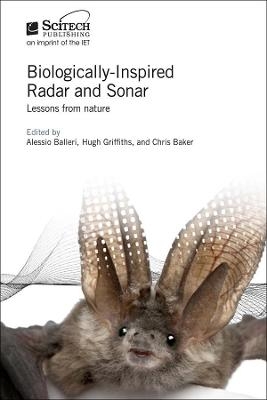
This book presents some of the recent work that has been carried out to investigate how sophisticated sensing techniques used in nature can be applied to radar and sonar systems to improve their performance. Topics covered include biosonar inspired signal processing and acoustic imaging from echolocating bats; enhanced range resolution: comparison with the matched filter; air-coupled sonar systems inspired by bat echolocation; analysis of acoustic echoes from bat-pollinated plants; the biosonar arms race between bats and insects; biologically inspired coordination of guidance and adaptive radiated waveform for interception and rendezvous problems; cognitive sensor/ processor system framework for target tracking; the biosonar of the Mediterranean bottlenose dolphins; human echolocation; and polarization tensors and object recognition in weakly electric fish.
Biologically-Inspired Radar and Sonar is essential reading for radar and sonar practitioners in academia and research, governmental and industrial organisations, engineers working in signal processing and sensing, and those with an underlying interest in the interaction between natural sciences and engineering.
Dr Alessio Balleri is a Senior Lecturer with Cranfield University at the Defence Academy of the United Kingdom, Shrivenham. His research interests include radar and sonar system design, biologically inspired radar and sonar systems, radar and sonar target classification, target feature extraction and modelling of radar clutter. Professor Hugh Griffiths holds the THALES/Royal Academy of Engineering Chair of RF Sensors at University College London. His research interests include radar sensor systems and signal processing as well as antennas and antenna measurement techniques. He has published over 500 papers and technical articles on these subjects. Professor Griffiths received the IET A F Harvey Research Prize in 2012 and the IEEE Picard Medal in 2017. He is Editor-in-Chief of the journal IET Radar, Sonar and Navigation. Professor Chris Baker is Chief Technology Officer for Aveillant. He has been actively engaged in radar systems research since 1984 and is the author of over 250 publications in this field. He has won numerous awards for his research. Professor Baker has many collaborations with industry, government and academia and is a visiting Professor at, Ohio State University, UCL, Cranfield University, the University of Cape Town, Wright State University, Strathclyde University and Birmingham University and is a fellow of the IET and IEEE.
Chapter 1: Introduction
Chapter 2: Biosonar-inspired signal processing and acoustic imagine from echolocating bats
Chapter 3: Enhanced range resolution: comparison with the matched filter
Chapter 4: Air-coupled sonar systems inspired by bat echolocation
Chapter 5: Analysis of acoustic echoes from bat-pollinated plants
Chapter 6: The biosonar arms race between bats and insects
Chapter 7: Biologically-inspired coordination of guidance and adaptive radiated waveform for interception and rendezvous problems
Chapter 8: Cognitive sensor/ processor system framework for target tracking
Chapter 9: The biosonar of the Mediterranean Bottlenose dolphins: analysis and modeling of echolocation signals
Chapter 10: Human echolocation - spatial resolution and signal properties
Chapter 11: Polarization tensors and object recognition in weakly electric fish
| Erscheinungsdatum | 12.08.2017 |
|---|---|
| Reihe/Serie | Radar, Sonar and Navigation |
| Verlagsort | New York |
| Sprache | englisch |
| Maße | 156 x 234 mm |
| Themenwelt | Technik ► Nachrichtentechnik |
| ISBN-10 | 1-61353-235-0 / 1613532350 |
| ISBN-13 | 978-1-61353-235-5 / 9781613532355 |
| Zustand | Neuware |
| Informationen gemäß Produktsicherheitsverordnung (GPSR) | |
| Haben Sie eine Frage zum Produkt? |
aus dem Bereich