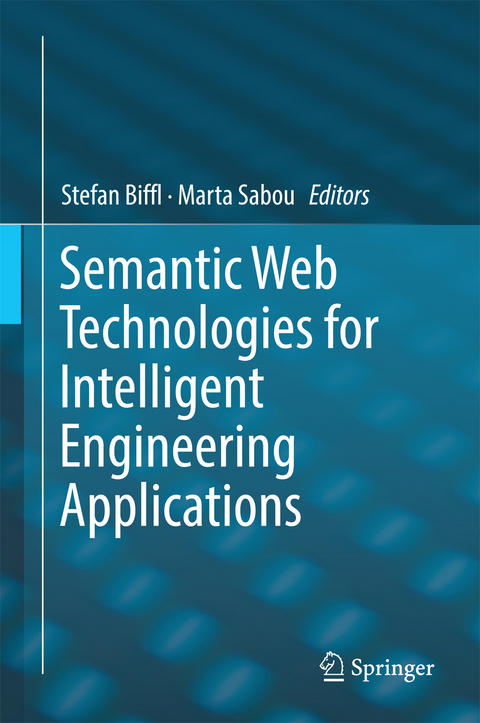
Semantic Web Technologies for Intelligent Engineering Applications (eBook)
XX, 405 Seiten
Springer International Publishing (Verlag)
978-3-319-41490-4 (ISBN)
This is the first book to explore how Semantic Web technologies (SWTs) can be used to create intelligent engineering applications (IEAs). Technology-specific chapters reflect the state of the art in relevant SWTs and offer guidelines on how they can be applied in multi-disciplinary engineering settings characteristic of engineering production systems. In addition, a selection of case studies from various engineering domains demonstrate how SWTs can be used to create IEAs that enable, for example, defect detection or constraint checking.
Part I 'Background and Requirements of Industrie 4.0 for Semantic Web Solutions' provides the background information needed to understand the book and addresses questions concerning the semantic challenges and requirements of Industrie 4.0, and which key SWT capabilities may be suitable for implementing engineering applications. In turn, Part II 'Semantic Web-Enabled Data Integration in Multi-Disciplinary Engineering' focuses on how SWTs can be used for data integration in heterogeneous, multi-disciplinary engineering settings typically encountered in the creation of flexible production systems. Part III 'Creating Intelligent Applications for Multi-Disciplinary Engineering' demonstrates how the integrated engineering data can be used to support the creation of IEAs, while Part IV 'Related and Emerging Trends in the Use of Semantic Web in Engineering' presents an overview of the broader spectrum of approaches that make use of SWTs to support engineering settings. A final chapter then rounds out the book with an assessment of the strengths, weaknesses and compatibilities of SWTs and an outlook on future opportunities for applying SWTs to create IEAs in flexible industrial production systems.
This book seeks to build a bridge between two communities: industrial production on one hand and Semantic Web on the other. Accordingly, stakeholders from both communities should find this book useful in their work. Semantic Web researchers will gain a better understanding of the challenges and requirements of the industrial production domain, offering them guidance in the development of new technologies and solutions for this important application area. In turn, engineers and managers from engineering domains will arrive at a firmer grasp of the benefits and limitations of using SWTs, helping them to select and adopt appropriate SWTs more effectively. In addition, researchers and students interested in industrial production-related issues will gain valuable insights into how and to what extent SWTs can help to address those issues.
About the Editors:
Marta Sabou is Senior Researcher at the Vienna University of Technology, where she leads a group of researchers in the area of semantic representation and integration of engineering data in the context of automation systems. She has a broad expertise in several Semantic Web research topics ranging from ontology engineering tasks (ontology creation, mapping, modularization) to the creation of intelligent systems that benefit from semantic information in domains as varied as tourism, climate change or open government. Her current interest is on data integration issues, with a special focus on the domain of industrial automation and Industrie 4.0.
Stefan Biffl is Associate Professor of Software Engineering at the Institute of Software Technology and Interactive Systems, Vienna University of Technology. He is the head of the Christian Doppler research laboratory 'Software Engineering Integration for Flexible Automation Systems', which investigates concepts, methods, and tools for improving production systems engineering processes based on better integration of data in multi-disciplinary engineering projects. Stefan Biffl is also a supervisor in the doctoral college on 'Cyber-Physical Production Systems' at the Vienna University of Technology. His current research interests include software and systems engineering, and product and process improvement.
About the Editors: Marta Sabou is Senior Researcher at the Vienna University of Technology, where she leads a group of researchers in the area of semantic representation and integration of engineering data in the context of automation systems. She has a broad expertise in several Semantic Web research topics ranging from ontology engineering tasks (ontology creation, mapping, modularization) to the creation of intelligent systems that benefit from semantic information in domains as varied as tourism, climate change or open government. Her current interest is on data integration issues, with a special focus on the domain of industrial automation and Industrie 4.0. Stefan Biffl is Associate Professor of Software Engineering at the Institute of Software Technology and Interactive Systems, Vienna University of Technology. He is the head of the Christian Doppler research laboratory “Software Engineering Integration for Flexible Automation Systems”, which investigates concepts, methods, and tools for improving production systems engineering processes based on better integration of data in multi-disciplinary engineering projects. Stefan Biffl is also a supervisor in the doctoral college on "Cyber-Physical Production Systems" at the Vienna University of Technology. His current research interests include software and systems engineering, and product and process improvement.
Foreword I 5
Foreword II 7
Preface 11
Contents 13
Contributors 15
Abbreviations 17
1 Introduction 21
Abstract 21
1.1 Context and Aims of This Book 21
1.2 Industrial Production Systems 24
1.3 Intelligent Engineering Applications for Industrie 4.0 27
1.4 Who Should Read This Book and Why? 31
1.5 Book Content and Structure 31
Acknowledgments 32
References 33
Background and Requirements of Industrie 4.0 for Semantic Web Solutions 34
2 Multi-Disciplinary Engineering for Industrie 4.0: Semantic Challenges and Needs 35
Abstract 35
2.1 Introduction 36
2.2 Production Systems Life Cycle 38
2.3 Engineering of Industrial Production Systems 43
2.4 Usage Scenarios that Illustrate Needs for Semantic Support 50
2.4.1 Scenario 1—Discipline-Crossing Engineering Tool Networks 52
2.4.2 Scenario 2—Use of Existing Artifacts for Plant Engineering 54
2.4.3 Scenario 3—Flexible Production System Organization 58
2.4.4 Scenario 4—Maintenance and Replacement Engineering 60
2.5 Needs for Semantic Support Derived from the Scenarios 62
2.6 Summary and Outlook 66
Acknowledgments 67
3 An Introduction to Semantic Web Technologies 70
Abstract 70
3.1 Introduction 70
3.2 The Semantic Web: Motivation, History, and Relevance for Engineering 71
3.2.1 Why Was the Semantic Web Needed? 71
3.2.2 The Semantic Web in a Nutshell 72
3.2.3 The Use of Semantic Web Technologies in Enterprises 74
3.2.4 How Are SWTs Relevant for Engineering Applications? 75
3.3 Ontologies 76
3.4 Semantic Web Languages 79
3.4.1 Resource Description Framework (RDF) 79
3.4.2 RDF Schema—RDF(S) 83
3.4.3 The Web Ontology Language (OWL) 84
3.4.4 SPARQL (SPARQL Protocol and RDF Query Language) 85
3.5 Formality and Reasoning 87
3.6 Linked Data 89
3.7 Semantic Web Capabilities Relevant for Engineering Needs 91
3.8 Summary 95
Acknowledgments 96
References 96
Semantic Web Enabled Data Integration in Multi-disciplinary Engineering 99
4 The Engineering Knowledge Base Approach 100
4.1 Introduction 100
4.2 Background and Research Challenges 102
4.2.1 Automation Systems Engineering 102
4.2.2 Semantic Integration of Tool Data Models 103
4.2.3 Research Challenges 104
4.3 Related Work 105
4.3.1 Usage of Standards in Development Processes 106
4.3.2 Usage of Common Project Repositories 106
4.3.3 Complete Transformation Between Project Data Models 107
4.4 Engineering Knowledge Base Framework 108
4.4.1 Engineering Knowledge Base (EKB) Overview 108
4.4.2 Data Structuring in the EKB Framework 109
4.5 Case Study and Evaluation 111
4.5.1 Case Study Description 111
4.5.2 Scenario-Based Evaluation of the EKB 112
4.6 Conclusion 116
References 117
5 Semantic Modelling and Acquisition of Engineering Knowledge 119
Abstract 119
5.1 Introduction 120
5.2 Ontology Engineering Methodologies 121
5.3 Ontology Evaluation 124
5.4 Classification of Engineering Ontologies 126
5.4.1 The Product-Process-Resource Abstraction 127
5.4.2 A Classification Scheme for Engineering Ontologies 128
5.5 Examples of Engineering Ontologies 131
5.5.1 The AutomationML Ontology 135
5.5.2 Common Concepts Ontology 138
5.6 Ontology Design Patterns for Engineering 140
5.7 Acquisition of Semantic Knowledge from Engineering Artefacts 143
5.8 Summary and Future Work 146
Acknowledgments 147
References 147
6 Semantic Matching of Engineering Data Structures 151
6.1 Introduction 151
6.2 Ontology Matching: Background Information and Definitions 153
6.3 Running Example: The Power Plant Engineering Project 155
6.4 Representing Relations Between Engineering Objects 157
6.5 Languages and Technologies for Mapping Definition and Representation 163
6.6 Representing Complex Relations with EDOAL 166
6.7 Conclusion 170
References 171
7 Knowledge Change Management and Analysis in Engineering 172
Abstract 172
7.1 Introduction 173
7.2 KCMA in Engineering 174
7.2.1 KCMA Example 175
7.2.2 Requirements for KCMA in Engineering 176
7.3 Solutions for KCMA in the Engineering Domain 177
7.3.1 Database Schema Evolution and Versioning 178
7.3.2 Model-Based Engineering (MBE) Co-Evolution 178
7.4 Semantic Web for KCMA in Engineering 179
7.4.1 Ontology Change Management 181
7.5 Reference Process for KCMA in MDEng Environment 185
7.6 A Potential Semantic Web-Based Implementation of the KCMA Reference Process 187
7.7 Summary and Future Work 189
Acknowledgments 189
References 189
Intelligent Applications for Multi-disciplinary Engineering 192
8 Semantic Data Integration: Tools and Architectures 193
Abstract 193
8.1 Introduction 194
8.2 Related Work 197
8.2.1 Semantic Web Technologies 197
8.2.2 Semantic Data Integration 198
8.2.3 Engineering Knowledge Base 199
8.2.4 Semantic Data Stores 200
8.2.4.1 Ontology in File Stores 201
8.2.4.2 Ontology in Triple Stores 201
8.2.4.3 Ontology in Relational Databases 202
8.2.5 NoSQL Graph Databases 203
8.2.6 Versioning 204
8.3 Use Case: A Steel Mill Plant Engineering 206
8.3.1 Integration Requirements 208
8.3.1.1 Data Insertion 208
8.3.1.2 Data Transformation 209
8.3.1.3 Data Query 209
8.4 Engineering Knowledge Base Software Architecture Variants 210
8.4.1 Software Architecture Variant A—Ontology Store 210
8.4.2 Software Architecture Variant B—Relational Database with RDF2RDB Mapper 211
8.4.3 Software Architecture Variant C—Graph Database Store 212
8.4.4 Software Architecture Variant D—Versioning Management System 214
8.5 Evaluation 215
8.5.1 Evaluation Process and Setup 216
8.5.2 Evaluation of Data Management Capabilities 217
8.5.2.1 Performance Results of Evaluation Scenario 1 217
8.5.2.2 Performance Results of Evaluation Scenario 2 218
8.5.3 Evaluation of Historical Data Analysis Capabilities 219
8.6 Discussion 222
8.7 Conclusion 225
Acknowledgments 225
References 225
9 Product Ramp-up for Semiconductor Manufacturing Automated Recommendation of Control System Setup 230
Abstract 230
9.1 Introduction 231
9.2 Definition of Product Ramp-up 232
9.2.1 In-Depth Insight into the Product Ramp-up 232
9.2.2 A Knowledge System Based Product Ramp-up (K-RAMP) 236
9.3 Challenge of IC Production—Prerequisites for Efficient Product Ramp-up 239
9.4 The Process Perspective of K-RAMP 242
9.5 Requirements of the K-RAMP Knowledge Base 251
9.6 Architecture and Ontology Models 256
9.7 Reuse of Process Control Settings 259
9.8 Conclusions and Outlook 263
Acknowledgment 264
References 265
10 Ontology-Based Simulation Design and Integration 267
10.1 Motivation 268
10.2 Related Work 270
10.2.1 Simulation Model Design 270
10.2.2 Simulation Model Integration 271
10.3 Simulation Process 273
10.4 Simulation Domain Architecture 275
10.4.1 Simulation Framework 275
10.4.2 Data Sources and Data 276
10.4.3 Simulation Modules 278
10.5 Knowledge Base 278
10.6 Model-Driven Configurations 281
10.7 Simulation Model Design 283
10.8 Conclusions and Future Work 285
References 286
Related and Emerging Trends in the Use of Semantic Web in Engineering 288
11 Semantic Web Solutions in Engineering 289
Abstract 289
11.1 Introduction 290
11.2 Semantic Web Solutions for Model Integration 292
11.3 Semantic Web Solutions for Model Consistency Management 294
11.4 Semantic Web Solutions for Flexible Comparison 297
11.5 Conclusions 298
11.6 Outlook on Part IV 300
Acknowledgments 303
References 303
12 Semantic Web Solutions in the Automotive Industry 305
12.1 Introduction: Models in the Engineering Domain 306
12.2 Systems Engineering and SysML 307
12.3 The Engineering Ontologies 308
12.3.1 Representing the Engineering Ontologies 309
12.3.2 Why Frames and Not OWL 310
12.3.3 The Components Ontology 312
12.3.4 The Connections Ontology 313
12.3.5 The Systems Ontology 314
12.3.6 The Requirements Ontology 316
12.3.7 The Constraints Ontology 317
12.4 Use Case 1: Stepwise Refinement of Design Requirements 318
12.4.1 The Requirements Management System 319
12.4.2 The User Interface 320
12.4.3 The Requirements Ontology in SDD 321
12.4.4 The Constraint Processing Logic 322
12.4.5 The Automatic Conflict Solving 323
12.4.6 The SDD Application at Runtime 323
12.4.7 Benefits of an Ontology--Based Approach 324
12.5 Use Case 2: Mapping and Change Propagation between Engineering Models 324
12.5.1 Mapping Between Libraries of Components 325
12.5.2 The Mapping Framework 326
12.5.3 Defining the Mappings 329
12.5.4 Consistency Checking and Change Propagation 329
12.5.5 Benefits of an Ontology--Based Approach 330
12.6 Conclusion 331
References 332
13 Leveraging Semantic Web Technologies for Consistency Management in Multi-viewpoint Systems Engineering 335
13.1 Introduction 336
13.2 Utilizing Semantic Web Technologies for Validating Integrated System Components 339
13.2.1 Reasoning over Ontologies 340
13.2.2 Validation of RDF Data 341
13.3 Shapes Constraint Language (SHACL) 343
13.3.1 Preliminaries 344
13.3.2 Identifying Nodes for Validation 345
13.3.3 SHACL Constraint Types 346
13.3.4 SHACL Constraint Components 347
13.3.5 Reporting of Validation Results 348
13.4 Use Case: Integrating Heterogeneous Views on a Computer Network 348
13.4.1 Integration of Heterogeneous Viewpoints 349
13.4.2 Defining Mappings Between Viewpoint Definitions using SHACL 349
13.5 Related Work 354
13.6 Conclusion 356
References 357
14 Applications of Semantic Web Technologies for the Engineering of Automated Production Systems---Three Use Cases 361
14.1 Introduction 362
14.2 Application Example: The Pick and Place Unit 363
14.3 Challenges in the Automated Production Systems Domain 365
14.4 Related Works in the Field of Inconsistency Management 366
14.5 Semantic Web Technologies in a Nutshell 367
14.6 Use Cases for Applying Semantic Web Technologies in the Automated Production Systems Domain 371
14.6.1 Use Case 1: Ensuring the Compatibility Between Mechatronic Modules 371
14.6.2 Use Case 2: Keeping Requirements and Test Cases Consistent 376
14.6.3 Use Case 3: Identifying Inconsistencies in and Among Heterogeneous Engineering Models 381
14.7 Conclusion and Directions for Future Research 387
References 388
15 Conclusions and Outlook 391
Abstract 391
15.1 Introduction 391
15.2 Semantic Web Technologies for Building Intelligent Engineering Applications: Capabilities and Limitations 392
15.2.1 Industrie 4.0 Scenarios and Tasks Solved with SWTs 392
15.2.2 Most Used Semantic Web Capabilities 395
15.2.3 Least Used Semantic Web Capabilities 398
15.2.4 Semantic Web Limitations and Challenges 398
15.2.5 Alternative Technologies 400
15.3 A Technology Blueprint for IEAa 402
15.4 Outlook 404
Acknowledgments 406
References 407
Index 409
| Erscheint lt. Verlag | 14.11.2016 |
|---|---|
| Zusatzinfo | XX, 405 p. 116 illus., 40 illus. in color. |
| Verlagsort | Cham |
| Sprache | englisch |
| Themenwelt | Informatik ► Theorie / Studium ► Künstliche Intelligenz / Robotik |
| Technik ► Bauwesen | |
| Schlagworte | Factory of the Future • Industrie 4.0 • Industry 4.0 • Information Systems Applications • Integration frameworks • Knowledge Representation and Reasoning • semantic web |
| ISBN-10 | 3-319-41490-9 / 3319414909 |
| ISBN-13 | 978-3-319-41490-4 / 9783319414904 |
| Informationen gemäß Produktsicherheitsverordnung (GPSR) | |
| Haben Sie eine Frage zum Produkt? |
 PDF (Wasserzeichen)
DRM: Digitales Wasserzeichen
Dieses eBook enthält ein digitales Wasserzeichen und ist damit für Sie personalisiert. Bei einer missbräuchlichen Weitergabe des eBooks an Dritte ist eine Rückverfolgung an die Quelle möglich.
Dateiformat: PDF (Portable Document Format)
Mit einem festen Seitenlayout eignet sich die PDF besonders für Fachbücher mit Spalten, Tabellen und Abbildungen. Eine PDF kann auf fast allen Geräten angezeigt werden, ist aber für kleine Displays (Smartphone, eReader) nur eingeschränkt geeignet.
Systemvoraussetzungen:
PC/Mac: Mit einem PC oder Mac können Sie dieses eBook lesen. Sie benötigen dafür einen PDF-Viewer - z.B. den Adobe Reader oder Adobe Digital Editions.
eReader: Dieses eBook kann mit (fast) allen eBook-Readern gelesen werden. Mit dem amazon-Kindle ist es aber nicht kompatibel.
Smartphone/Tablet: Egal ob Apple oder Android, dieses eBook können Sie lesen. Sie benötigen dafür einen PDF-Viewer - z.B. die kostenlose Adobe Digital Editions-App.
Buying eBooks from abroad
For tax law reasons we can sell eBooks just within Germany and Switzerland. Regrettably we cannot fulfill eBook-orders from other countries.
aus dem Bereich